


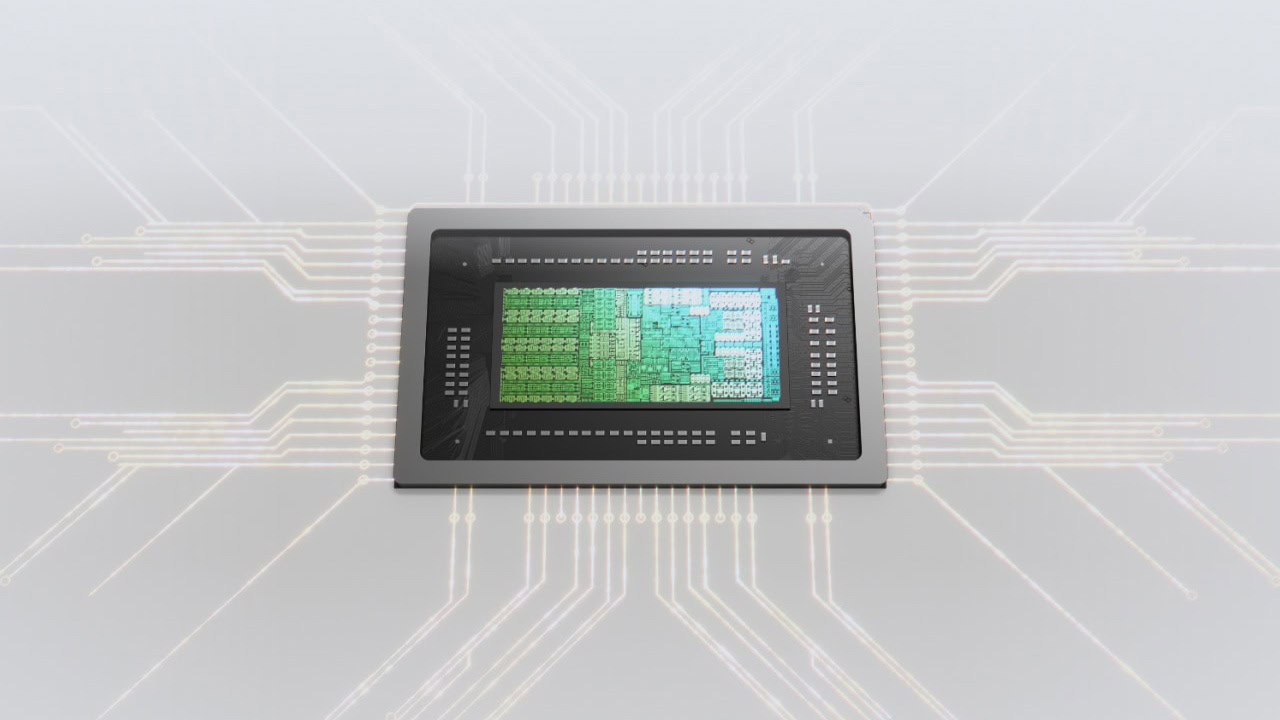
In a landmark development for the personal computing industry, NVIDIA has unveiled the RTX Spark, a revolutionary "superchip" designed to bridge the gap between portable Windows laptops and server-grade artificial intelligence performance. By fusing the power-efficient Arm-based Grace CPU architecture with the cutting-edge Blackwell GPU technology, NVIDIA is positioning the RTX Spark as the definitive solution for users who require high-end AI inference and AAA gaming capabilities in a mobile form factor.
The industry is already bracing for the impact, with major OEMs—including Microsoft Surface, ASUS, Dell, HP, Lenovo, and MSI—confirmed to integrate the chip into a new wave of premium devices slated for release later this year. These systems will span a wide variety of form factors, ranging from ultra-thin 14-inch creative laptops to robust 16-inch mobile workstations and compact desktop solutions.
Main Facts: The Anatomy of a Superchip
At its core, the RTX Spark represents a departure from traditional x86 architecture, opting instead for a unified-memory, Arm-based ecosystem that mirrors the success of Apple Silicon while supercharging it with NVIDIA’s proprietary GPU pedigree.
Key Specifications:
- CPU: The N1X (GB10 Grace Blackwell) processor, featuring a 20-core configuration (10 Arm Cortex-X925 cores and 10 A725 cores).
- GPU: Integrated Blackwell architecture boasting 6,144 CUDA cores, designed to deliver performance parity with desktop-class 5070-series hardware.
- Memory: A massive 128GB of unified LPDDR5X memory, enabling the system to load and run 120-billion-parameter AI models entirely on-device.
- Interconnect: NVLink-C2C, providing 600 GB/s of bidirectional bandwidth between the CPU and GPU.
- AI Performance: Up to 1 petaflop of FP4 AI performance, fully leveraging the CUDA and TensorRT ecosystem.
By adopting a unified memory architecture, NVIDIA has solved the primary bottleneck hindering current "AI PCs": the inability to hold large language models (LLMs) in memory. While most standard laptops struggle with 16GB or 32GB of RAM, the RTX Spark’s 128GB capacity allows for the seamless execution of models like GPT-OSS 120B and NVIDIA’s own Nemotron 3 Super.
Chronology of Development
The journey to the RTX Spark began with NVIDIA’s strategic pivot toward the data center and the realization that the "AI Everywhere" mandate required hardware that could exist outside of the cloud.
- 2024 (Foundation): The release of the Arm Cortex-X925 provided the architectural blueprint for high-performance mobile computing. MediaTek’s collaborative work with NVIDIA on this CPU design provided the initial momentum for the GB10 architecture.
- Early 2025 (The DGX Spark Precursor): NVIDIA introduced the $4,700 DGX Spark, a professional-grade Linux workstation. While effective, its proprietary OS limited its reach to enterprise researchers and server environments.
- Mid-2026 (The Windows Pivot): NVIDIA recognized the growing demand for local AI on Windows. By optimizing the GB10 for the Windows on Arm platform, the company effectively transitioned its server-grade technology into the consumer and prosumer space.
- Late 2026 (Upcoming Launch): The scheduled rollout of the RTX Spark-powered laptop fleet across major PC manufacturing partners marks the official entry of the chip into the retail market.
Supporting Data: Why Unified Memory Matters
The primary differentiator of the RTX Spark is its reliance on the NVLink-C2C interconnect. Traditional PC architecture utilizes the PCIe bus, which, while capable, often acts as a bottleneck for high-speed data transfer between a CPU and a discrete GPU.
NVIDIA’s internal data indicates that the NVLink-C2C interconnect is approximately five times faster than the PCIe Gen5 standard. This is critical for AI workflows where the model weights must be shuffled between system RAM and VRAM. By consolidating everything into a 128GB LPDDR5X pool, the RTX Spark eliminates the latency associated with data copying.
However, it is important to contextualize the performance. While the LPDDR5X memory is optimized for high capacity, its effective bandwidth of 273 GB/s is lower than the 768 GB/s typically found in discrete graphics cards utilizing dedicated GDDR7 memory. Consequently, while the RTX Spark will be a monster for AI inference and productivity, users should manage expectations regarding peak gaming frame rates compared to a dedicated desktop RTX 5070.
Official Responses and Strategic Intent
NVIDIA has framed the RTX Spark as the logical evolution of the "AI PC." In various briefings, NVIDIA representatives have emphasized that the goal is not to replace the high-end gaming desktop, but to democratize access to the CUDA ecosystem.
"We are moving from a world where AI is a cloud service to a world where AI is an extension of your own local hardware," noted an NVIDIA spokesperson. The collaboration with Microsoft is particularly telling; by leaning heavily into the Windows on Arm platform, NVIDIA is signaling that it is prepared to compete directly with Qualcomm’s Snapdragon X series and Apple’s M-series silicon, but with a specific value proposition: CUDA compatibility.

The inclusion of DLSS 4.5, Reflex, and hardware-accelerated ray tracing in the chip’s feature set proves that NVIDIA remains committed to the gaming demographic, even as it pushes into the professional AI sector.
Implications for the Industry
The arrival of the RTX Spark carries significant weight for several sectors of the tech industry:
1. The Death of the "AI Bottleneck"
For software developers and AI engineers, the RTX Spark is a game-changer. Until now, testing local AI models required bulky desktop rigs or massive, expensive server arrays. A laptop that can run a 120B-parameter model is a portable research lab, likely to disrupt the workflows of data scientists and creative professionals globally.
2. The Windows on Arm Renaissance
For years, the "Windows on Arm" ecosystem was hampered by a lack of high-performance hardware and a perceived incompatibility with professional software. NVIDIA’s move validates the platform. If the world’s leading GPU manufacturer is betting its top-tier Blackwell architecture on Arm, developers will be forced to ensure their software is fully optimized for the architecture.
3. Pricing and Market Accessibility
The most significant hurdle remains the price point. With 128GB of unified memory and a complex SoC design, the RTX Spark is unlikely to appear in entry-level machines. We expect these systems to be priced firmly in the $3,000 to $5,000 range. This limits the initial audience to power users, enterprise professionals, and AI enthusiasts, rather than the general consumer.

4. Competitive Pressure on Apple
Apple Silicon has long dominated the "unified memory" space, offering incredible performance-per-watt for creators. The RTX Spark is a direct assault on this position. By providing an open, CUDA-accelerated, and Windows-compatible alternative, NVIDIA is offering a compelling reason for creative professionals to consider switching from the Mac ecosystem back to Windows-based workstations.
Conclusion
The NVIDIA RTX Spark is more than just a new chip; it is a declaration of intent. By miniaturizing server-class technology and embedding it into the familiar chassis of a laptop, NVIDIA is attempting to redefine what "mobile computing" means in the age of generative AI.
As we approach the late-2026 launch, the industry will be watching closely to see if the real-world battery life and thermal management can match the ambitious technical specs. If NVIDIA delivers on its promises, the RTX Spark will not only secure its place as the heart of the next generation of laptops but also establish a new standard for how we interact with, and build, the artificial intelligence of the future.












No comments yet. Be the first to join the conversation!