Rifan Muazin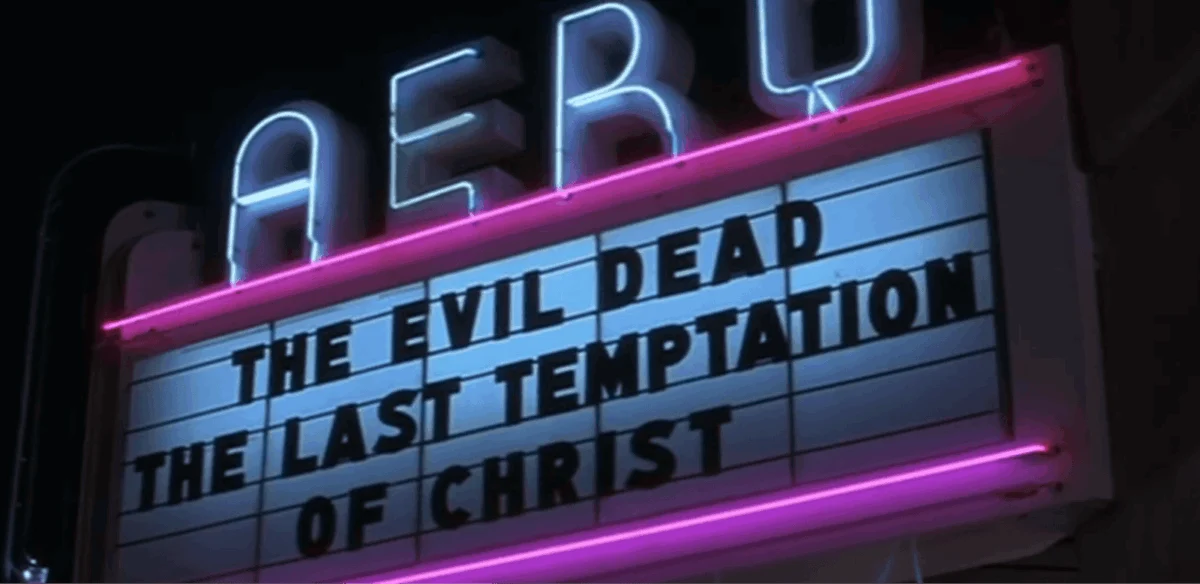
Twenty-five years after its initial release, Richard Kelly’s Donnie Darko remains a monolith of the cult classic landscape. A film defined by its surrealist dread, temporal displacement, and the haunting, brooding performance of a young Jake Gyllenhaal, it has cemented its place in cinematic history. Yet, as the film approaches a milestone anniversary and a nationwide re-release via Fathom Events, new revelations from writer-director Richard Kelly remind us that the road to iconic status is often paved with bureaucratic obstacles and last-minute creative pivots.
In a candid recent interview with Wired, Kelly detailed a "deus ex machina" moment that nearly saw one of the film’s most pivotal scenes—the theater sequence where Donnie and Gretchen watch a horror movie—stripped of its identity.
The Original Vision: A Cult Classic Conundrum
The scene in question is atmospheric and character-defining: a quiet, dimly lit theater where Donnie Darko and Gretchen Ross escape the pressures of their reality. In the original screenplay, Kelly envisioned the couple watching the 1984 horror flick C.H.U.D. (Cannibalistic Humanoid Underground Dwellers).
"In the original script, Donnie and Gretchen went to go see C.H.U.D., just because I thought it was a funny ’80s horror movie," Kelly explains. For a filmmaker deeply entrenched in the aesthetic and cultural signifiers of the era, the choice was deliberate. C.H.U.D. is a quintessential piece of B-movie history, a film that perfectly encapsulates the grindhouse grit and absurdist horror of the period.
However, as the production team at Flower Films prepared to shoot at the historic Aero Theatre in Santa Monica, they encountered a wall of corporate indifference. According to Kelly, Linda McDonough, an executive at Flower Films, spearheaded the effort to secure licensing rights. Her experience, however, was an exercise in futility.
"She was getting nowhere," Kelly says. "It was one of the big studios, and there was some woman in charge of licensing at that studio who was just like, ‘You’re never getting this.’"
The Chronology of a Crisis
The struggle for C.H.U.D. serves as a stark example of how intellectual property hurdles can threaten the momentum of an independent production.
- Pre-Production: Kelly solidifies the script, identifying C.H.U.D. as the ideal film to mirror the subterranean, "underground" themes present in the Donnie Darko narrative.
- Production Scheduling: With the Aero Theatre booked and the production timeline tightening, the legal team hits a deadlock. The studio holding the rights to C.H.U.D. becomes increasingly uncooperative, creating an environment of ambiguity for the production team.
- The Three-Day Countdown: With only 72 hours remaining before the cameras were set to roll on the theater scene, the production faced a logistical emergency. Without a film to show on the screen, the sequence—and the emotional grounding it provided—was in jeopardy.
- The Pivot: Faced with an impasse, the production team pivots. Utilizing professional connections, they secure the rights to The Evil Dead at the eleventh hour, transforming the scene into the version that millions of fans have come to know and love.
The "Elusivity" of B-Movie Rights
It is a common misconception that smaller, cult-status horror films are easy to license. In reality, the legal landscape surrounding such properties can be significantly more complex than that of high-budget studio fare.
"You would think we were trying to license Lawrence of Arabia or Citizen Kane," Kelly recalls of the negotiations. The studio’s demand for exorbitant fees, combined with the lack of transparency in the licensing process, nearly forced the production to abandon the specific scene entirely.
The irony is palpable. C.H.U.D., despite its B-movie reputation, has maintained a consistent, if niche, cultural presence. It has been referenced in The Simpsons and Agents of S.H.I.E.L.D., and a VHS copy even appears in the opening of Jordan Peele’s Us. Yet, for a low-budget independent film like Donnie Darko, the costs and the gatekeepers proved to be an impenetrable barrier.
The Raimi Solution: A Professional Lifeline
The resolution of the crisis arrived in the form of industry goodwill. Linda McDonough, recognizing the urgency of the situation, leveraged her professional network to approach the producers of Sam Raimi’s The Evil Dead.
"Linda, to her enormous credit, said, ‘Richard, I am friends with the producers at the studio that owns The Evil Dead, they own the negative,’" Kelly explains. "Sam Raimi is a great guy, and they will let us have the poster to show at the front in the lobby of the theater. They’ll let you show any clip from The Evil Dead you want, the music, you can have it basically for free."
This act of solidarity was, in Kelly’s words, a "deus ex machina." The switch to The Evil Dead not only solved the immediate production crisis but arguably enhanced the film. The visceral, manic energy of Raimi’s debut horror masterpiece fits the erratic, high-stakes psychological tone of Donnie Darko far more effectively than the campier C.H.U.D. could have.
Implications for Modern Independent Cinema
The Donnie Darko licensing story is more than just a piece of trivia; it is a cautionary tale regarding the fragility of creative vision. Independent cinema is often defined by the ability to pivot, but the success of such pivots relies on the availability of alternatives and the presence of collaborative partners.
Had the production not been able to secure The Evil Dead, the theater scene might have been filmed with a generic, non-copyrighted film or removed entirely, altering the texture of one of the most important sequences in the movie. The episode highlights the inherent power dynamics in Hollywood—where the rights to a film that is decades old can still be held hostage by studio administrators who, as Kelly noted, seemed entirely uninterested in supporting a new generation of filmmakers.
Furthermore, this incident underscores the importance of networking and industry relationships in independent film. Without McDonough’s personal ties to the Evil Dead production team, the "Donnie and Gretchen at the movies" scene would likely be remembered very differently, or not at all.
The Legacy of the Sequence
As fans prepare to revisit the film for its 25th anniversary, the Evil Dead sequence stands as a testament to the chaos of production. The film Donnie Darko is a work that thrives on the juxtaposition of the mundane and the supernatural. By placing the characters in front of a screening of The Evil Dead, Kelly inadvertently created a meta-layer to the film, connecting his work to the lineage of horror auteurs like Sam Raimi.
The inclusion of The Last Temptation of Christ on the same marquee serves as a brilliant, if accidental, thematic counterpoint to the gore of The Evil Dead. Kelly notes that this pairing was "an easier ask" because they were only using the name and the poster, avoiding the necessity of clearing complex clips.
Ultimately, the story of Donnie Darko’s theater scene is a reminder that even the most calculated, visionary works are subject to the whims of corporate bureaucracy. It is a story of how a "no" from a licensing executive can become the catalyst for a more fitting, more iconic creative choice. For Richard Kelly, the struggle was worth it—not just for the film itself, but for the story it tells about the resilience required to get a masterpiece onto the silver screen.

 Asep Darmawan
 Asro
Asro