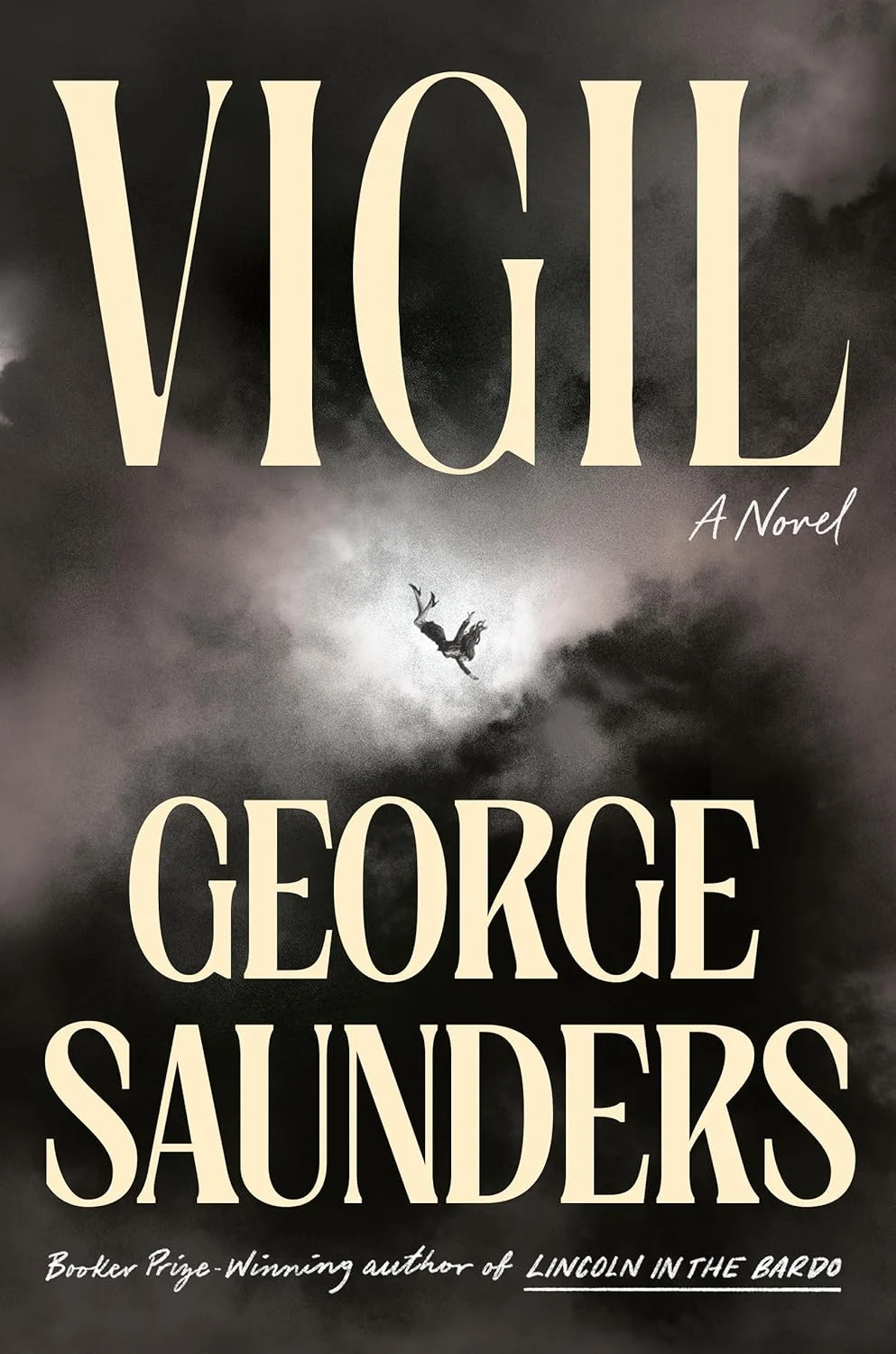
George Saunders occupies a rarefied space in contemporary American letters. He is a writer whose career trajectory—marked by a MacArthur "Genius" Fellowship, a Booker Prize for Lincoln in the Bardo (2017), and a permanent fixture on the syllabi of creative writing programs nationwide—has cemented his status as a modern literary darling. His work is consistently met with the kind of reverent, long-form critical analysis in the New York Times Book Review that is rarely afforded to authors operating within the speculative fiction or absurdist genres. To be praised by Thomas Pynchon is, in the ecosystem of high-brow fiction, the final seal of approval.
Yet, with the release of his latest novel, Vigil, the literary community finds itself grappling with a central question: Does the "Saunders touch" remain as sharp as it was in his CivilWarLand in Bad Decline days, or has the author drifted into a realm of sentimentality that threatens to undermine his reputation for biting, trenchant satire?
The Anatomy of an Afterlife
Vigil marks a thematic return to the metaphysical landscapes of Lincoln in the Bardo. Both books are set in the afterlife, exploring the intersection of profound personal grief and the existential necessity of "moving on." However, Vigil is not a sequel. While Lincoln in the Bardo utilized a sprawling, Greek-chorus-style cast of spirits to frame the historical mourning of Abraham Lincoln for his son, Vigil attempts a more intimate, character-driven approach.
The narrative centers on Jill "Doll" Blaine, a woman who died in her prime during the 1970s. In the afterlife, she is tasked with a bureaucratic purgatorial duty: counseling the newly deceased. Her latest charge is K. J. Boone, a ruthless, recently departed oil tycoon who refuses to acknowledge his own transition, let alone his moral failings.
The contrast between the two leads provides the novel’s primary friction. Jill, a product of a pre-feminist era, is perpetually seeking a sense of purpose and validation—an existential struggle that is complicated by the discovery that her husband back on Earth did not miss her as deeply as she had hoped. Boone, by contrast, is a caricature of the "pull-them-up-by-the-bootstraps" corporate titan. He views his legacy—including the environmental destruction caused by his empire—as the inevitable byproduct of "responsible corporate stewardship" and sound scientific hypothesis.
A Chronology of Expectation vs. Reality
The reception of Saunders’ work has historically followed a trajectory of immense anticipation followed by deep, granular dissection. When Lincoln in the Bardo was released, critics were quick to categorize the supernatural elements as "experimental" or "magical realism" rather than "fantasy," shielding it from the dismissive labeling often applied to genre fiction.
With Vigil, however, the critical wind has shifted. While early readers anticipated the sharp-edged humor that defined Saunders’ early career, they were met with a narrative that leans heavily into the didactic. The novel’s central premise—that climate change is a moral failure and that those responsible should perhaps reflect on their actions—feels, to many, like a mundane foundation for a writer of Saunders’ stature.
- 1996: Publication of CivilWarLand in Bad Decline, establishing Saunders as a master of cynical, futuristic satire.
- 2017: Lincoln in the Bardo wins the Booker Prize, shifting his focus toward metaphysical and historical inquiry.
- 2021: Publication of A Swim in a Pond in the Rain, reinforcing his role as a literary mentor and guide to the Russian masters.
- 2026: Release of Vigil. The novel is immediately categorized as a "climate change novel," a label that brings with it a specific set of expectations regarding urgency and moral weight.
Supporting Data: The Craft of the Sentence
Despite the common critical refrain that Vigil lacks the intellectual "cleverness" of Saunders’ previous work, the book’s saving grace—and the reason it continues to garner mainstream attention—lies in the author’s unparalleled sentence-level craft. Even when the plot feels thin, the prose acts as a powerful adhesive.
Consider the description of K. J. Boone’s deathbed. Saunders writes:
"He was dying, for reasons unclear, in the least appealing room of his magnificent home. A pair of red velvet drapes hung on the eastern wall, as if to frame a view out a window. But there was no window."
The imagery is quintessential Saunders: the "purposeless drapes," the "miniature brass knights" surrounding a lamp as if laying siege to it, and the juxtaposition of an Old West aesthetic (antlers, Colt .45s) against the trappings of modern wealth. Through these descriptions, Saunders reveals the hollowness of Boone’s life. The room is a museum of mythologies—knighthood, frontier individualism, corporate power—that ultimately failed to provide the tycoon with any real substance or comfort in his final hours.
Critics have noted that these passages reflect the influence of Barbara Tuchman’s A Distant Mirror, highlighting the gap between the "ideals" of a ruling class and their violent, self-serving reality. Whether Saunders is poking fun at the "cowboy" ethos of the oil industry or the fragility of the human ego, his ability to weave political commentary into the mundane details of a room remains unmatched.
Official and Critical Responses
The reaction to Vigil has been polarized. On one side are the loyalists who point to the "sappiness" of the text as a natural evolution of Saunders’ career. As Jay McInerney once noted of Saunders’ work, he is a rare writer who can "effortlessly blend satire and sentiment." Supporters argue that Vigil is a brave attempt to find human connection in a dying world, prioritizing character transformation over the "cardboard" archetypes of Golden Age science fiction.
Conversely, detractors suggest that Vigil suffers from a "saccharine" quality, likening it more to Matt Haig’s The Midnight Library than to the grit of Saunders’ earlier collections. The complaint is not that the sentiment is present, but that it is unearned. The "climate change is bad" thesis is viewed by many reviewers as an under-baked premise that lacks the speculative audacity of his earlier, more trenchant explorations of American decline.
Implications for the Genre and the Author
The release of Vigil serves as a case study in the "darling" phenomenon. When an author reaches a certain level of cultural capital, their work is often judged not just against other books, but against the persona of the author himself. Saunders is, by all accounts, a generous and inspiring teacher, and that warmth is undeniably present in his latest prose.
However, the implications for the broader genre of speculative fiction are significant. By framing climate change as a matter of personal "spiritual transformation" rather than systemic crisis, Vigil risks domesticating a subject that many believe requires a more radical, less conciliatory approach.
Ultimately, Vigil will likely be remembered as a transitional work. It showcases an author who has mastered the art of the sentence, yet who is currently wrestling with the tension between his satirical roots and his desire to offer a more hopeful, perhaps even sentimental, view of human potential. Whether or not one finds the transition successful depends on what they seek from George Saunders: the sharp, cynical blade of the 1990s, or the reflective, purgatorial mirror of the 2020s. As the protagonist Jill Blaine realizes, "I must put her behind me forever, that girl who once was." It appears George Saunders is similarly engaged in the process of putting his past iterations behind him, for better or for worse.