

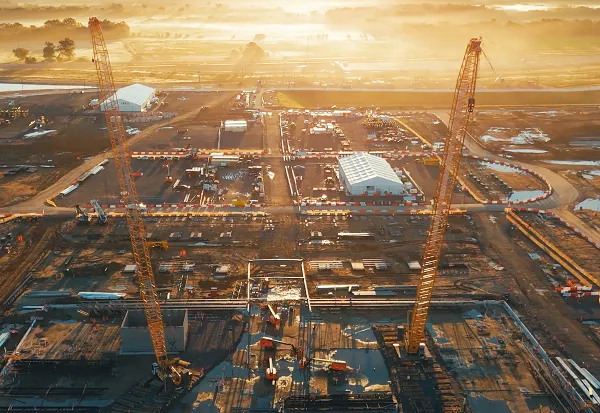
In an era defined by the frantic race for artificial intelligence dominance, Meta has unveiled a staggering $50 billion expansion of its data center infrastructure in Richland Parish, Louisiana. Touted by the tech giant as one of the largest single investments in American AI infrastructure, the project is framed as a transformative opportunity for local economic development. Yet, as the construction cranes rise, a polarized debate is brewing: is this a generational opportunity for rural revitalization, or a cautionary tale of environmental and civic overreach?
The Core of the Investment: A Massive Bet on AI
Meta’s announcement, released in July 2026, details more than just an increase in server capacity. The company is positioning its Louisiana facility as a foundational pillar for its future AI training and inference capabilities. To support these energy-hungry clusters, Meta has committed to extensive regional infrastructure upgrades.
Central to the project is an energy agreement with Entergy Louisiana, which Meta claims will reduce utility costs for local consumers by over $2 billion during the next two decades. When combined with a previous agreement, the company asserts it will provide $2.65 billion in cumulative savings for the region. Beyond the digital footprint, the expansion promises to bolster local schools, provide capital for small businesses, and fund significant public infrastructure improvements, including a dedicated $1 billion allocation for local utility grid reinforcement.
Chronology: The Road to Richland Parish
The progression of Meta’s Louisiana project reflects the broader, aggressive timeline of global AI infrastructure development:
- Initial Groundbreaking: Meta identified Richland Parish as a strategic site for its data center network, citing land availability and favorable regulatory conditions.
- Early 2026: As AI model complexity increased, Meta signaled a shift toward "hyperscale" data centers, leading to the planning of this massive expansion.
- July 2026: Meta officially announces the $50 billion investment, framing it as a model for public-private partnerships.
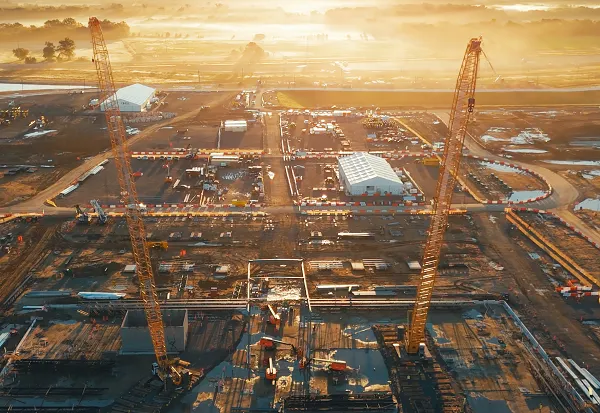
- Ongoing: Construction is currently underway, characterized by intensive labor mobilization and heavy industrial activity in the region.
- Policy Context: Throughout this period, federal scrutiny has grown. In early 2026, Senator Bernie Sanders introduced the Artificial Intelligence Data Center Moratorium Act, signaling a potential legislative cooling-off period for the industry.
Supporting Data: The Economic vs. Environmental Ledger
Meta’s narrative relies on a "multiplier effect"—the idea that a massive injection of capital will stimulate the local economy through job creation, contractor utilization, and tax revenue. For a region like Richland Parish, an influx of billions of dollars in investment is objectively significant.
However, the economic ledger is not one-sided. Data center construction is notorious for its resource intensity. The "hidden" costs—often borne by the local municipality rather than the corporation—include:
- Energy Demands: Data centers require consistent, massive power loads that can strain local grids, potentially leading to instability or rate hikes if infrastructure does not scale proportionately.
- Water Usage: High-performance computing requires vast amounts of water for cooling systems. Concerns over water table depletion and potential contamination have been raised in similar projects across the U.S.
- Infrastructure Wear: The influx of heavy machinery and construction traffic has historically led to accelerated degradation of local roadways and increased incident rates for local commuters.
Official Responses and Corporate Strategy
Meta has been proactive in its communication strategy, clearly aiming to mitigate the "Big Tech vs. Local Community" narrative that has plagued similar projects in other states. By emphasizing its support for "workforce development" and "local business integration," Meta is attempting to position itself as a long-term corporate citizen rather than a transient developer.
In its official statements, the company emphasized that its data centers are "net positives." This rhetoric is essential for Meta’s social license to operate. By highlighting the $650 million in savings from the first phase of its agreement with Entergy, the company is attempting to provide a quantifiable, tangible benefit that residents can see on their monthly utility bills—an effective counter-argument to the abstraction of "AI progress."
The Legislative Pushback: The Moratorium Act
The most significant challenge to Meta’s expansion is not local, but national. Senator Bernie Sanders’ Artificial Intelligence Data Center Moratorium Act represents the first serious federal attempt to curb the unchecked growth of AI infrastructure.
The bill is predicated on the idea that the public interest has been sidelined by the speed of AI deployment. Sanders’ legislation calls for:
- A Temporary Halt: A pause on new construction until federal agencies can conduct a comprehensive assessment of the social and environmental risks.
- Consumer Protection: Explicit language regarding the prevention of utility bill spikes caused by the massive power consumption of AI centers.
- Environmental Oversight: Mandated reporting on the environmental footprint of data center expansion, including carbon output and water usage.
While the bill faces significant opposition from the tech lobby and lawmakers eager to maintain the U.S. lead in AI, it has galvanized community activists across the country who fear that their local resources are being sacrificed to train algorithms they may never directly benefit from.
The Implications: A National Conflict of Interest
The situation in Louisiana serves as a microcosm of a broader national conflict. On one hand, the U.S. government views AI supremacy as a matter of national security and economic competitiveness. The current administration and key legislative leaders have shown a clear preference for fast-tracking AI development to ensure the country does not fall behind global rivals.
On the other hand, the physical reality of AI is messy, loud, and resource-intensive. The "cloud" is actually a collection of concrete, steel, copper, and water-cooled servers. As these projects move from tech hubs to rural areas, the friction between high-tech aspirations and local quality of life is becoming impossible to ignore.
The Future of "Hyperscale" Development
Looking ahead, several critical questions remain:
- Can Sustainability Be Guaranteed? Meta’s $1 billion infrastructure commitment is a start, but critics argue that it does not account for the long-term environmental degradation caused by industrial-scale cooling and power consumption.
- The Power Grid Dilemma: As more data centers go online, the pressure on regional grids will intensify. If the "energy agreement" model fails to keep costs low, the political backlash could be severe.
- Workforce Reality: How many of the promised jobs will go to local residents, and how many will be filled by outside contractors brought in for the construction phase?
Conclusion: Balancing Progress and Preservation
Meta’s $50 billion expansion in Louisiana is a masterclass in modern corporate development. It leverages massive capital, strategic partnerships with utility providers, and a narrative of community support to navigate a complex regulatory environment.
However, the "truth on the ground" remains a point of contention. As Meta expands its footprint—from Louisiana to Canada and beyond—it is being forced to confront the reality that the public is no longer content to accept the "AI is good for everyone" narrative at face value. The growing support for federal oversight indicates that the era of unfettered, community-agnostic data center expansion may be coming to an end.
For the residents of Richland Parish, the next few years will be a test of whether Meta’s promises of prosperity will manifest as tangible growth or if they will be overshadowed by the physical costs of supporting the world’s most advanced artificial intelligence. In the halls of Congress, the debate over the Artificial Intelligence Data Center Moratorium Act will serve as the ultimate barometer for how the U.S. decides to manage the friction between the digital future and the local present. One thing is certain: as the AI race continues to accelerate, the physical footprint of the industry will remain the most visible—and most controversial—part of the transformation.











