Laily UPN
In a surprising pivot that highlights the growing friction between corporate AI adoption and user experience, TikTok has officially implemented a restrictive ban on the use of artificial intelligence-generated voices and automated audio within its live broadcast ecosystem. This policy shift, specifically targeting TikTok Shop livestreams, marks a significant departure from the industry’s broader trend toward automating digital storefronts and customer engagement.
As the platform balances its ambition to become a global e-commerce powerhouse with the necessity of maintaining authentic user connection, these new rules suggest that the "AI revolution" on social media may be hitting a structural ceiling.
The Policy Shift: What Has Changed?
According to updated guidelines found within the TikTok Shop Seller University, the platform has explicitly labeled non-real-time verbal interaction as "prohibited content." The policy is unambiguous: "Don’t use non-real-time verbal interaction such as AI-generated voices, audio recordings, or radio."
This directive is designed to force creators and brands back to the roots of the medium: human connection. TikTok now mandates that broadcasters must engage directly with their viewers using real-time verbal communication or sign language, maintaining a demeanor that is appropriate for a diverse, global audience. Any livestream that relies on pre-recorded audio loops or AI-synthesized speech—common tactics used by brands to run 24/7 "automated" sales streams—is now classified as "non-compliant."
This regulatory tightening arrives at a time when the marketplace is flooded with synthetic content, raising questions about how the platform intends to police these interactions and what constitutes "real-time" in an era where AI processing speeds are nearly instantaneous.
Chronology of the AI Livestream Trend
To understand the weight of this decision, one must look at the rapid rise of virtual influencers and automated broadcasting over the past two years.
The Rise of the Virtual Host (2024)
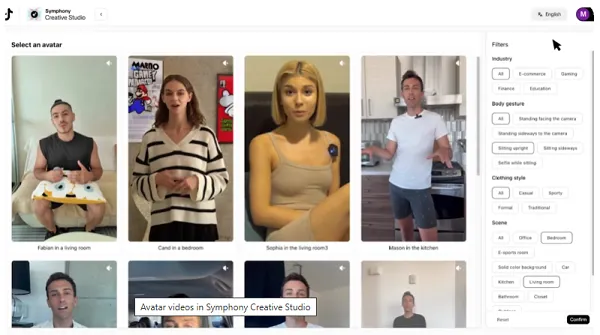
In early 2024, TikTok began signaling a pivot toward AI-powered digital avatars. The rationale was clear: scalability. By providing businesses with tools to generate virtual characters, TikTok aimed to lower the barrier to entry for e-commerce. These avatars were marketed as a revolutionary way for brands to maintain a 24/7 presence without the logistical nightmare of hiring shift-based human staff.

The Influence of Douyin
The inspiration for this shift was undoubtedly the success of Douyin, the Chinese counterpart to TikTok. In the Chinese market, virtual influencers have become a multi-billion-dollar industry. Recent data from Sixth Tone highlights the scale of this phenomenon, noting that there are nearly one million registered digital avatar companies in China. These entities provide inexpensive, high-quality virtual hosts capable of streaming around the clock, creating a seamless, automated sales funnel that rarely sleeps.
The Pivot to Restriction (2025–2026)
Following the widespread adoption of these tools, the platform began to see the "dark side" of automation. As brands rushed to capitalize on the technology, the volume of repetitive, low-effort AI content skyrocketed. Users began reporting an influx of "AI slop"—monotonous, soulless streams that felt more like robotic vending machines than engaging social content. By mid-2026, the negative feedback reached a tipping point, prompting the platform to hit the brakes on its earlier, more permissive strategy.
Supporting Data: The Scale of the AI Economy
The numbers behind the virtual influencer market remain staggering, even if TikTok is now curbing their usage on its primary Western platform.
- Production Costs: Utilizing AI avatars reduces production costs by an estimated 70–90% compared to traditional live broadcast setups. This is achieved by removing the need for physical studio space, lighting technicians, and, most notably, human talent.
- Availability: Human streamers are limited by the biological necessity of rest. Virtual avatars, however, operate on a 24/7 cycle, allowing companies to capture global traffic across all time zones without interruption.
- Market Saturation: With over 993,000 digital avatar companies in China alone, the industry represents a massive segment of the digital economy. The sheer volume of these entities suggests that for many businesses, the AI host was not just an experiment—it was their primary business model.
By banning these tools, TikTok is effectively forcing a massive industry to pivot overnight, potentially disrupting the revenue streams of thousands of small-to-medium-sized enterprises that built their entire infrastructure around automated broadcasting.
Official Stance and Implementation
TikTok’s official communication regarding these changes emphasizes the "quality of experience." The platform has long positioned itself as a community-driven app where discovery is powered by authentic interaction.
"Engage directly with your viewers," the guidelines urge. The implication is that the algorithm—and the audience—are beginning to reject the sterile, repetitive nature of AI-generated voices. While the platform continues to embrace AI for video editing, filter generation, and ad-creative tools, it has drawn a hard line at the "face and voice" of the brand.
Interestingly, there remains a potential "loophole" regarding screen real estate. The updated rules state: "Don’t use animated figures or content that covers more than 50% of the screen." Analysts are now debating whether this implies that a smaller, non-intrusive AI avatar might still be permitted, provided the audio is provided by a human. However, given the current crackdown, most brands are likely to avoid any AI-centric imagery to steer clear of potential shadow-banning or account suspension.
Implications: The Future of E-Commerce and "Authenticity"
The implications of this policy shift are vast, touching on the future of both e-commerce and the broader trajectory of AI in social media.
1. The Death of "AI Slop"
For years, social media users have complained about the degradation of content quality as generative AI tools became more accessible. TikTok’s decision is one of the first major instances of a platform actively purging "slop" to prioritize human-centric engagement. This could set a precedent for other platforms, such as Instagram or YouTube, to follow suit if they face similar user retention issues.
2. A Setback for Automated Commerce
For brands that relied on AI hosts to drive sales, this is a significant logistical hurdle. Businesses will now need to reconsider their labor models. While AI can still be used for background tasks—such as inventory management or data analysis during the stream—the "front-of-house" experience must be human. This may lead to an increase in demand for live-streamers, potentially revitalizing the gig economy for human creators.
3. The "Human Premium"
We may be entering an era where "Human-Made" becomes a badge of quality. Just as organic food carries a premium over processed goods, live-streamed content featuring real people may be prioritized by TikTok’s recommendation engine. This creates a market incentive for brands to showcase genuine personality, humor, and spontaneity—traits that AI, for all its sophistication, still struggles to replicate authentically.
4. Strategic Inconsistency
Critics might argue that TikTok is sending mixed signals. While the platform continues to launch new AI-powered video generation tools for advertisers, it is simultaneously penalizing those who use similar technology in a live environment. This suggests a nuanced strategy: TikTok wants AI to help brands create better content, but it does not want AI to replace the interaction that keeps users on the app.
Conclusion: Finding the Balance
TikTok’s decision to ban AI-generated voices in livestreams is a profound acknowledgement that efficiency does not always equal effectiveness. While the technological capabilities for 24/7 automated broadcasting exist, the social cost—boredom, distrust, and a decline in platform engagement—has proven to be too high.
As the industry watches, the question remains: Can a platform that is so deeply integrated with AI continue to prioritize the "human touch"? For now, TikTok has decided that when it comes to the live experience, the human element is not just a preference—it is a requirement. The era of the "faceless, voiceless" automated store on TikTok has come to a close, signaling a return to the chaotic, unpredictable, and undeniably human nature of live social commerce.


 Evan Lee Salim
 Iffa Jayyana