Neng Nana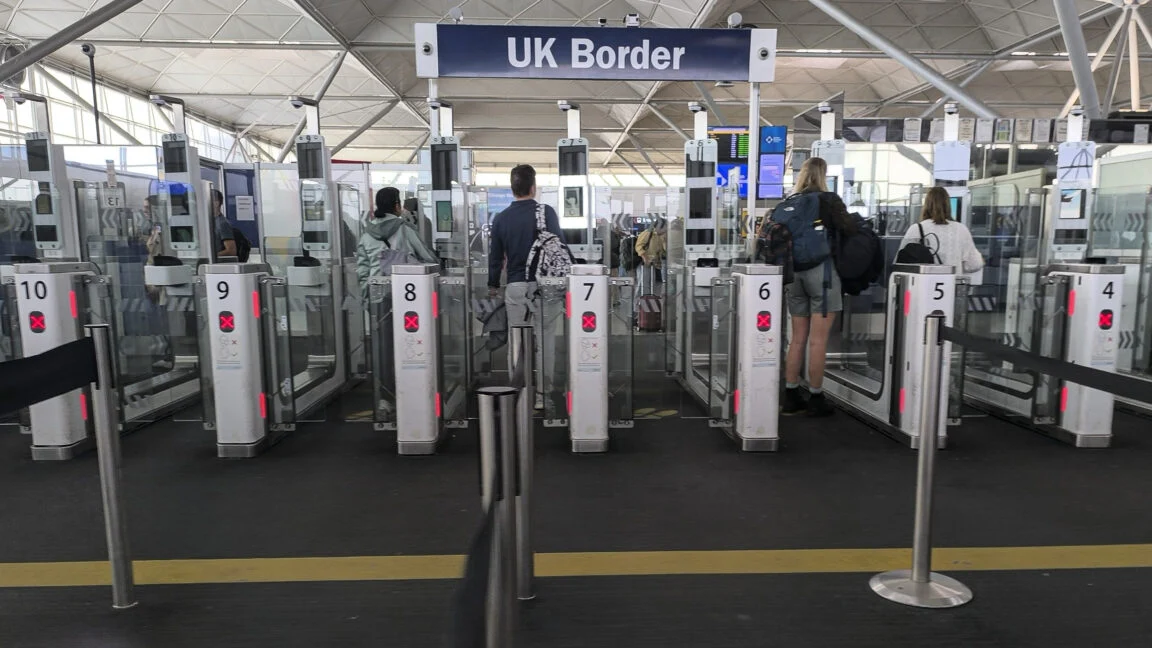
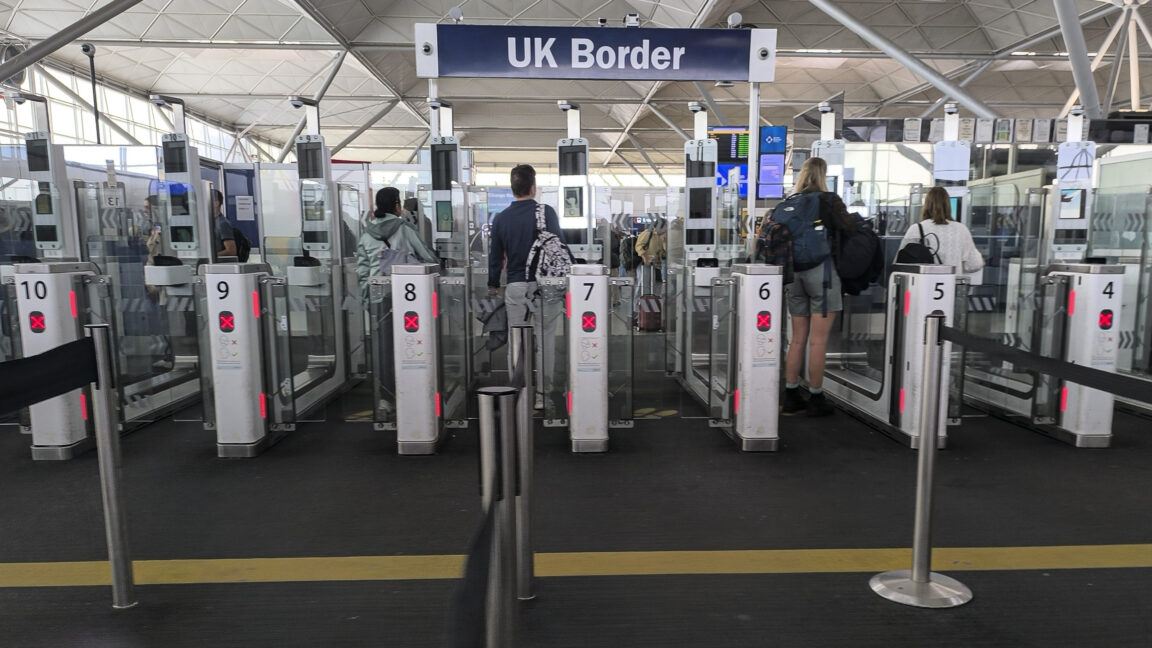
The British government is poised to integrate artificial intelligence into one of the most sensitive areas of public policy: the age assessment of asylum seekers. Starting in 2027, the Home Office plans to deploy facial age estimation (FAE) technology at its borders, a move that critics, human rights organizations, and scientific experts warn could lead to life-altering errors for the most vulnerable individuals.
While the government frames this as a necessary modernization to identify adults attempting to bypass immigration controls, an investigation by WIRED and Lighthouse Reports, in collaboration with The Independent, reveals that the technology is fraught with "hideously inaccurate" performance and systemic biases that disproportionately affect migrants from Sub-Saharan Africa.
The Mechanism of Measurement: How FAE Works
Facial age estimation uses machine learning algorithms trained on millions of labeled images to analyze the structural features of a person’s face—such as bone structure, skin texture, and musculature—to generate a statistical probability of their age.
While these systems have become increasingly common in the digital sphere, appearing in age-gated online content and alcohol retail trials, their application at the physical border represents a dangerous escalation. Unlike an online user uploading a clear, well-lit selfie, an asylum seeker arriving at the UK border is often suffering from the physical toll of a perilous, long-distance journey. They may be dehydrated, exhausted, or traumatized—factors that can significantly distort the biometric markers upon which these algorithms rely.
A Chronology of the Policy Shift
The road to this implementation has been marked by internal controversy and a lack of transparency:
- 2023: The Home Office begins formalizing the role of AI in border control, coinciding with a broader push to "crack down" on illegal migration.
- April 2025: An internal government report is produced detailing the testing of seven different FAE algorithms against 2.5 million images. The report, which the government initially withheld from public scrutiny, reveals significant performance failures.
- July 2025: The UK government officially announces its intention to use FAE as a supporting tool for border staff in assessing the age of migrants.
- May 2026: Despite mounting concerns, the Home Office awards a contract worth over $400,000 to the German technology firm Cognitec to provide age-scanning infrastructure.
- 2027 (Projected): Full deployment of the AI-assisted assessment protocol at UK border points.
The Data: Inaccuracy and Systemic Bias
The core of the criticism lies in the internal Home Office test results. The report found that the "best performing" algorithms struggled significantly with demographic consistency. Specifically, the systems demonstrated "substantial deviations" when analyzing images of Sub-Saharan Africans.
For female migrants from this region, the AI’s error margin was an average of 4.6 years. In a practical, high-stakes setting, this margin is the difference between a child receiving the legal protections afforded to minors and a teenager being processed as an adult—a misclassification that can result in placement in adult-only detention centers and the denial of critical social services.
Furthermore, the audit of public data from the US National Institute of Standards and Technology (NIST) confirmed that 16-year-olds from West Africa were significantly more likely to be misclassified as adults (18+) than their Eastern European counterparts. These results were exacerbated when the AI was fed lower-quality images—a common occurrence during the chaotic, high-pressure environment of a border crossing.
The Disbanding of Scientific Oversight
Perhaps the most troubling revelation is the dissolution of the scientific committee tasked with advising the Home Office on age estimation methodologies.
Tim Cole, an emeritus professor of medical statistics at University College London’s Institute of Child Health and a former member of the committee, stated that the group was eager to voice concerns regarding the inadequacy of FAE systems. "This opportunity was not presented to us, and then the committee was shut down," Cole remarked, characterizing the technology as "hideously inaccurate."
When pressed on why the committee was disbanded, a Home Office spokesperson claimed the decision was due to a requirement for "different fields of expertise," a justification that has done little to satisfy the scientific community.
Official Responses and Government Justification
The Home Office maintains that the technology is designed to be an "additional tool" rather than a replacement for human judgment. According to official guidance, border staff will continue to conduct interviews and assess demeanor, with AI serving only as a secondary data point to assist in "first encounter" decisions.
"We have rigorous processes in place to verify an individual’s age and are working to modernize these through the testing of fast and effective facial age estimation technology," a spokesperson stated. The Home Office also noted that in cases of uncertainty, "individuals will always be treated as children until a further assessment is conducted."
However, industry partners are less forthcoming. Cognitec, the firm contracted for the technology, declined to comment on its specific work with the UK government. A spokesperson for the company noted that "demographic differences" in performance are a universal issue for all face-scanning algorithms, attributing them to the "complex" nature of image quality and training data, while asserting that their specific algorithms maintain "low" bias compared to industry peers.
The Human and Legal Implications
The implications of this deployment extend far beyond technical performance. Critics argue that the use of such technology is inherently dehumanizing.
1. Normalization of Surveillance
Rights groups fear that once these systems are integrated into border operations, they will become "entrenched." Anna Bacciarelli of Human Rights Watch warns that the risks inherent in every component of the system—from the flawed training data to the stressed physical state of the subjects—make the project fundamentally flawed.

2. Legal Protections and Human Rights
Children seeking asylum are among the most vulnerable populations globally. Many have survived conflict, human trafficking, and dangerous maritime crossings. The risk of incorrectly classifying a child as an adult carries profound legal consequences, stripping them of the specific safeguarding duties the UK state is obligated to provide under international law.
3. The "Stress Test" Problem
The Home Office’s own documentation acknowledges that the trauma and physical stress endured by asylum seekers may impact the efficacy of facial scanning. There is currently no evidence that the algorithms can distinguish between "biological age" and "physical appearance altered by extreme stress and malnutrition." By ignoring these variables, the government risks turning legitimate, vulnerable children into "test subjects" for experimental, high-error-rate technology.
4. The Burden on Staff
Immigration officers are already operating under immense pressure. By introducing a technology that provides a "score," the government may be creating a form of "automation bias," where officers are pressured to favor the machine’s output over their own professional intuition or the evidence provided by the individual, especially in instances where speed is prioritized over accuracy.
Conclusion: A Question of Value
The Home Office has recently stated that the National Physical Laboratory will conduct an independent review of the trials. They have also suggested potential "thresholds"—such as only flagging individuals who appear to be under 20—to mitigate the most egregious margin-of-error cases.
Yet, for those opposing the policy, these are merely technical bandages on a fundamentally broken approach. As 61 organizations, including the rights group Foxglove, stated in an open letter to the government, the potential for "baked-in racism and inaccuracy" is too high to justify the use of AI in such a life-altering context.
As the 2027 deployment date approaches, the UK government faces a stark choice: continue to invest in a technological solution that risks violating the rights of the most vulnerable, or acknowledge that the complexities of human age, trauma, and identity cannot be reduced to a biometric percentage. For now, the push for "efficiency" at the border appears to be winning over the call for human-centric, evidence-based care.


 Ammar Sabilarrohman
 Jia Lissa