

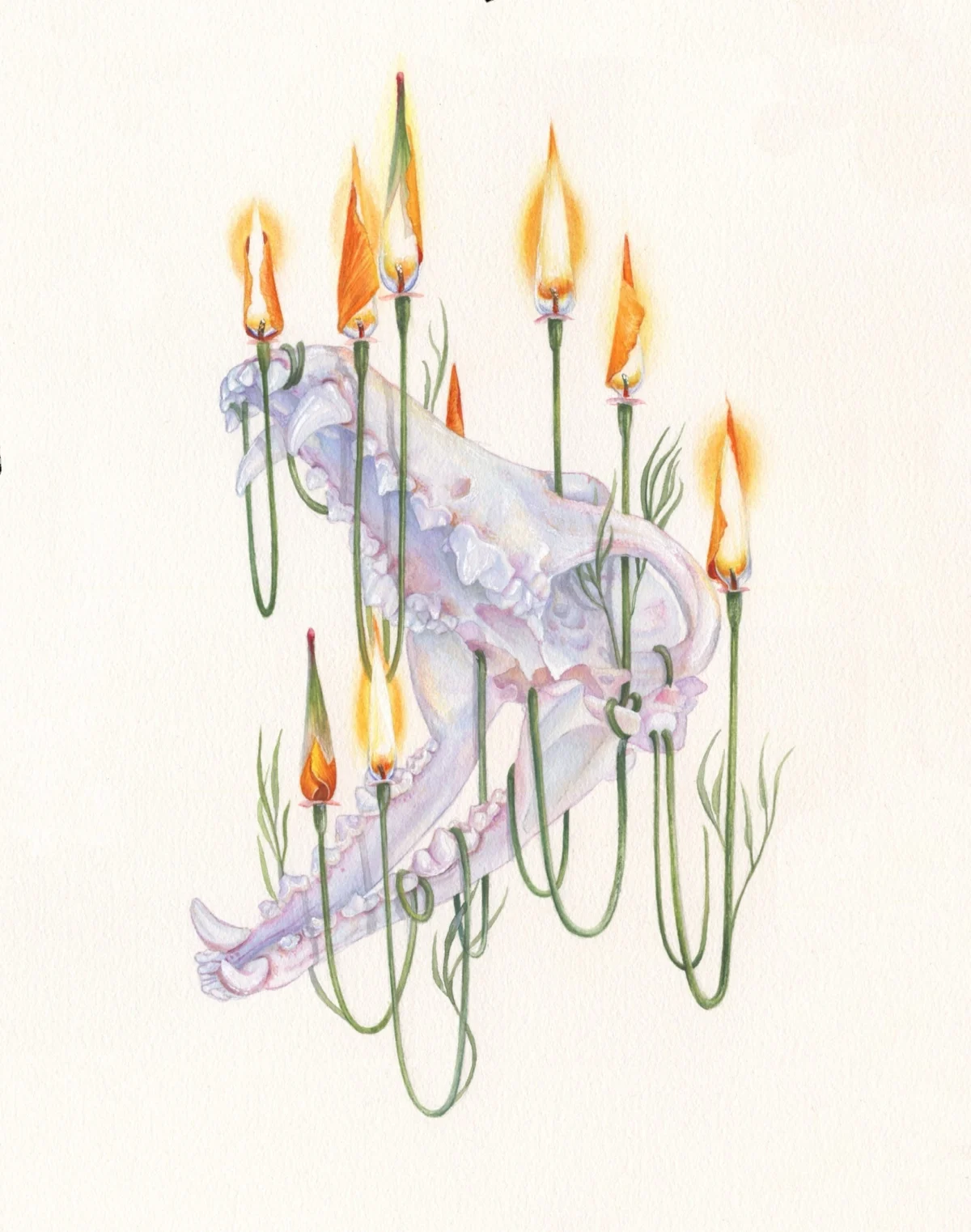
In the quiet, deliberate space where art meets introspection, artist Christina Mrozik has spent the last half-decade constructing a bridge between the subconscious mind and the physical world. Their latest endeavor, an oracle deck titled The Feelings of All Things, is not merely a collection of illustrations; it is a meticulously crafted psychological instrument. Comprising 50 monochromatic cards, the project serves as a visual taxonomy of the human emotional experience, utilizing surrealist botanical and zoological metaphors to navigate the complexities of the internal landscape.
After six years of intensive development, the project has moved from the artist’s drafting table to the public eye, currently finding significant traction on the crowdfunding platform Kickstarter. By blending the aesthetic beauty of natural history illustration with the profound vulnerability of self-reflection, Mrozik has created a tool that challenges the conventional utility of oracle decks.

The Core Philosophy: An Emotional Ecosystem
At the heart of The Feelings of All Things lies a rejection of the "self-help" industry’s obsession with optimization. Mrozik is clear about the purpose of their work: "It is not a tool for fixing yourself, but a practice for meeting yourself."
The deck functions as an "emotional ecosystem," a conceptual space designed to help users witness their feelings, understand their underlying purpose, and cultivate a deeper, more empathetic relationship with their own inner world. The illustrations, which lean heavily into the uncanny, feature bizarre yet harmonious pairings: twin turtles with eyes embedded within their shells, a bird physically integrated with the branches of a spindly tree, and a lily pad emerging from the jaw of an alligator. These images are not intended to be "read" as fortunes, but as mirrors, reflecting the often-contradictory nature of human existence—where beauty and pain, life and death, are inextricably woven together.

Chronology of a Masterpiece: A Six-Year Development
The gestation period for The Feelings of All Things spans an exhaustive six-year timeline. For Mrozik, the project was never about quantity or rapid output; it was about the slow, deliberate refinement of visual language.
Phase One: Conceptualization and Research
The initial years were spent in research and iterative sketching. Mrozik approached the project like a natural historian, studying the forms of flora and fauna to ensure that the "monstrous" or surreal elements of the drawings remained grounded in biological truth. This phase involved hundreds of rough sketches, testing the juxtaposition of various species to see which pairings best represented specific emotional states.

Phase Two: The Labor of the Line
The physical execution of the cards is a testament to extraordinary discipline. Mrozik notes that each individual drawing required between 20 to 40 hours of focused work. The process was additive, built in layers that demanded extreme precision. Starting with the foundational rough sketches, the artist would refine the composition, then move to the pencil, slowly developing light, shadow, and texture until the piece possessed a sense of finality. This monochromatic approach serves to strip away the distraction of color, forcing the viewer to engage directly with the form and the metaphor.
Phase Three: Integration and Refinement
As the deck neared completion, the focus shifted to the "user experience." Mrozik spent the final stages of the project ensuring that the images worked in concert. The deck is designed to be highly versatile: it can be used as a standalone meditative tool, where a user draws a card to prompt reflection, or it can be integrated into existing tarot practices to add a layer of psychological depth to traditional spreads.

Supporting Data and Technical Specifications
The sheer scale of the labor involved in The Feelings of All Things is evidenced by the technical quality of the output.
- Quantity: 50 distinct, hand-drawn illustrations.
- Time Investment: Approximately 1,000 to 2,000 hours of direct illustrative labor, excluding research, logistics, and design.
- Medium: Graphite/Pencil on paper, translated into high-resolution print media.
- Crowdfunding Performance: The project has significantly exceeded its initial funding goals on Kickstarter, demonstrating a strong market appetite for art-centric, introspective tools. With less than a week remaining in the campaign, the project continues to attract backers, proving that there is a growing demographic interested in "slow art" that facilitates personal growth.
Official Commentary: The Artist’s Perspective
In their reflections on the project, Mrozik has been candid about the intersection of their personal growth and the artistic process. The act of drawing, for Mrozik, is an act of observation. By spending dozens of hours with a single image—such as a skull entwined with a blossoming plant—the artist forces themselves to confront the duality of decay and growth.

"I built every image in layers," Mrozik writes, highlighting the meditative state required to bring the project to fruition. This process of building, breaking down, and refining mirrors the human psychological process of healing. By inviting the user into this space, Mrozik is essentially sharing their own toolkit for emotional regulation. The "curious pairings" in the deck are not just stylistic choices; they are visual representations of the way our own emotions often feel like disparate, sometimes conflicting parts of a single, coherent being.
Implications for the Art and Wellness Communities
The success of The Feelings of All Things carries several implications for the contemporary art and wellness landscapes.

The Rise of "Slow Art" in Wellness
In an era of digital saturation and rapid-fire content, Mrozik’s project represents a significant shift toward "slow art"—work that demands time, patience, and deep engagement. The popularity of the deck suggests that users are moving away from surface-level wellness trends and toward more profound, introspective practices.
The Deconstruction of Traditional Oracle Systems
By positioning the deck as a tool for "meeting" rather than "fixing" the self, Mrozik is helping to de-stigmatize the use of divination tools. Instead of looking for external validation or predictions of the future, the user is encouraged to look inward. This shift is consistent with the broader integration of psychological concepts into modern spiritual practices, where the focus is on self-awareness and radical acceptance.

The Intersection of Biology and Psychology
Mrozik’s work sits at a unique nexus of natural science and human emotion. By using the natural world as a repository for human feeling, the artist taps into a primal language. We see our anxieties in the fragile wing of a bird; we see our resilience in the stubborn growth of a plant through a skull. This synthesis creates a powerful, accessible, and deeply personal experience for the user, regardless of their prior experience with oracle decks.
Final Reflections
As the Kickstarter campaign enters its final week, the resonance of The Feelings of All Things is clear. It is a project that speaks to the necessity of slowing down and acknowledging the breadth of our emotional terrain. Christina Mrozik has not only produced a collection of beautiful, technically masterful drawings but has also provided a framework for a more nuanced understanding of the human condition.

For those interested in exploring the work further, Mrozik’s portfolio remains a testament to the power of detail-oriented, emotionally resonant illustration. Whether used as a daily meditative anchor or simply appreciated as a masterclass in monochromatic surrealism, The Feelings of All Things stands as a significant contribution to both the art world and the personal development space. It reminds us that to feel—to truly feel all things—is perhaps the most complex and beautiful work we will ever do.










No comments yet. Be the first to join the conversation!