Rifan Muazin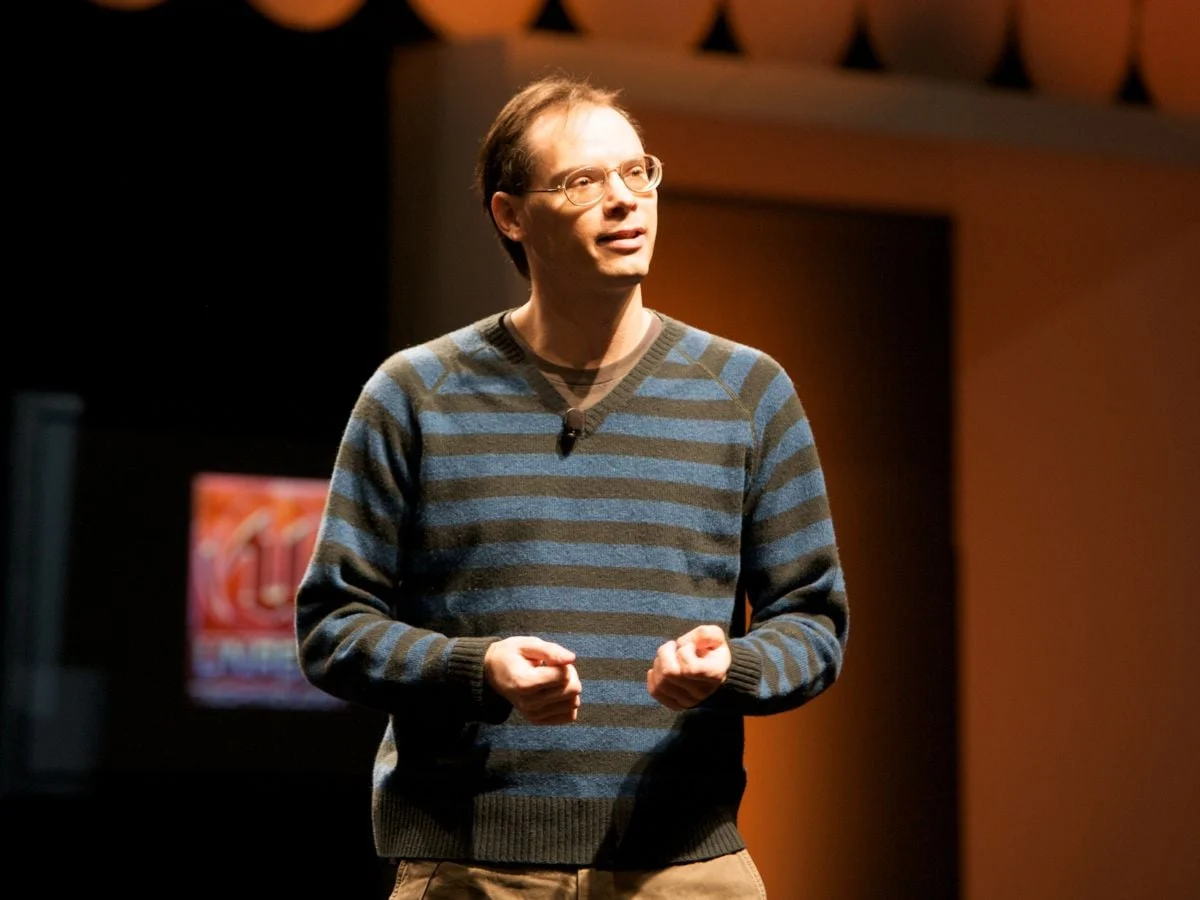
At the 2026 Unreal Fest in Chicago, Epic Games CEO Tim Sweeney stepped onto the stage not merely as a software executive, but as an architect of a new industry paradigm. With the official unveiling of Unreal Engine 6, Sweeney signaled a pivot for the gaming industry—one that pits his vision of an "open" ecosystem against the monolithic, centralized "walled gardens" that have increasingly defined the digital landscape. As the traditional AAA development model shows signs of structural collapse, Sweeney is positioning Epic Games as the primary alternative to industry giants like Roblox, leveraging the power of generative AI to rewrite the rules of game development.
The Crisis of the AAA Model
Sweeney’s keynote addressed a looming "tidal wave" currently crashing over the AAA game industry. For decades, the industry has relied on a model of escalating budgets and high-fidelity production values. However, as Sweeney pointed out, the economics of this approach are becoming increasingly untenable.
"We’re often seeing hundreds of millions of dollars in development costs followed by tens of millions in revenue," Sweeney observed during his address. "The development costs keep rising, and it feels like a tidal wave is sweeping over the AAA game business."
This financial strain has forced many studios into a cycle of layoffs and project cancellations, including Epic’s own internal restructuring, which saw the company shed 1,000 employees last year. Yet, Sweeney remains optimistic about the shift in consumer behavior. He argues that the industry is undergoing a fundamental transformation: the economy of gaming is moving away from the point-of-sale purchase and toward micro-transactions and in-game ecosystem participation. Whether the core gaming audience welcomes this shift or not, Sweeney believes it is an economic inevitability.
The Rise of the "Walled Garden" Threat
The central tension in Sweeney’s vision is the competition for user attention. While traditional studios are struggling with budgets, platforms like Roblox have surged, effectively "eating" the gaming market by centralizing content creation.
"One view of the future is that Roblox grows and eats gaming," Sweeney warned. "A lot of people are saying this online. What you have there is a centralized platform with a game keeper that takes more than 70 percent of revenue and has 450 million users on board. So that’s a real challenge to game developers."
Sweeney’s critique of Roblox is consistent with his long-standing battle against platform gatekeepers—a fight he has waged publicly against Apple and Google in the courts. His fear is that if gaming becomes entirely subsumed by centralized platforms that act as both the publisher and the toll booth, the creative autonomy of independent developers will vanish. To counter this, Sweeney is proposing "Team Open," a collaborative, decentralized ecosystem where developers retain ownership and control, powered by the technical ubiquity of Unreal Engine 6.

Unreal Engine 6: The AI-Powered Renaissance
The technical backbone of this resistance is Unreal Engine 6 (UE6). Unlike its predecessors, which focused primarily on lighting, physics, and rendering, UE6 is explicitly designed to integrate Large Language Models (LLMs) and generative AI as a core component of the development workflow.
"For UE6, we see LLMs, generative AI models, and tools like Claude and Codex playing a central role in helping you build content faster while maintaining the creative control you need," Sweeney explained.
This integration is aimed at solving the "manual labor" bottleneck that currently plagues AAA development. Marcus Wassmer, the Unreal Engine development lead, elaborated on the vision during a technical breakdown: "AI-assisted game creation will tighten iteration loops and reduce time-consuming manual setup of levels, character rigs, particle systems, skinning, bone weights, and adjusting lighting. All the manual work required to translate professional creative intent into interactive, performant, and cross-platform games is being overhauled."
By automating the mundane, repetitive tasks of game development, Epic believes it can allow smaller teams to achieve the output and scale of massive studios. However, this shift is not without controversy.
The Friction of AI Integration
The announcement of AI-heavy integration in UE6 has been met with skepticism from a gaming community that remains deeply wary of artificial intelligence. In recent years, public sentiment against AI in creative fields has hardened, with many gamers fearing that the technology will lead to a decline in artistic quality, the replacement of human jobs, and the dilution of the creative "soul" of their favorite titles.
Sweeney and his team are acutely aware of this optics problem. Epic’s strategy involves framing AI not as a replacement for developers, but as a "force multiplier" that keeps creative control in the hands of the human lead. Yet, whether the consumer base will accept a transition toward AI-generated assets remains an open question. If the goal of UE6 is to compete with the "instant gratification" of platforms like Roblox, Epic must walk a fine line between efficiency and the perceived "devaluation" of game artistry.
Supporting Data and Industry Context
The urgency behind Sweeney’s message is supported by current industry data. 2026 has been a year of record-breaking layoffs and studio closures across the sector, even as player engagement remains at an all-time high.

- Development Costs: Average AAA development cycles have extended from 3–4 years to 6–8 years, often costing upwards of $300 million.
- Revenue Models: Live-service games, which were once seen as a gold mine, are experiencing a decline in retention as the market becomes saturated with "attention-hungry" titles.
- Platform Dominance: Roblox, with its 450 million monthly active users, consistently outperforms traditional standalone releases in terms of daily active user (DAU) retention, primarily because it is an ecosystem rather than a product.
Sweeney’s strategy is to turn Unreal Engine 6 into the "operating system" for the next generation of games, effectively creating a decentralized network of high-quality experiences that can compete with the reach of Roblox without the restrictive 70% commission rates.
Implications: The Future of "Team Open"
The implications of Sweeney’s pitch are profound. If successful, Epic Games will move from being a "game developer that makes an engine" to being the "infrastructure provider for the next iteration of the internet."
By providing developers with the tools to generate complex worlds, animations, and systems in a fraction of the time, Epic is betting that it can lower the barrier to entry for high-fidelity games, thereby democratizing the "AAA" experience.
However, the strategy is not without its risks. The success of "Team Open" depends on whether developers are willing to adopt a unified, AI-integrated workflow and whether players are willing to accept the output of such a system. The battle, as Sweeney describes it, is not just about technology—it is a battle for the "future of gaming" itself.
As we look toward the late 2020s, the path forward for the industry appears to be splitting into two distinct directions: the centralized, closed-loop platforms where the platform owner dictates the rules, and the "open" ecosystem where Epic hopes to provide the tools for individual creators to build their own empires.
Whether this vision results in a new golden age of independent development or a homogenized landscape of AI-generated content remains to be seen. What is clear is that Tim Sweeney has drawn his line in the sand. With Unreal Engine 6, the tools of the future are being placed into the hands of the creators—but the industry will have to decide if it is ready to use them.


 Sagoh
Sagoh
 Ammar Sabilarrohman