Azzam Bilal Chamdy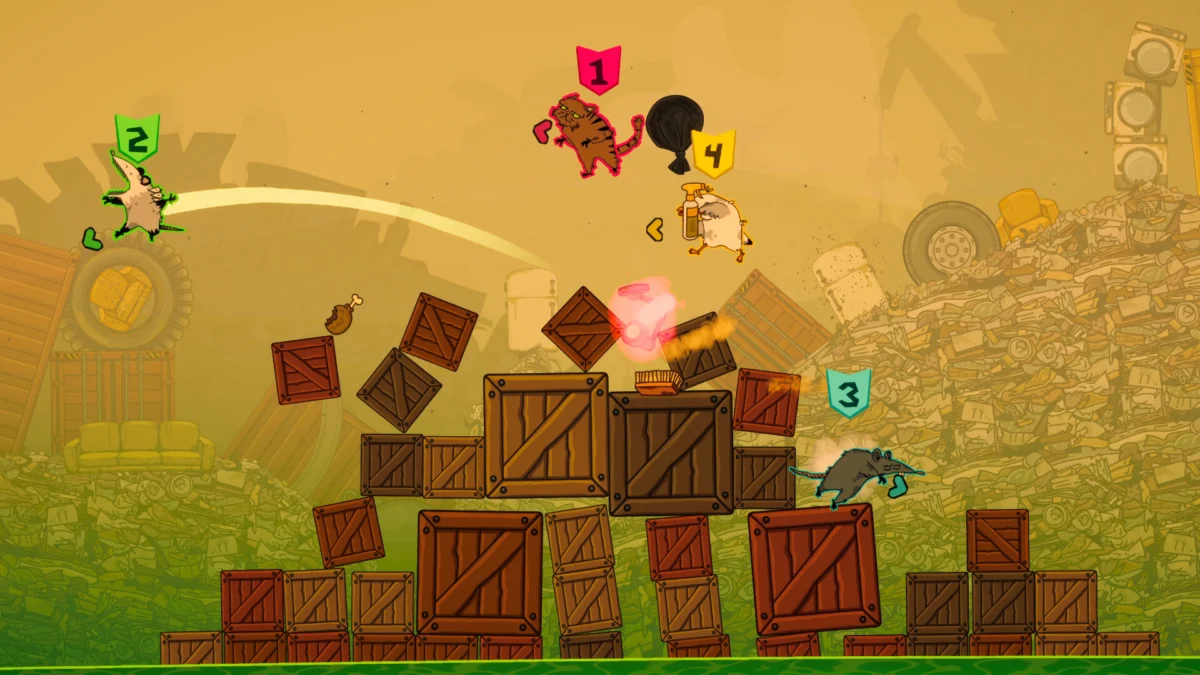
In the ever-expanding landscape of indie party brawlers, few titles manage to strike the delicate balance between accessible fun and absolute, screen-shaking bedlam. Royal Vermin, the latest title to grace the genre, is a testament to the idea that sometimes, the best competitive experiences are the ones that don’t take themselves too seriously. By blending the strategic environmental destruction of Worms, the frantic platforming of Super Smash Bros., and the unpredictable, physics-defying slapstick of modern indie hits, Royal Vermin has carved out a unique space for itself as the quintessential "one more round" game for your next social gathering.
The Core Concept: When Physics Becomes Your Greatest Rival
At its heart, Royal Vermin is simple to understand but delightfully difficult to master. Players control a troupe of goofy, expressive critters tasked with surviving within arenas that are actively disintegrating around them. The premise is as thin as it is effective: be the last creature standing as the world crumbles beneath your feet.
The genius of the game lies in its approach to environmental interaction. Unlike traditional brawlers where the stage is merely a backdrop for combat, the stages in Royal Vermin are active, hostile participants. A well-placed throw or a heavy impact doesn’t just damage an opponent; it can trigger a cascading failure of the level’s geometry. You might find yourself standing on a seemingly stable platform, only to watch it tilt, crumble, or plummet into the abyss because your opponent decided to drop a heavy object on the other side of the map.
Accessibility Meets Escalating Intensity
For newcomers, the control scheme is refreshingly intuitive. There are no complex move lists to memorize or frame-perfect combos to practice. You move, you jump, and you interact with the environment. This low barrier to entry ensures that everyone at the couch—from the seasoned gamer to the casual friend—can pick up a controller and feel like they have a fighting chance. However, as the round progresses, the intensity scales. Platforms disappear, hazards activate, and the screen becomes a whirlwind of falling debris and panicked scurrying.
Chronology of the Gameplay Experience
To understand why Royal Vermin resonates, one must look at the standard lifecycle of a single match.
- The Calm Before the Storm: Every round begins with a moment of relative peace. Players take their positions, gauging the layout and identifying the most stable ground. It’s a moment of tactical assessment, albeit brief.
- The Initial Skirmish: As soon as the first projectile is thrown, the "wonky physics" engine takes over. The game shifts from a platformer to a slapstick disaster simulator. Players begin to trade blows, but the real enemy is the architecture.
- The Crumbling Phase: As the timer ticks down or the damage threshold is met, the arena enters its most dangerous state. This is where the game’s "chaotic charm" truly shines. Platforms fall, hazards spawn, and the margin for error shrinks to near zero.
- The Final Scramble: The last few seconds are usually marked by frantic jumping and desperate attempts to remain on the shrinking landmass. Even players who have already been eliminated remain part of the experience, often shouting directions or cheering on the inevitable disaster.
- The Post-Match Reflection: Victory is rewarding, but the highlights are rarely about the win. Instead, players find themselves laughing at the ridiculous chain reactions—the moment where a stray piece of floor caused a player to fly off-screen in an impossible arc.
Supporting Data: The Anatomy of a Party Game
While Royal Vermin isn’t aiming to be the next Evo Championship Series mainstay, its design choices are grounded in solid, proven gaming principles.

The Balancing Act of Randomness
One might argue that the high level of randomness—the "luck-based" outcomes—detracts from the competitive integrity of the game. However, in the context of a party brawler, this is a feature, not a bug. By injecting a high degree of entropy into every match, the developers ensure that no single player can dominate the room indefinitely. It levels the playing field, allowing for "upset" victories that generate the kind of genuine, high-volume laughter that defines a successful couch co-op experience.
Inclusive Difficulty Scaling
The inclusion of adjustable difficulty settings is a sophisticated touch. By allowing hosts to tweak the environmental volatility, the game can be tailored to the specific skill level of the group. If you are playing with younger players or friends who aren’t familiar with the genre, dialing down the environmental destruction creates a more controlled experience. If you are playing with a group of veterans, cranking up the chaos ensures that even the best players are kept on their toes.
Official Perspectives and Industry Positioning
While the developers have remained largely quiet on long-term post-launch support, the initial reception from the community has been one of warm appreciation. Industry critics, such as Marcus Orchard of Sequential Planet, have noted that while the game lacks the "robust online matchmaking" and "deep solo content" found in massive, AAA titles, it succeeds precisely because it knows exactly what it is.
The game is not attempting to be an esports titan. It is not trying to compete with the deep, technical mechanics of Street Fighter or the competitive longevity of Super Smash Bros. Melee. Instead, it serves as a "palate cleanser"—a title that bridges the gap between longer, more serious gaming sessions. Its cartoonish art style, coupled with fluid, expressive animations, creates a visual language that is instantly readable, even when the screen is filled with four players and collapsing terrain.
Implications: The Future of the "Micro-Brawler"
The success of Royal Vermin highlights a growing trend in the indie sector: the "micro-brawler." These are games that favor atmosphere, local multiplayer camaraderie, and short, repeatable bursts of gameplay over sprawling narrative arcs or complex progression systems.
The Shift Toward Local-First Design
In an era dominated by globalized, always-online service games, Royal Vermin serves as a reminder of the enduring power of local multiplayer. The "couch co-op" genre, once thought to be dying, has seen a massive resurgence thanks to titles that prioritize social interaction. Royal Vermin thrives in the physical space of a living room, where the social dynamics—the trash talk, the frantic button-mashing, the shared laughter—are as much a part of the game as the code running on the console.

The Limitations of the Genre
However, the game also serves as a cautionary tale for developers. By stripping away the "frills" of modern gaming (extensive online matchmaking, detailed lore, deep progression), the game inherently limits its audience. Players looking for a solo-player campaign or a competitive online ladder will likely find Royal Vermin lacking. It is a game that requires a specific environment to shine: a group of friends, a couch, and a shared willingness to embrace the absurdity of digital failure.
Conclusion: Is It Worth Your Time?
When evaluating Royal Vermin, one must consider the intended use case. If you are a solo gamer looking for a title to sink hundreds of hours into, you will likely find this game’s offerings thin. It is not a game designed for solitary play; it is a game designed for the living room.
For the target audience—friends and family looking for an accessible, hilarious, and visually charming way to spend an evening—Royal Vermin is an absolute triumph. It understands that the best party games are not the ones that reward the most skillful player, but the ones that create the most memorable, disaster-filled moments.
While it will not displace the titans of the genre, it occupies a comfortable and welcome niche. It is a game that reminds us that gaming, at its core, should be fun. It’s a chaotic, silly, and occasionally frustrating experience—and that is exactly why it belongs in your digital library. Whether you are a fan of physics-based puzzles or simply need a game that can get everyone laughing within five minutes of booting it up, Royal Vermin is well worth the investment. It’s a testament to the fact that sometimes, in the world of video games, the most satisfying victory is the one you barely survived.


 Sagoh
Sagoh
 Ammar Sabilarrohman