

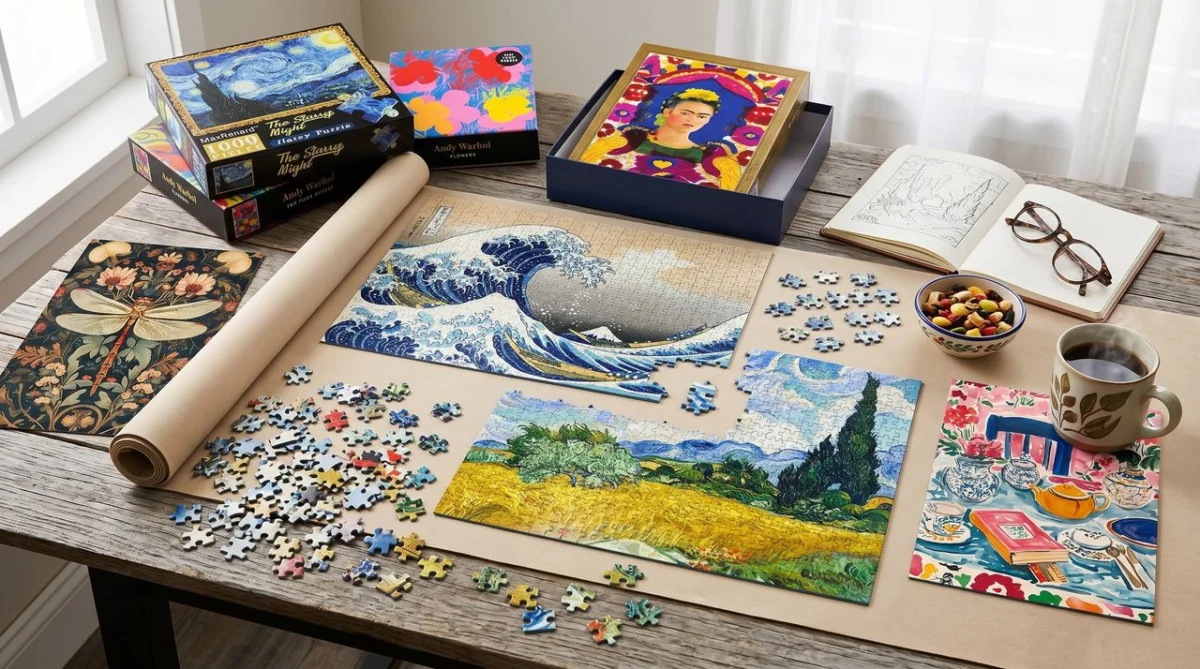
In an era defined by perpetual digital connectivity, the quiet, tactile allure of a jigsaw puzzle has staged a remarkable comeback. Moving beyond the stereotype of a dusty pastime for rainy afternoons, jigsaw puzzling has evolved into a sophisticated mindfulness practice for the modern creative. Whether it is the meditative repetition of color-matching or the intellectual stimulation of assembling complex imagery, puzzles offer a unique sanctuary for the brain.
This article explores the resurgence of the jigsaw puzzle, examines the psychological benefits of this analog activity, and provides a curated guide to the most visually compelling puzzles available for those looking to sharpen their focus and feed their creative spirit.
The Resurgence of Analog Mindfulness
For many professionals working in design, tech, and the creative arts, the "always-on" nature of modern work can lead to cognitive fatigue. Digital screens—while essential for output—are often sources of stress and sensory overload. Consequently, there has been a noticeable shift toward "analog hobbies" that require focus but provide a tangible, non-digital reward.
Jigsaw puzzles are the pinnacle of this movement. Unlike passive entertainment, such as binge-watching television, puzzling demands active engagement. It forces the practitioner to enter a state of "flow"—a psychological state where one is fully immersed in a task, losing track of time and external stressors.
The Science of the Piece
The act of puzzling engages both sides of the brain. The right hemisphere is responsible for identifying patterns, colors, and shapes, while the left hemisphere provides the logical, analytical framework to piece them together. This cross-brain stimulation is not only mentally satisfying but has been linked to improved problem-solving skills and long-term cognitive health.
Chronology: From 18th Century Maps to Modern Art Pieces
The history of the jigsaw puzzle is as layered as the pieces themselves. Understanding its evolution highlights why it has remained a staple of human recreation for centuries.
- 1760s – The Educational Origins: The first jigsaw puzzle is attributed to John Spilsbury, a London mapmaker. He glued maps onto wood and cut them into pieces to help children learn geography.
- 1900s – The Great Depression Boom: During the economic hardship of the 1930s, puzzles became a primary source of affordable home entertainment. Manufacturers began producing puzzles as giveaways with products, solidifying their place in popular culture.
- 1960s–1980s – The Rise of Complexity: As manufacturing techniques improved, die-cut technology allowed for more intricate shapes and larger piece counts, moving puzzles from "children’s toys" to "adult pastimes."
- 2020s – The Digital-Detox Renaissance: The global pandemic acted as a massive catalyst for the industry. As people spent more time at home, the demand for high-quality, art-focused puzzles surged, leading to a "golden age" of puzzle design where contemporary artists are now commissioned to create original works specifically for the format.
Supporting Data: Why Creatives Choose Puzzles
Recent market trends and psychological surveys indicate that the demographic for jigsaw puzzles has skewed younger and more professional over the past five years.
Cognitive Benefits
- Increased Dopamine Production: The completion of a section of a puzzle releases small amounts of dopamine, the neurotransmitter associated with reward and pleasure.
- Improved Short-Term Memory: Puzzlers frequently report an improved ability to remember shapes and colors, which correlates to better focus during high-intensity creative work.
- Stress Reduction: Studies have shown that repetitive, low-stakes activities like sorting pieces can lower heart rates and reduce cortisol levels.
The "Arty" Appeal
The current market shift focuses on high-aesthetic value. Brands such as Galison and Graphinee have moved away from generic landscapes and toward abstract art, mid-century modern patterns, and tributes to iconic figures like Frida Kahlo. For a designer, a puzzle featuring a complex color gradient or an intricate illustration serves as a study in composition and color theory.
Curated Selections: Puzzles for the Discerning Eye
For those looking to trade their monitors for a tabletop challenge, the following selections represent the pinnacle of current puzzle design.
The Masterclass: Fine Art Reproductions
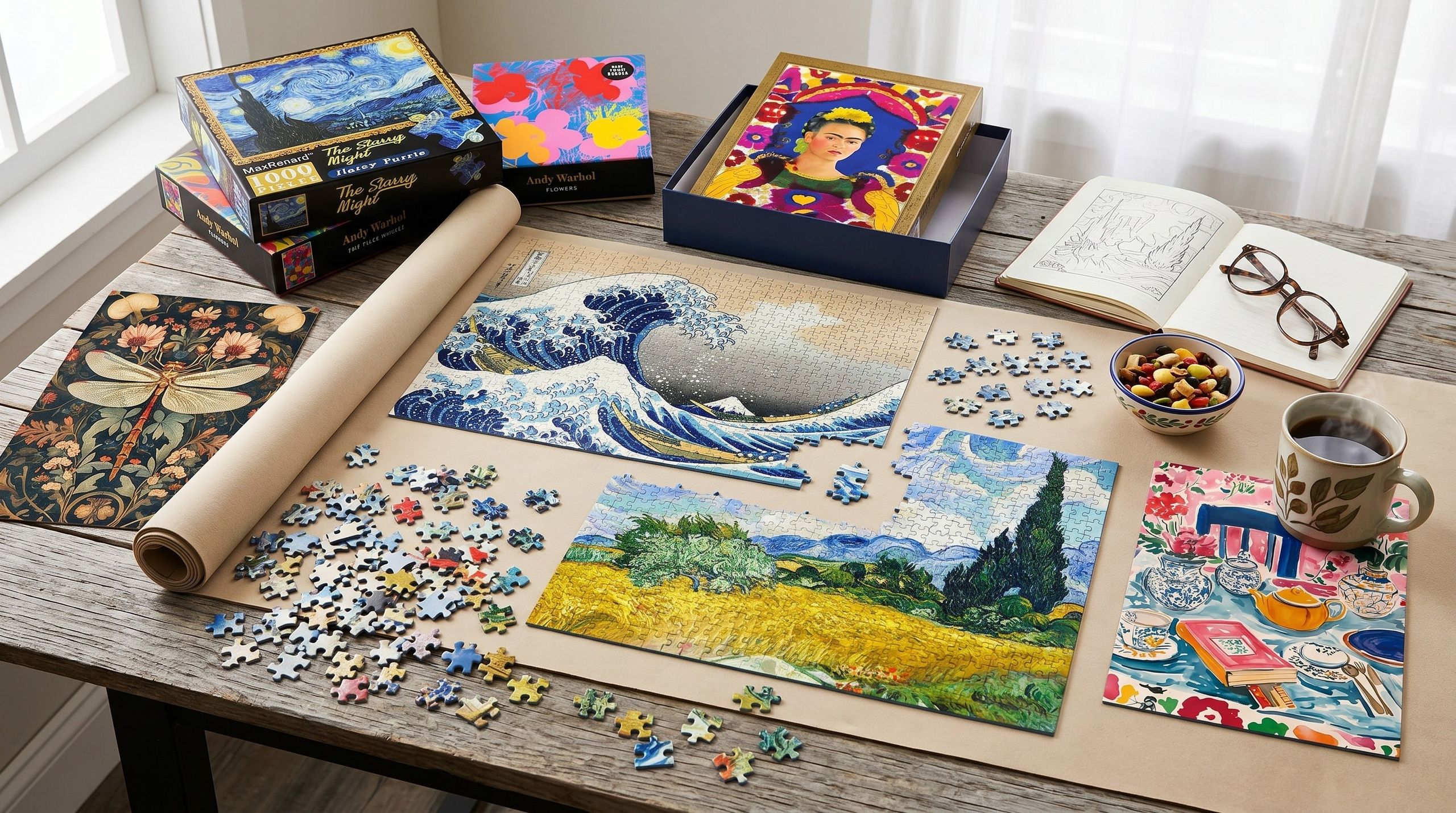
For those who appreciate the history of art, brands like EuroGraphic offer museum-quality reproductions. Tackling a 1,000-piece puzzle of a classic masterpiece—such as Van Gogh’s Starry Night—is a lesson in brushstroke and technique. It requires immense patience and an eye for subtle color shifts.
The Abstract Challenge: Contemporary Design
Graphinee and MaxRenard are leading the charge in modern, abstract puzzles. These are particularly popular with creative professionals because they lack the "easy" visual cues of a horizon line or a central subject. Instead, they force the brain to rely on geometry and pattern recognition.
The Cultural Icon: Frida Kahlo and Beyond
As noted by editorial teams at Creative Bloq, puzzles featuring cultural icons are not merely decorative; they are often deceptively difficult. A puzzle featuring a portrait—like those of Frida Kahlo—presents the challenge of matching skin tones and intricate floral details. These are often considered "expert level" because the human eye is highly sensitive to errors in facial features, making the process of assembly both frustrating and immensely rewarding.
Official Industry Perspective: The Future of Play
Industry experts and manufacturers agree that the "puzzle space" is no longer just about killing time. It is becoming a design category in its own right.
"We are seeing a move toward sustainable materials, such as recycled greyboard and soy-based inks," says a spokesperson for a leading puzzle distributor. "The modern puzzler is not just looking for a challenge; they are looking for a physical object that reflects their personal aesthetic and values. When a puzzle is finished, it’s no longer shoved back in the box—it’s framed and displayed as art."
This sentiment is echoed by the rising trend of "puzzle clubs," where enthusiasts trade high-end puzzles, emphasizing the community aspect of what was traditionally a solitary activity.
Implications: The Necessary Disconnect
The implications of the puzzle trend are clear: we are entering a phase of "intentional analog living." As Artificial Intelligence and screen-based interfaces take over more of the professional creative process, the human need to manipulate physical objects—to feel the texture of cardboard, to hear the "click" of a piece locking into place—is becoming a vital component of mental health.
How to Integrate Puzzling into Your Routine
- The Evening Ritual: Swap the last hour of "doom-scrolling" before bed with 30 minutes of puzzle assembly. The lack of blue light aids in sleep hygiene.
- The Collaborative Workspace: If you are part of a design team, a puzzle left out in a common area serves as a "frictionless" collaborative tool. It invites team members to stop, chat, and solve a problem together without the pressure of a meeting agenda.
- The Creative Warm-up: Treat a 500-piece puzzle as a "warm-up" for your brain. Much like a warm-up sketch, it gets the visual cortex firing before you dive into complex software or project management tasks.
Conclusion
Whether you are a seasoned illustrator, a UI/UX designer, or simply someone looking to quiet a busy mind, the jigsaw puzzle offers a rare commodity: clarity. By engaging with these physical puzzles, we don’t just distract ourselves from the digital world; we equip ourselves to return to it with renewed focus, sharpened visual acuity, and a deeper sense of patience.
If you are looking for further ways to keep your hands busy and your mind sharp, consider exploring our guides on fidget toys for the workspace or our list of board games designed for creative thinkers. In the quiet pursuit of the missing piece, you may find exactly what you were looking for.










No comments yet. Be the first to join the conversation!