

The golden age of documentary and unscripted storytelling has ushered in an era of unprecedented intimacy. Audiences are no longer satisfied with mere surface-level observation; they demand the raw, unvarnished truth of the human experience. However, the crux of any compelling non-fiction series hinges on a fragile, often elusive element: the subject’s willingness to be vulnerable.
For the visionaries behind some of Netflix’s most acclaimed unscripted projects, achieving this level of candor is the primary hurdle. Whether investigating the dark corners of a disgraced music empire or exploring the quiet, poignant reality of life on the autism spectrum, the challenge remains consistent: how do you convince someone to lower their defenses in front of a camera?
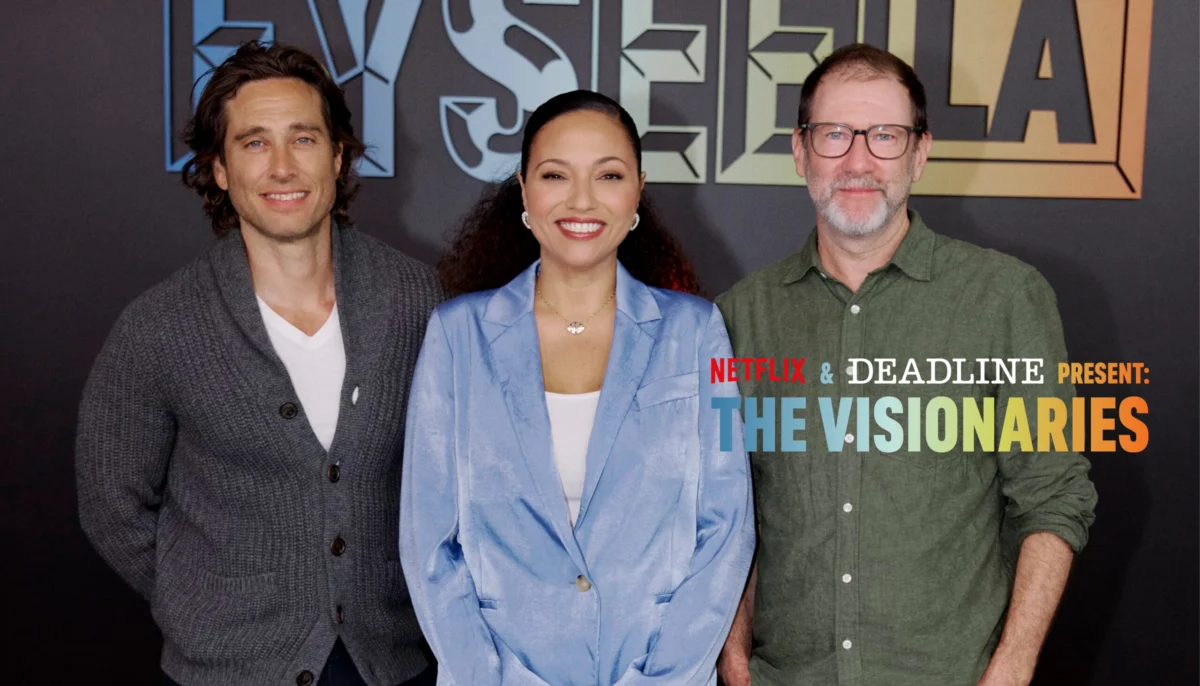
During the Netflix & Deadline Present: The Visionaries panel, industry heavyweights—including Alexandria Stapleton (Sean Combs: The Reckoning), Brad Falchuk (Famous Last Words), and Cian O’Clery (Love on the Spectrum)—pulled back the curtain on the delicate, time-intensive, and deeply human process of building trust in the age of the streaming giant.
The Weight of Silence: Approaching High-Stakes Subjects
For Alexandria Stapleton, director of the explosive four-part series Sean Combs: The Reckoning, the challenge of production was compounded by the gravity of the allegations surrounding the Bad Boy Records founder. The subjects in her series were not merely interviewees; they were individuals who had spent years in the shadows of a powerful industry figure.
“Trust was a very big deal,” Stapleton stated during the panel. “It took a lot of off-the-record conversations… a lot of just listening. Most of the people I interviewed for this had spent so much of their life being outcasts. After they had a falling out with Sean, they were siloed. They were silenced, and they really felt like they were alone.”
The 12-Hour Investment
Stapleton’s methodology challenged traditional broadcast timelines. Rather than rushing through a standard two-hour interview, she opted for sessions that lasted up to 12 hours. This was not about exhaustion; it was about safety. By providing an environment where the clock wasn’t ticking, Stapleton allowed her subjects to process their trauma at their own pace.

“I very much believe that trauma is not necessarily a story,” Stapleton explained. “A lot of other people talking about what was going on just wanted to focus on the worst possible events and not build out anything else. For me, context is everything. I wanted them to understand that, as a victim, let’s understand what was great about him, what was great about this world, what did you want, what were you excited about? I think most people felt that that was freeing.”
Mortality and Memory: The Unique Challenge of Famous Last Words
While Stapleton works to unearth the hidden truths of the past, creator and producer Brad Falchuk faces a uniquely existential challenge with his series Famous Last Words. The project asks its subjects to contemplate a topic most spend a lifetime avoiding: their own death.
The series is built on a foundation of profound secrecy. Netflix has already released poignant, pre-recorded conversations with individuals like Eric Dane and Jane Goodall, but only after their passing. The list of other participants remains a closely guarded secret, known only to the production team.
Establishing an Existential Safe Space
For Falchuk, the “ask” is inherently intimate. The success of the project relies on selecting the right guest—someone with the intellectual and emotional fortitude to confront their mortality head-on.
“The biggest thing, obviously, is to get the right guest who is really up for that particular adventure,” Falchuk said. “It’s about knowing them really well and them being game for it, and then creating a very, very safe space for them where they know they can say anything, and they won’t be judged. There’s nothing to worry about.”
Falchuk emphasizes that the secrecy is not a gimmick; it is a vital component of the trust-building process. By ensuring that the interview remains private until the subject is gone, the production removes the pressure of public perception, allowing for a level of honesty that would be impossible in a traditional talk-show format.

The Collaborative Lens: Authenticity in Love on the Spectrum
Cian O’Clery, the director and producer behind the heartwarming and insightful Love on the Spectrum, approaches his subjects with a different philosophy: the “tiny team” model. For O’Clery, the goal is to minimize the presence of the production so that the reality of the subjects’ dating lives can shine through without the intrusion of a massive film crew.
The Human-First Approach
“We only do one interview, really, with our cast, right at the beginning,” O’Clery noted. “It’s the only time we bring lights into someone’s house. Otherwise, we’re just a tiny team… shooting in a way that hopefully captures things in a very honest and truthful way.”
O’Clery’s success lies in his rejection of the "untouchable" production hierarchy. Before a single camera is set up, he builds a rapport by visiting subjects in their homes, meeting their families, and establishing a collaborative partnership.
“I think it’s just how we approach everything,” he said. “It’s very much like, we’re in this together. It’s never like we’re this untouchable TV production that is going to sign them up to be part of this thing. We are always collaborative.”
Supporting Data: Why Trust Drives Engagement
The industry’s shift toward these highly personalized, trust-based production models is not merely an artistic choice; it is a data-driven response to audience behavior.
- Viewer Retention: Studies on long-form documentary consumption indicate that viewers are more likely to complete a series when they feel a parasocial bond with the subjects.
- Authenticity Metrics: Social media discourse, which serves as a primary metric for Netflix’s success, heavily favors content perceived as “authentic” rather than “staged.”
- Subject Longevity: When subjects feel protected and respected by the production, they are more likely to participate in follow-up seasons or promotional cycles, which significantly lowers acquisition costs for the studio.
The Implications of the "Visionary" Approach
The insights shared by Stapleton, Falchuk, and O’Clery suggest a seismic shift in the power dynamics of unscripted television.

Ethical Responsibility
As producers increasingly delve into trauma, mortality, and the nuances of neurodivergence, the burden of care has never been higher. The 12-hour interview sessions and the pre-death reflection protocols are not just production techniques; they are ethical safeguards. Producers are no longer just content creators; they are temporary custodians of their subjects’ personal histories.
The Future of Unscripted
As technology advances and the appetite for "real" content continues to grow, the industry will likely see a split between high-octane reality television and this new, "Slow TV" movement—a genre defined by deep listening, long-term commitment, and the pursuit of truth over spectacle.
The success of these Netflix series proves that when creators prioritize the dignity of their subjects, the audience responds in kind. By creating a safe harbor for the truth, these directors have transformed the act of interviewing into an act of empathy. In a world of noise, the most revolutionary thing a producer can do is simply, quietly, listen.
Conclusion
The Netflix & Deadline Present: The Visionaries panel highlighted a fundamental truth about modern storytelling: the medium is secondary to the connection. Whether the subject is speaking from a place of historical trauma, preparing for the end of life, or navigating the complexities of romance, the success of the narrative is entirely dependent on the level of trust established between the storyteller and the subject.
As Alexandria Stapleton, Brad Falchuk, and Cian O’Clery demonstrate, the future of the unscripted genre is not found in bigger cameras, faster edits, or more dramatic music. It is found in the patience to wait for the truth, the bravery to ask the hard questions, and the empathy to recognize that every person—regardless of their story—deserves to be heard with compassion and integrity.
As we look toward the future of streaming, these creators provide a blueprint for what a responsible, human-centric production model looks like. It is a slow, difficult, and sometimes painful process, but as the reception to their work has proven, it is the only way to capture the authentic human experience in all its complexity.











No comments yet. Be the first to join the conversation!