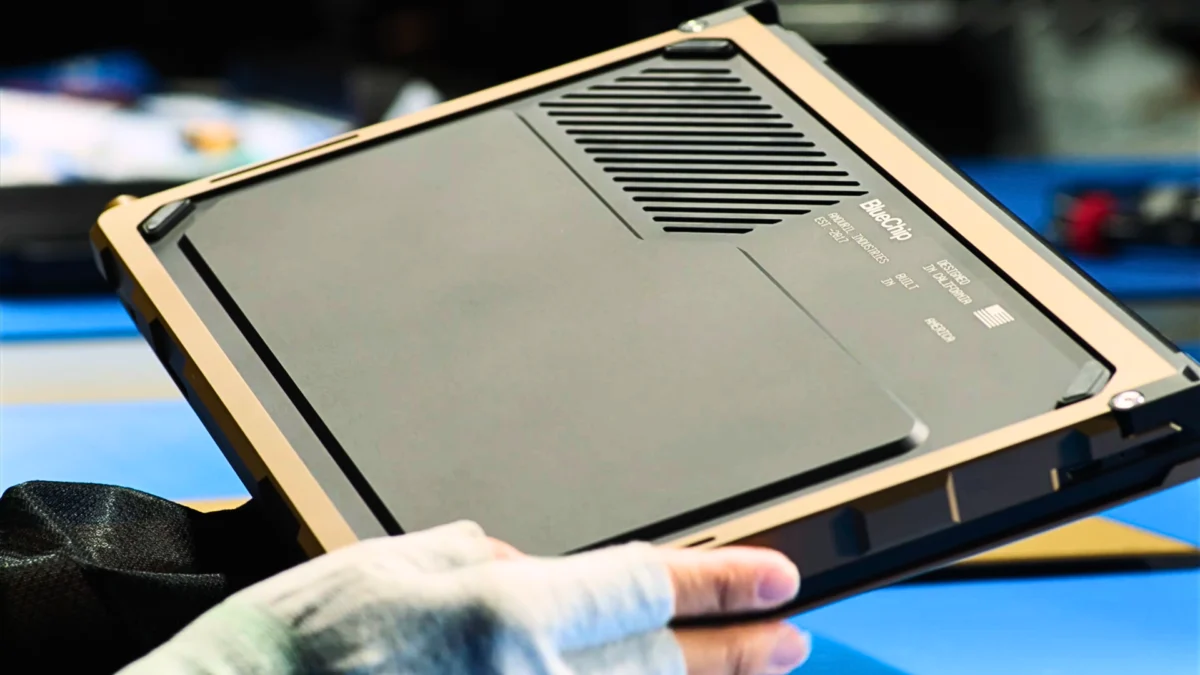
In a significant pivot for the defense technology sector, Anduril Industries—a company best known for its autonomous drones, underwater vehicles, and advanced surveillance systems—has announced a strategic entry into the hardware manufacturing market. The company recently unveiled "BlueChip," a new product line of high-performance laptops designed and assembled within the United States. This move represents more than a simple product launch; it is a calculated effort to insulate the American defense and industrial base from the vulnerabilities of globalized supply chains.
By leveraging Qualcomm’s Snapdragon X Series System-on-a-Chip (SoC) technology, Anduril aims to marry cutting-edge processing power with a mission-critical manufacturing standard. As geopolitical tensions rise and the fragility of international semiconductor dependencies becomes increasingly apparent, Anduril’s entry into the laptop space signals a broader industrial policy shift, aiming to reclaim the domestic production of essential computing hardware.
Main Facts: What is BlueChip?
The BlueChip initiative is Anduril’s answer to the "trusted computing" challenge. At its core, the project seeks to establish a resilient, secure, and domestic supply chain for high-performance mobile computing.
- The Hardware: The laptops will be powered by Qualcomm’s Snapdragon X Series processors, which provide the high-efficiency, high-performance architecture necessary for modern computational tasks, including edge AI and real-time data processing.
- The Supply Chain: Currently, Anduril has achieved a milestone where 90% of the procurement cost for components is derived from suppliers within the United States or from trusted allied nations. This is a critical metric for a defense contractor, as it reduces the risk of foreign interference, hardware "backdoors," or catastrophic supply chain disruptions.
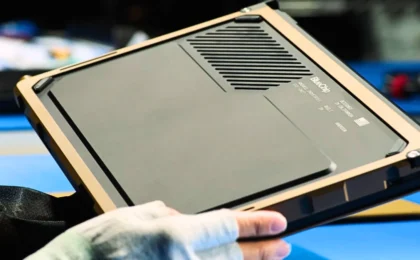
- The Roadmap: Anduril has confirmed that functional prototypes are already in existence and undergoing testing. The company is currently targeting 2027 for the official launch and commercial availability of the product line.
- The Goal: The ultimate objective is to achieve a fully domestic, "end-to-end" supply chain. By keeping design, sourcing, and assembly on U.S. soil, Anduril intends to create a product that meets the stringent security requirements of the Department of Defense (DoD) and other high-security private sector entities.
Chronology of Development
The path to BlueChip did not begin in a vacuum. It is the culmination of years of scrutiny regarding the American defense industrial base.
The Initial Assessment (2020–2022)
Following the global supply chain crises brought on by the COVID-19 pandemic, Anduril’s leadership, including founder Palmer Luckey, began identifying critical bottlenecks in defense procurement. They recognized that while software and autonomous platforms were being built in the U.S., the underlying silicon and hardware components were overwhelmingly reliant on long-distance, politically sensitive logistics routes.
Strategic Partnership Formation (2023)
Anduril entered into high-level discussions with Qualcomm Technologies. The goal was to find a computing architecture that could offer performance parity with existing market leaders while allowing for the rigorous auditing processes required by U.S. government contracts. The choice of the Snapdragon X series was strategic, offering a transition to ARM-based computing that is increasingly favored for its power efficiency and integration capabilities.
Prototype Development (2024)
Throughout the current year, Anduril’s engineering teams have been focused on "ruggedizing" the platform. The focus has not just been on the aesthetic or user experience, but on the physical integrity of the circuit boards, the security of the firmware, and the provenance of every sub-component—from capacitors to cooling systems.
The Public Unveiling (2024–2027)
With the recent announcement, Anduril has moved from stealth development to public accountability. The next three years will be defined by rigorous testing, the scaling of manufacturing facilities, and the finalization of the supply chain infrastructure required to meet the 2027 launch window.
Supporting Data: The Case for Reshoring
The economic and strategic necessity for BlueChip is rooted in several layers of data. For decades, the trend in the tech industry has been "offshoring for efficiency." However, that era is ending as the "risk premium" of globalized manufacturing rises.
The 90% Threshold
The current 90% procurement cost metric is a vital statistic. In modern electronics, the most expensive components are the SoC, the memory modules, the storage controllers, and the display panels. By securing these from the U.S. and key allies, Anduril is effectively insulating its hardware from the "choke points" often exploited by geopolitical rivals.
Performance Metrics
The Snapdragon X Series is not merely a consumer-grade chip; it is a high-performance architecture capable of handling complex AI workloads. This is crucial for Anduril’s mission. Defense laptops of the future will not just be for word processing; they will be the command-and-control centers for drone swarms, satellite data analysis, and predictive maintenance in the field. The efficiency of the Snapdragon X architecture allows for longer battery life and reduced thermal throttling, two factors that are life-or-death in combat environments.
The Supply Chain Vulnerability Index
Industry reports consistently suggest that over 75% of global semiconductor manufacturing and assembly capacity is concentrated in East Asia. Any disruption in this region—whether due to natural disasters or geopolitical conflict—would effectively halt the production of standard laptops. Anduril’s data suggests that by localizing production, they can reduce lead times by up to 40% for government clients, despite the higher initial cost of domestic labor and materials.
Official Responses and Industry Outlook
The announcement has been met with a mix of cautious optimism and intense interest from both the private sector and the defense establishment.
From Anduril’s Leadership:
"We are rebuilding the American computer manufacturing capability," the company stated in its official press release. Anduril emphasizes that this is not a venture meant to compete with consumer laptop brands like Apple or Dell in the retail space. Rather, it is a mission to provide the "gold standard" for hardware that simply cannot be allowed to fail.
From Industry Analysts:
Market analysts note that Anduril is entering a space traditionally dominated by firms like Dell (with its Rugged line) and Panasonic (with its Toughbook series). However, these analysts suggest that Anduril has a unique advantage: they are already a trusted contractor for the Pentagon. The "friction" to adopting a new hardware platform is significantly lower for Anduril than for a consumer company trying to break into the defense market.
From Qualcomm:
Qualcomm has positioned this partnership as a testament to the versatility of its Snapdragon architecture. By powering the BlueChip line, Qualcomm is signaling that its chips are no longer just for smartphones or standard ultra-portables; they are ready for the rigorous demands of national security applications.
Implications: The Future of Sovereign Tech
The implications of Anduril’s BlueChip project are profound, signaling a potential shift in how the U.S. government approaches hardware procurement.
1. The Rise of "Sovereign Computing"
The era of blind trust in global supply chains is likely coming to an end. BlueChip serves as a proof-of-concept for "Sovereign Computing"—the idea that a nation-state must have the capacity to build its own essential computing devices from the ground up to ensure they are free from surveillance or malicious hardware modifications.
2. Economic Reindustrialization
If successful, Anduril’s model could provide a blueprint for other defense contractors. By demonstrating that high-tech manufacturing can be brought back to the U.S. at a competitive scale, Anduril may catalyze a revival in domestic electronics manufacturing, potentially spurring further investment in U.S.-based semiconductor packaging and assembly plants.
3. A New Standard for Defense Hardware
Current defense laptops are often criticized for being "legacy" machines—underpowered, heavy, and outdated. Anduril is attempting to change this narrative. By using the same high-performance architecture found in the latest AI-enabled laptops, they are ensuring that military personnel have access to the same technological advantages as the civilian sector, but with a security-first architecture.
4. Geopolitical Signaling
The 2027 launch date is not coincidental. It aligns with broader geopolitical timelines and the DoD’s modernization goals for the late 2020s. By making this announcement, Anduril is signaling to global adversaries that the U.S. industrial base is not as vulnerable as it once was. It is a form of industrial deterrence.
Conclusion
Anduril Industries’ move to produce the BlueChip line is an audacious project that sits at the intersection of national security and industrial policy. By prioritizing a 90% domestic/allied supply chain and utilizing the latest in SoC technology, the company is positioning itself to be the primary provider of secure, high-performance computing for the U.S. government.
While the 2027 launch is still several years away, the existence of functional prototypes suggests that Anduril is well on its way to turning this vision into reality. If the company succeeds, BlueChip will not just be a laptop; it will be a cornerstone of the next generation of American defense infrastructure—a device built with the knowledge that in an era of digital warfare, the security of the hardware is just as important as the security of the software. As the world watches, Anduril’s journey will serve as a bellwether for whether the U.S. can truly reclaim its manufacturing dominance in the most critical sector of the 21st century: computing.