

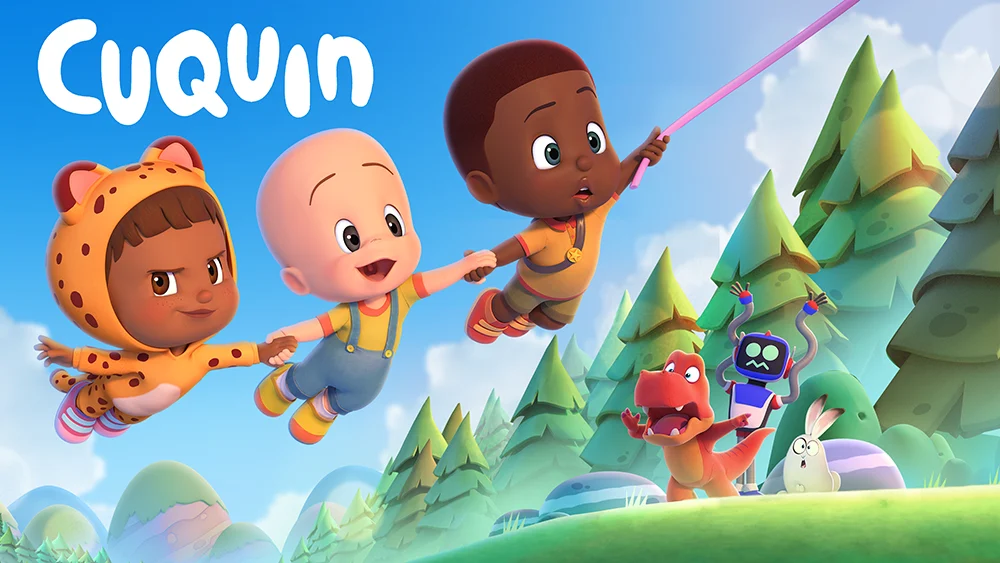
In a landmark move that signals the rapid maturation of the European animation landscape, global visual effects (VFX) titan DNEG has officially acquired the Las Palmas-based animation powerhouse, Anima Kitchent. The transaction, supported by a significant €24.9 million ($28.8 million) capital injection from the Spanish Society for Technological Transformation (SETT), marks a strategic pivot for both the Canary Islands’ creative sector and the global production ambitions of DNEG’s "ReDefine Originals" division.
This partnership is not merely a corporate acquisition; it is a state-backed venture intended to establish the Canary Islands as a primary global hub for high-end animation, production, and intellectual property (IP) development. By leveraging the combined expertise of a world-class VFX leader and a specialized, data-driven creative studio, the deal aims to scale operations, create hundreds of high-skilled jobs, and secure a dominant position in the international market.
The Financial Engine: Behind the Investment
The infusion of €24.9 million by SETT—a sovereign venture capital fund—is a cornerstone of the broader “Plan Spain Audiovisual Hub.” This initiative, which boasts a staggering €1.7 billion ($2 billion) budget, is a critical component of the European Union’s broader "Recuperation, Transformation and Resilience Plan."
The investment is designed to provide Anima Kitchent with the liquidity and infrastructure necessary to transition from a successful boutique studio into an industrial-scale creator of original, high-quality feature films and series. For DNEG, the move provides a bridgehead into the European market, allowing it to integrate Anima Kitchent’s unique IP-development methodology into its global VFX pipeline.
A Chronology of Growth: From Boutique to Powerhouse
Founded in 2017 in Las Palmas de Gran Canaria, Anima Kitchent began with a modest team of just 12 employees. Under the leadership of CEO Angel Molinero and operations manager Ariana Villalobos, the company adopted a radical, audience-first approach that defied traditional production models.
- 2017–2019: The Foundation Phase. The studio focused on establishing its creative identity, quickly identifying a niche in preschool entertainment.
- 2020–2022: The Digital Scaling. Anima Kitchent leaned heavily into digital-native platforms, specifically YouTube. By using real-time data to track viewer trends, they cultivated a massive online footprint. Successes like "Cleo & Cuquín," "Lea & Pop," and the Warner Bros. Discovery-backed "Cuquín" catapulted the studio to international recognition.
- 2023: The Strategic Expansion. The studio grew its headcount to 170 professionals, proving that the Canary Islands could support high-level, scalable production.
- 2024: The DNEG Acquisition. The formal partnership with DNEG and SETT was finalized, setting the stage for the next phase of growth: the creation of 275 additional jobs and the development of original long-form features.
The Canary Islands: A Strategic "Safe Harbor"
The Canary Islands have undergone a metamorphosis over the last six years. In 2018, the region boasted only a single production house; today, that number has swelled to over 30 active studios. This transformation is not accidental. It is the result of a deliberate policy effort to diversify the island economy—traditionally reliant on tourism and trade—into the high-value digital and creative sectors.
Regulatory and Tax Incentives
The region offers a unique "Special Zone" (ZEC) status, which provides a significantly reduced corporate income tax rate of 4% and a 7% VAT rate, compared to the 25% and 21% rates found on the Spanish mainland. Furthermore, the Canary Islands provide a robust tax credit system:
- Film/TV Expenditure Credits: 54%–45% on production expenditure.
- Per-Project Caps: €36 million ($41.8 million) per feature film and €18 million ($20.9 million) per TV episode.
These incentives have made the islands a magnet for global players. Companies like Fortiche (the studio behind the Netflix hit Arcane), Atlantis Animation (partnering on Sony-Disney projects), and Tomavision (which contributed to Space Jam: A New Legacy) have all established strongholds in the region. The recent entry of companies like Finland’s Gigglebug and the newly announced Surfing Giant—the production outfit behind Disney’s Hey A.J.!—confirms the region’s status as a top-tier destination for global animation.
Official Perspectives: Aligning Vision and Strategy
The significance of the Anima Kitchent deal extends beyond the balance sheets. For the Spanish government, this is a clear bet on the future of the digital economy.
"The Canary Islands have bounties of climate, gastronomy, and landscapes," said Angel Víctor Torres Pérez, Spain’s Minister for Territorial Policy. "Its tourism and trade are fundamental, but we need to diversify its economy. Here, Spain’s government bets clearly on the audiovisual sector, especially in the Canary Islands."
The sentiment is echoed by Pablo Hernández, ZEC executive president, who highlighted the unique synergy between creative talent and technical analysis. "The real edge is the combination: strong IP and production values paired with data analysis that tracks audience trends in real time," Hernández explained. "Producing quickly and at high quality is precisely what makes these IPs travel into new markets."
Hernández further emphasized that the groundwork for this deal was not a sudden occurrence but the result of four years of collaborative effort between the ZEC, Proexca (the government of the Canary Islands), and local island Cabildos. "Our long-term groundwork meant that when the opportunity arose, DNEG already had a deep understanding of what the islands could deliver," he added.
Implications for the Global Market
The acquisition of Anima Kitchent by DNEG represents a broader trend of "nearshoring" production within the European Union. As costs rise and labor markets tighten in traditional hubs like Los Angeles, London, and Vancouver, the Canary Islands offer a stable, cost-effective, and highly regulated alternative.
1. Resiliency and Stability
In an industry currently reeling from market volatility and strikes, the Canary Islands are being framed as a "safe harbor." The stability of the regulatory environment, combined with the presence of international giants like DNEG, creates a professional ecosystem that is largely immune to the sudden disruptions seen in other territories.
2. The IP-First Methodology
By integrating Anima Kitchent into its ReDefine Originals division, DNEG is doubling down on the "IP-first" model. Rather than just acting as a service provider for other studios, the combined entity will focus on creating, owning, and distributing its own content. This is a critical move to ensure long-term profitability in an era where streaming platforms and distributors are hungry for original, proven content.
3. A Catalyst for Local Talent
The commitment to creating 275 new jobs is a major economic driver for the local population. By fostering a high-tech environment, the region is effectively reversing "brain drain," keeping local creative talent in the islands while simultaneously attracting international experts to the archipelago.
Conclusion: A New Chapter for European Animation
The marriage of DNEG’s technical prowess with Anima Kitchent’s data-driven creative culture, bolstered by the financial backing of the Spanish government, represents a blueprint for future regional development in the arts. As the Canary Islands continue to consolidate their infrastructure and attract world-class talent, they are moving from being a mere production outpost to becoming a central pillar of the global animation industry.
The success of this venture will likely be measured not just in the success of the films produced, but in the sustained growth of the local ecosystem. If the trajectory holds, the "Canary Islands Model"—defined by tax competitiveness, deep institutional support, and a focus on data-backed IP development—could serve as a template for other European regions looking to revitalize their economies through the power of the screen.











No comments yet. Be the first to join the conversation!