

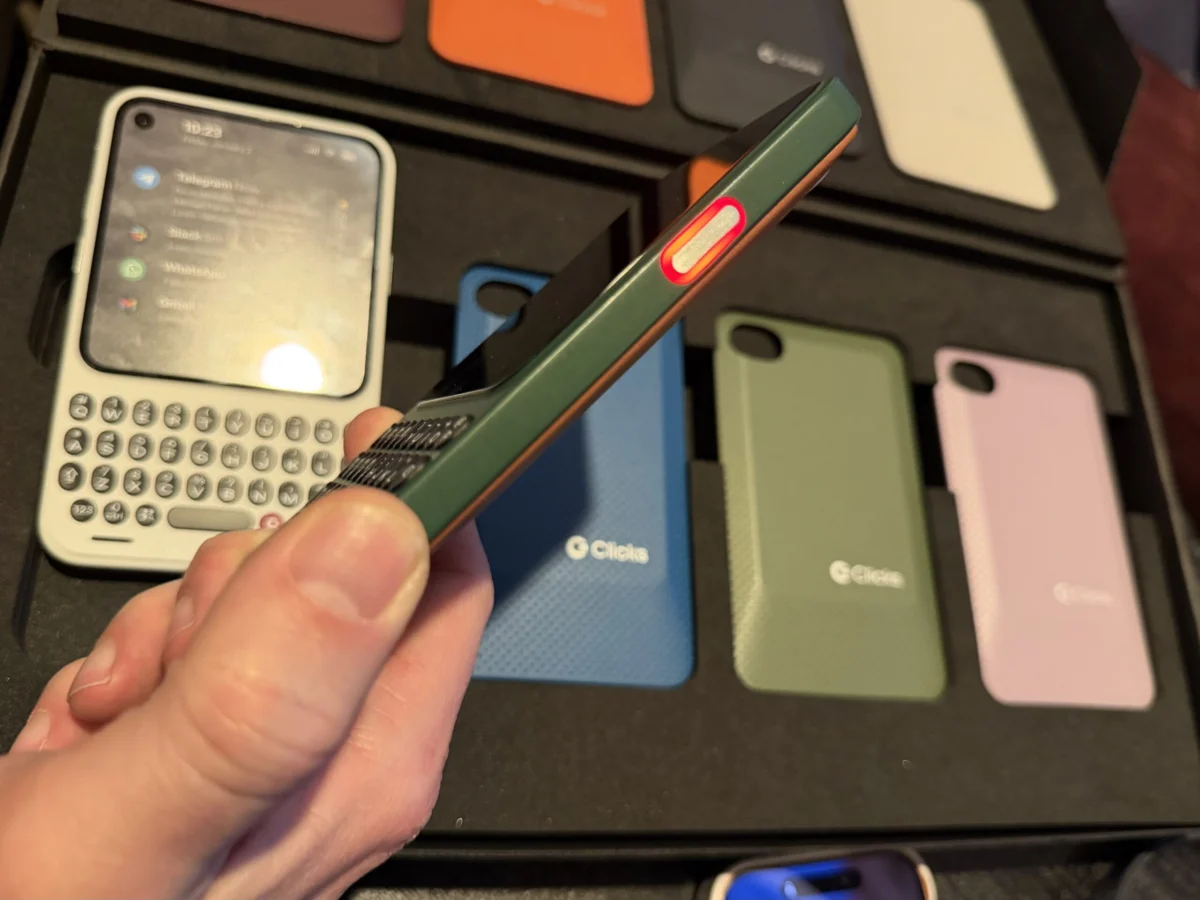
In an era dominated by expansive, edge-to-edge glass slabs and the homogenization of mobile design, a new startup is betting that the future of mobile productivity lies in the past. Clicks Technology, the company that made waves earlier this year with its snap-on keyboard case for iPhones, has officially pulled back the curtain on its flagship standalone device: the Clicks Communicator.
First teased at the Consumer Electronics Show (CES) in Las Vegas this past January, the device serves as a direct homage to the golden age of BlackBerry—a period defined by physical keys, tactile feedback, and a focus on getting work done rather than falling into the endless scroll of social media feeds. With a retail price of $499 and a scheduled shipping window for the fourth quarter of this year, the Communicator is positioning itself as a niche, high-utility tool for the professional class and the "digital minimalist" alike.
The Core Philosophy: Why Physical Keys Matter
The Clicks Communicator is more than just a nostalgic play; it is a calculated response to the ergonomic limitations of modern touchscreens. For power users who spend their days drafting emails, managing complex Slack threads, or composing long-form notes on the go, the virtual keyboard remains a hurdle.
"We are building for the doers," says the design team at Clicks Technology. By integrating a physical, touch-sensitive keyboard directly into the chassis of the phone, the device aims to reclaim the screen real estate lost to software keyboards. The result is a device that feels purpose-built for high-speed typing, providing the "clicky" sensation that many former BlackBerry users have been mourning for over a decade.
Initial hands-on reports from the CES prototype reveal a device that balances weight and grip effectively. While the pre-production unit featured keys that the development team is still calibrating for pressure sensitivity, the consensus among testers was clear: the tactile experience is superior for those who prioritize accuracy and speed in their mobile communication.
Chronology of a Revival
The journey of the Clicks Communicator did not begin in a boardroom, but rather in the community of tech enthusiasts who refused to abandon the hardware-centric workflow of the late 2000s.
- Early 2024: Clicks Technology gains viral attention with the launch of its iPhone-compatible keyboard case. The success of this peripheral proved there was a latent market for physical keys.
- January 2025 (CES): The company officially debuts the "Clicks Communicator" concept. The announcement is met with significant media buzz, highlighting the device as a modern-day spiritual successor to the BlackBerry.
- Mid-2025: The company refines its prototype based on user feedback, focusing on the mechanical switch tension and the integration of its unique "Signal Light" feature.
- Today: A new, detailed video demonstration is released, providing the public with the first high-definition look at the phone’s interface, software, and hardware nuances.
- Q4 2025: Anticipated commercial shipping for early adopters.
Technical Specifications and Innovation
While the form factor is a throwback, the internal architecture of the Clicks Communicator is thoroughly modern. The device is not merely a "dupe"; it introduces several hardware innovations designed to enhance user autonomy.
The "Signal Light" System
One of the most touted features is the "Signal Light," a customizable LED interface located on the side of the device. This is a deliberate move away from the "notification firehose" model of current smartphone operating systems. Users can program specific colors and flash patterns to correspond to high-priority contacts, apps, or groups. This allows the user to leave their phone face-down or in a bag, knowing exactly when a truly urgent notification has arrived, thereby curbing the impulse to constantly check the display.
Hardware Flexibility
In an age of soldered RAM and non-removable storage, the Communicator is a radical outlier:
- Expandable Storage: The device supports microSD cards up to 2TB, ensuring that professionals who store massive archives of documents and media have the space they need.
- Connectivity: It includes a 3.5mm headphone jack—a feature long abandoned by mainstream manufacturers—and a physical SIM tray alongside eSIM capabilities.
- Customization: The back covers are modular and swappable, allowing for aesthetic personalization that doesn’t require a permanent, bulky case.
- Privacy Control: A dedicated tactile switch for Airplane Mode provides an immediate, physical way to disconnect, reinforcing the phone’s identity as a tool for focused work.
Digital Minimalism and the Android Partnership
Perhaps the most compelling aspect of the Clicks Communicator is its stance on the "attention economy." The device is positioned as an antidote to the dopamine-driven design of contemporary social media apps.
To achieve this, Clicks Technology has partnered with Niagara Launcher. This minimalist interface replaces the cluttered home screens of standard Android devices with a text-based, streamlined list. It discourages mindless browsing and encourages purposeful interaction. By combining this software philosophy with the hardware-level Signal Light, Clicks is effectively creating a "smart-dumbphone"—a device that has the power of Android but the discipline of a pager.
Official Responses and Industry Outlook
The industry response has been one of cautious intrigue. While mainstream manufacturers like Apple and Samsung continue to chase the "infinity screen" aesthetic, Clicks Technology is effectively targeting the white space in the market.
"The goal is not to replace the phone you use for photography or entertainment," a company spokesperson explained. "The goal is to provide a dedicated environment for the work that matters."
Financial analysts note that at a $499 price point, Clicks is avoiding the "ultra-premium" trap. It is priced as a professional tool—similar to the cost of a high-end mechanical keyboard or a business-class tablet—rather than a fashion accessory.
Implications: A New Market Segment?
The success of the Clicks Communicator could signal a broader shift in consumer behavior. For years, the smartphone market has reached a state of "feature saturation," where annual upgrades offer only marginal improvements in camera quality or processor speed.
If Clicks proves that a significant demographic is willing to trade a massive, vibrant screen for the utility of a physical keyboard and the peace of mind offered by a minimalist launcher, we may see a resurgence of "form-factor diversity."
Furthermore, the focus on hardware privacy—the physical airplane mode switch and the ability to ignore digital clutter—aligns with the growing "Digital Wellbeing" movement. As users become increasingly concerned about the psychological toll of hyper-connectivity, a device that facilitates intentional disconnection may find a very loyal, if not massive, user base.
What Lies Ahead
As we move toward the Q4 launch, the company has promised a series of deep-dive videos covering the "Prompt Key" (a shortcut-heavy navigation system), the "Message Hub" (a centralized repository for all incoming communication), and the advanced ergonomics of the keyboard.
Whether the Clicks Communicator becomes a cult classic or a mainstream disruptor remains to be seen. However, in a market that has felt stagnant for years, the arrival of a device that prioritizes the user’s time and the quality of their input over screen size and advertising reach is, at the very least, a refreshing deviation.
For the professional who remembers the efficiency of the BlackBerry era, the Clicks Communicator is not just a phone; it is a promise of a more focused, tactile, and intentional way to work.
Disclaimer: This article contains affiliate links. If you purchase products through these links, we may earn a small commission. This does not influence our editorial integrity or the objective analysis of the products discussed.











