

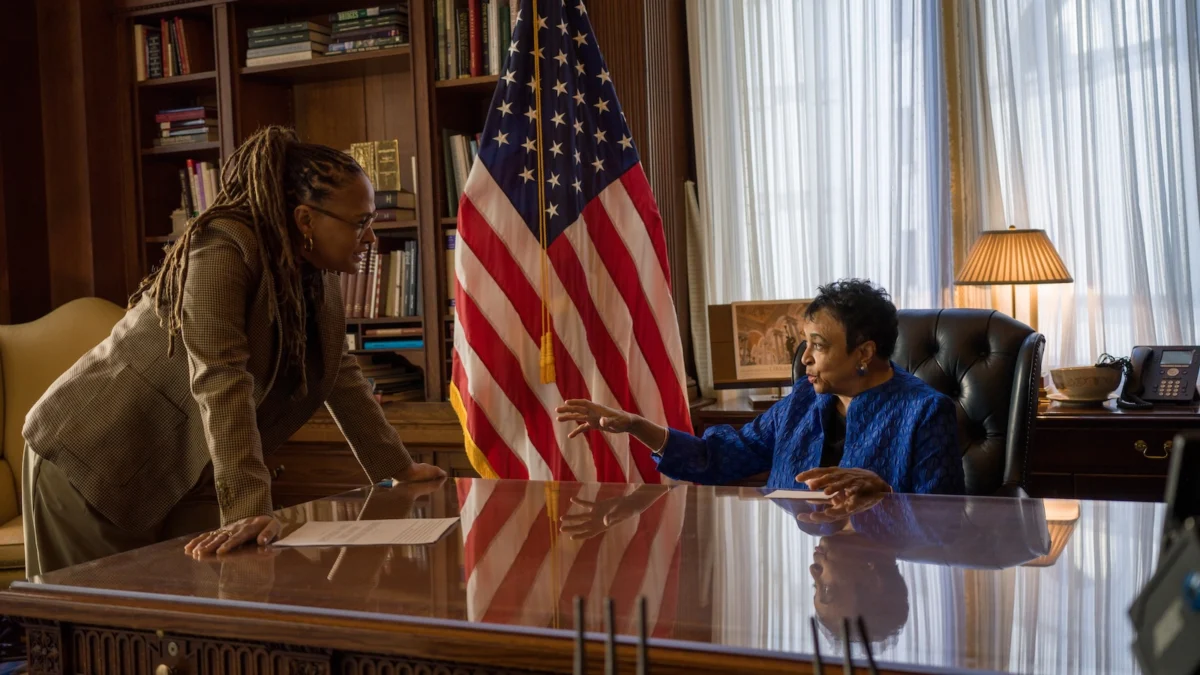
In a landscape where the interpretation of the U.S. Constitution has become the primary theater for America’s most volatile political battles, filmmaker Ava DuVernay is once again turning her lens toward the bedrock of American law. Ten years after her seminal, Oscar-nominated documentary 13th transformed the national conversation regarding the carceral state and racial inequality, DuVernay is returning to the fold with a spiritual successor: 14th.
The film, announced today by Netflix and slated for a release later this year, arrives at a moment of unprecedented constitutional friction. Less than two weeks ago, the Supreme Court of the United States delivered a landmark ruling, striking down an executive order from President Trump that sought to unilaterally terminate birthright citizenship for children born to parents residing in the country illegally or on a temporary basis. By positioning the 14th Amendment—the "Citizenship Clause"—at the center of her new project, DuVernay is not merely documenting history; she is interrogating the very definition of belonging in a fractured nation.
The Architecture of Belonging: Understanding the 14th Amendment
Ratified in 1868 during the Reconstruction era, the 14th Amendment was intended to guarantee citizenship to all persons born or naturalized in the United States, including those formerly enslaved. For over a century, it has served as the primary mechanism for civil rights litigation, equality under the law, and the fundamental promise that an individual’s rights are not subject to the whims of executive overreach.
However, as the recent SCOTUS decision highlights, the interpretation of the Amendment has become increasingly contested. 14th aims to deconstruct the 150-year struggle over this legal mandate, exploring the tension between established constitutional rights and contemporary political efforts to redefine the boundaries of the American electorate.
"If 13th asked who gets caged, then 14th asks who gets counted," DuVernay stated in a recent interview. "This is not a film about the past tense of freedom. I’m not interested in asking you to look back. The film asks what kind of country is being written beneath our feet now—while we’re busy believing the stories we’ve all been told."
A Decade of Documentary Evolution: From “13th” to “14th”
The trajectory of DuVernay’s career has been defined by her ability to bridge the gap between academic rigor and accessible storytelling. Since her breakout success with Selma in 2014, she has navigated the complexities of both scripted dramas and high-stakes documentary work.

Her previous collaboration with Netflix, the limited series When They See Us, demonstrated her capacity to humanize systemic failure. In the years following, she has directed projects as diverse as the sprawling family saga Queen Sugar, the comic-book adaptation Naomi, and the ambitious 2023 feature film Origin. Yet, it is the documentary format—specifically the analytical, essayistic style she pioneered in 13th—that appears to be her most potent weapon.
14th is produced via her ARRAY banner, with Spencer Averick, Tammy Garnes, and Paul Garnes serving as producers. The film marks a significant reinvestment in long-form, non-fiction storytelling for both the director and the streamer, signaling a belief that audiences are hungry for deep-dive, intellectual engagement with the structural underpinnings of democracy.
The Voices of the Amendment: A Cross-Ideological Inquiry
One of the most striking aspects of 14th is the breadth of its contributors. Rather than leaning on a singular ideological perspective, DuVernay has conducted over 50 interviews with a diverse array of stakeholders. The roster of voices includes:
- Political Leaders: Congresswoman Alexandria Ocasio-Cortez (D) and Congresswoman Anna Paulina Luna (R), representing the sharp divide in current legislative priorities.
- Senate Voices: Former Senator Jeff Flake (R) and current Senator Alex Padilla (D).
- Legal Scholars and Advocates: Sherrilyn Ifill, Robert Chang, and Stacey Abrams, who bring to bear decades of civil rights experience.
- Historians and Critics: Pulitzer Prize winners Eric Foner and David Blight, alongside conservative author Donald T. Critchlow and cultural critic Hasan Piker.
By inviting such a disparate group of thinkers to the table, the film avoids the pitfalls of echo-chamber commentary. Instead, it creates a crucible of debate, forcing viewers to confront the reality that the "rules" of American citizenship are written by people who rarely agree on the fundamental nature of the country itself.
Chronology of a Constitutional Crisis
The urgency of 14th is inextricably linked to the events of the last two years. The following timeline illustrates the escalating pressure on the 14th Amendment:
- 2024: Political discourse surrounding immigration reform shifts focus from border security to the legal status of children of non-citizens.
- Early 2026: A series of executive orders are issued, aimed at curtailing the reach of birthright citizenship under the guise of "national security" and "sovereignty."
- June 2026: The Supreme Court issues a narrow ruling striking down the President’s executive order, but legal experts suggest the battle is far from over, with future challenges expected to target state-level implementation of birthright policies.
- Late 2026: Release of 14th on Netflix, aimed at providing historical and legal context to a public grappling with the volatility of the Supreme Court’s recent term.
The Implications for the American Experiment
The primary implication of 14th is the question of sustainability. If the rights granted by the 14th Amendment—rights that have been taken for granted for generations—can be subjected to executive modification, what remains of the "social contract" in the United States?

The film suggests that the "fight" over the amendment is not just about immigration; it is about the power to decide who is entitled to the full protection of the law. By investigating who gets to "write the rules," DuVernay is effectively asking the audience to consider whether the democratic institutions of the United States are currently capable of protecting their own foundations.
Adam Del Deo, Vice President of Documentary Film and Series at Netflix, echoed this sentiment in a press statement accompanying the announcement. "Ava’s remarkable ability to bring history into conversation with the present made her last documentary, the seminal BAFTA-winning and Academy Award-nominated 13th, a cultural touchstone of the last quarter century. With 14th, she delivers another ambitious and thought-provoking documentary with the depth, artistry, and humanity that have come to define her work. We’re proud to continue our creative partnership with Ava and bring this powerful film to audiences around the world."
Beyond the Screen: A Call to Civic Engagement
As the film prepares for its global release, it is expected to ignite a wave of campus discussions, town halls, and policy forums. In an era of digital misinformation, where constitutional theory is often reduced to social media soundbites, 14th serves as a sobering reminder of the weight of words written on parchment.
The film does not claim to have all the answers. Instead, it serves as an invitation to the viewer to engage with the law as a living, breathing, and highly contested entity. For DuVernay, the "past tense of freedom" is a trap; the future of the republic depends on recognizing that the 14th Amendment is not a dusty relic, but a battlefield where the next generation of American identity is being decided today.
Whether the documentary will sway the needle of public opinion remains to be seen. However, given the massive cultural footprint of 13th, it is all but certain that 14th will become a mandatory point of reference for anyone attempting to navigate the complexities of American citizenship in the 21st century. As the film approaches its premiere, it stands as a testament to the power of the documentary form to act as both a mirror and a catalyst for the nation.










