

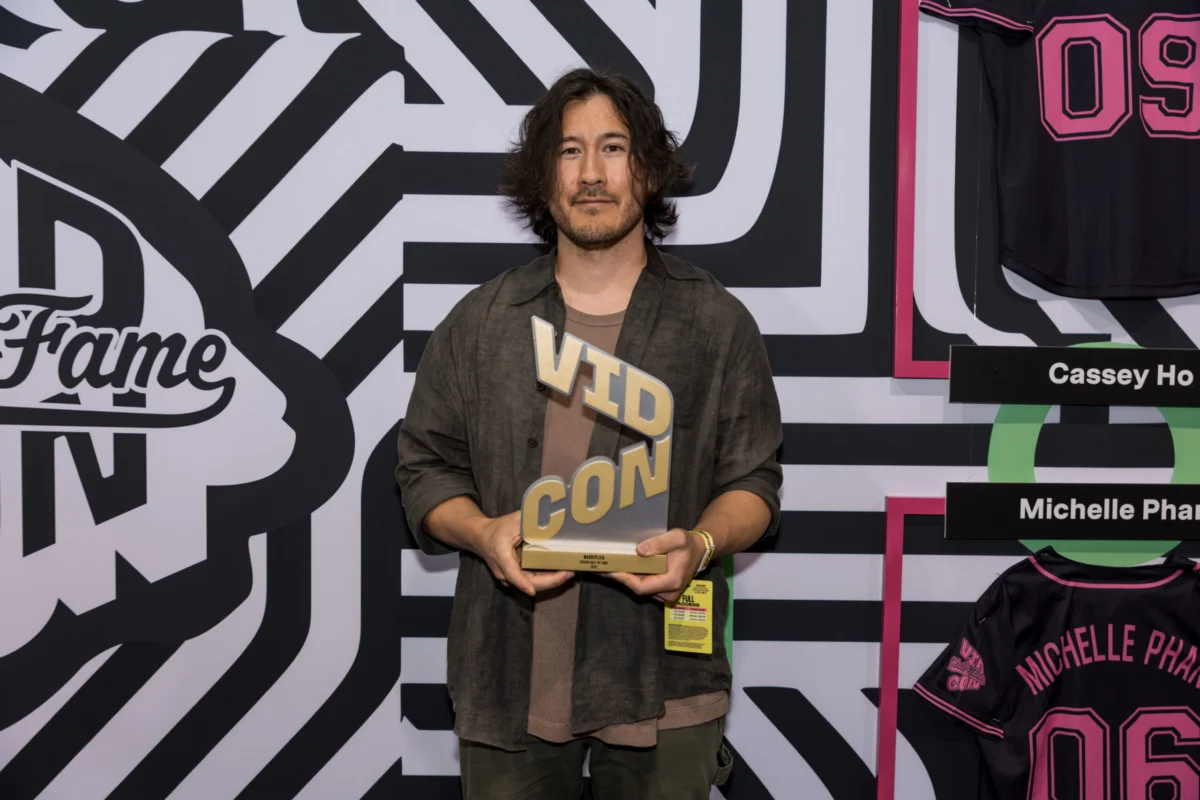
Six months ago, the film industry looked at Mark Fischbach—the multi-hyphenate creator better known to his 36 million subscribers as Markiplier—with a mixture of curiosity and skepticism. When he bypassed traditional distribution channels to self-release his directorial debut, Iron Lung, he didn’t just test a new business model; he effectively signaled the arrival of a new power dynamic in entertainment. With $50 million in global box office performance, Iron Lung wasn’t just a win for a YouTuber; it was a watershed moment for the creator economy.
Today, Fischbach stands at the center of a "holy triumvirate" of digital-native filmmakers, alongside Kane Parsons (Backrooms) and Curry Barker (Obsession). Together, these creators have proven that the development process once guarded by studio gatekeepers can thrive within the YouTube ecosystem. As Hollywood grapples with the transition, Fischbach is moving from disruptor to bridge-builder, aiming to institutionalize the autonomy he fought so hard to establish.
The Chronology of a Paradigm Shift
The journey to this moment was neither swift nor accidental. For years, the divide between "YouTuber" and "Filmmaker" was a rigid cultural barrier. However, the success of Iron Lung forced a rapid re-evaluation of that binary.
- The Independent Leap: By self-distributing his film, Fischbach avoided the predatory terms that often stifle independent creators. He retained creative control, proving that a direct line to an audience is more valuable than a traditional marketing budget.
- The Industry Realization: Following the film’s success, Fischbach entered a period of intense negotiation and dialogue with major studios. While he initially approached these meetings with the defensive posture of a creator wary of "soulless machinery," he discovered that the reality was far more nuanced.
- The VidCon Milestone: This past June, at the VidCon Hall of Fame ceremony in Anaheim, the industry shift was formalized. The honor recognized not just his content, but his influence on the structural evolution of media distribution.
The Anatomy of the "Creator-Bridge"
Fischbach’s current mission is twofold: he continues to develop his own creative slate while simultaneously serving as a "matchmaker" between other talented creators and the traditional industry. He is essentially building an informal incubator, vetting studio partners to ensure they possess the necessary respect for creator-led projects.
The Role of Infrastructure
Fischbach is acutely aware that passion alone does not make a film. He is currently in the process of building his own post-production house. By leveraging new technologies and keeping the edit suite in-house, he intends to maintain the speed and efficiency that defined his YouTube career while elevating the production value to meet theatrical standards.

"I am willing to let things be controlled because, honestly, looking back, I did too much myself," Fischbach admitted in a recent interview. "But at the same time, I want to shape it in a way that I can leverage technology. I still think there are some ideas that are bigger than what I could tackle myself."
Industry Implications: A New Currency of Loyalty
The most significant takeaway from the rise of the creator-filmmaker is the concept of "audience currency." In Hollywood, a film’s success is often dependent on a multi-million-dollar marketing campaign designed to convince a stranger to buy a ticket. In the creator economy, the ticket is bought by an established community.
The Problem with Traditional Deal-Making
The fundamental friction between Hollywood and creators often stems from a misunderstanding of this relationship. Studios often view an audience as a commodity to be mined, whereas creators view it as a reciprocal, human relationship.
"It’s this currency of loyalty that is so hard to quantify," Fischbach explained. "It’s almost impossible to put a number of value to it because it’s an interpersonal human relationship. Even through the internet, that exchange is there and you can’t tax it too much. Creators all kind of intuitively know that."
When studios approach creators with "predatory" intentions, they fail to realize that if a creator compromises their integrity to satisfy a corporate mandate, they risk losing the very audience that made them valuable in the first place.

Dissecting the "Soulless Machinery" Myth
Perhaps the most surprising revelation from Fischbach’s recent interactions with major studios is his evolving perspective on the people within the system. While the "soulless" label is often applied to big-budget production houses, Fischbach found a surprising amount of genuine artistic fervor behind the scenes.
"Even in some of the big, seemingly soulless companies, there’s a lot of really passionate people who want to make art," he noted. "They’ve found their niche somewhere on the business side, as opposed to the actual creative side, but all of them love—well, not all of them. A lot of them. A lot of them still love making movies."
This realization has informed his strategy: he isn’t trying to destroy the studios; he is looking for the "good actors" within them—the executives and producers who are as invested in the craft as they are in the bottom line. By filtering opportunities through this lens, he hopes to create a pipeline where high-quality, creator-led projects can get the resources they need without being stripped of their identity.
Looking Ahead: The Future of Distribution
The partnership between creators and platforms like YouTube is still in its infancy, and as Fischbach notes, the "systems are still old." There is an immense amount of work to be done to optimize the way independent films are monetized and discovered on video-sharing platforms.
However, the goal is not necessarily to replace Netflix or theatrical distribution, but to offer a viable, independent alternative. "It’s another avenue for creators as an individual to put their project forward," Fischbach says. "Creators can support other creators. It can become this loop for more and more people to make projects."

A Balanced Life: The Human Element
Despite his influence and the weight of his industry-changing ambitions, Fischbach remains grounded by his personal life. After the whirlwind of the last few months, his immediate focus is shifting away from boardrooms and toward his family.
His latest project isn’t a blockbuster; it’s a commitment to his wife and their dogs, particularly a recent rescue from Thailand currently recovering from hip surgery. It serves as a reminder that for all the talk of "creator economies" and "industry disruption," the heartbeat of the movement remains personal.
Conclusion: The Path Forward
The "Markiplier Effect" has effectively opened a window for a new generation of filmmakers. By proving that you can bypass the traditional gatekeepers without sacrificing the audience or the art, he has forced Hollywood to stop asking "Who are these people?" and start asking "How can we work with them?"
As the industry continues to evolve, the most successful creators will likely be those who, like Fischbach, can maintain their autonomy while navigating the complexities of corporate partnerships. The future of film may not be a total departure from Hollywood, but rather a reconfiguration—one where the creator is no longer just a content provider, but an equal partner in the production and distribution of their own vision.
The "holy triumvirate" of the current era—Fischbach, Parsons, and Barker—is likely only the beginning. As infrastructure improves and the "matchmaking" process becomes more sophisticated, we can expect a wave of independent, audience-vetted cinema that challenges the status quo, one upload at a time.










