Basiran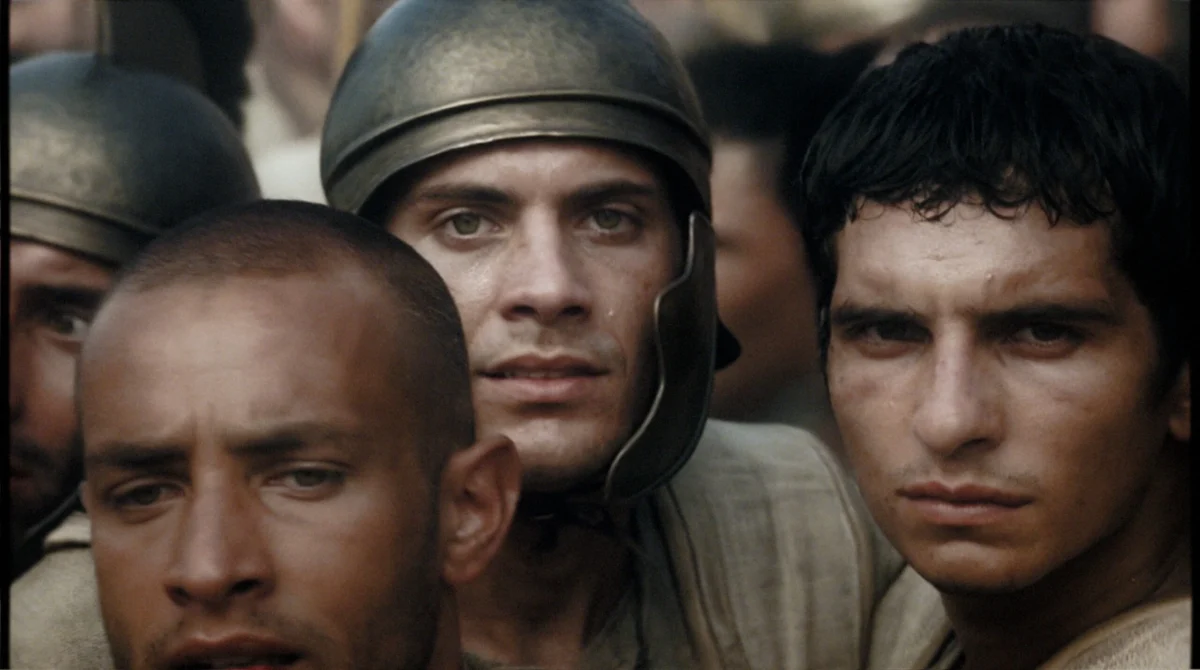
In the world of prestige documentary filmmaking, few brands carry the weight and historical gravitas of the Apocalypse franchise. Since its inception in 2013, the series has redefined the genre by transforming graining, static black-and-white archives into vibrant, colorized, and visceral experiences. Now, France TV Distribution is set to take this legacy into the digital age with the launch of its newest installment: Apocalypse Civilizations: Rome.
This ambitious project, written and directed by Thomas Marlier, promises to do for the ancient world what previous installments did for the World Wars—bringing the remote past into the immediate, high-definition present. By leveraging cutting-edge Artificial Intelligence, the production aims to bridge the gap between academic historical inquiry and modern, high-end entertainment, offering a window into the Mediterranean at the dawn of the Roman Empire.
A Legacy of Global Reach
The Apocalypse franchise is widely regarded as the most successful documentary export in French television history. Its unique formula—marrying meticulous archival research with sophisticated visual restoration—has resonated with audiences across more than 180 countries.
"We are really excited about this reboot of Apocalypse," says Julia Schulte, SVP of International Sales at France TV Distribution. "Since the first series launched, the collection has become the strongest French documentary brand in terms of ratings and international distribution. With Apocalypse Civilizations: Rome, we are evolving. Through full immersion made possible by outstanding research and the integration of AI, we are bringing a new, entertaining approach to high-end documentaries for wide, global audiences."
Chronology of a Turning Point: The Battle of Actium
At the heart of the documentary lies one of the most pivotal dates in Western history: September 2, 31 BC. The film meticulously tracks the lead-up to and the immediate aftermath of the Battle of Actium, a naval engagement that served as the final act of the Roman Republic’s long-standing civil wars.
The Protagonists of History
The narrative centers on the power struggle between Octavian—the adopted son of Julius Caesar—and the formidable alliance of Mark Antony and the Egyptian Queen, Cleopatra VII. For over a century, Rome had been torn apart by internal strife, shifting loyalties, and shifting power bases. Actium served as the decisive resolution to this instability.
Octavian’s victory in the Ionian Sea did more than just eliminate his political rivals; it dismantled the crumbling infrastructure of the Republic. By emerging as the sole ruler of the Roman world, Octavian transitioned from a factional leader into Augustus, the first Emperor. He established the Principate, a political system that provided a thin veil of republican tradition over what was, in effect, an absolute monarchy. This shift, while paradoxical, ushered in the Pax Romana, a long period of relative peace and stability that would define the Mediterranean for centuries.
Supporting Data: The Science of the Past
The production is a massive collaborative effort, produced by Élodie Polo-Ackermann for Imagissime (part of the Mediawan group) and Mediawan Kids & Family. The team spent over a year in development, bridging the divide between historical scholarship and visual storytelling.
What distinguishes this production from standard historical docudramas is its rigorous commitment to academic fidelity. Rather than relying on speculative reenactments, the filmmakers have built a visual bible based on the latest archaeological and historical research.
"We are in an intensive documentary research phase with a 10-strong team compiling scientific material," notes producer Élodie Polo-Ackermann. "We aren’t just creating pretty pictures; we are building a foundation based on the expertise of the finest researchers and historians in Antiquity."
Official Perspectives: The Role of AI in History
The inclusion of AI has sparked curiosity and debate regarding the ethics and authenticity of historical documentary. For director Thomas Marlier, AI is not a shortcut; it is a tool for historical visualization.
The "Newsreel" Aesthetic of Antiquity
"In keeping with the DNA of Apocalypse, which brought archival images back to life, the series asks an essential question: what would these great battles have looked like if cinema had existed at the time?" says Marlier.

He argues that historians have historically been limited by what they can formulate as hypotheses. AI allows them to test these theories visually. By inputting verified historical data into generative models, the team can visualize the scale of the Roman fleet or the topography of the Mediterranean landscape in a way that feels like "news footage" rather than a CGI-heavy feature film.
The Human Craft Behind the Machine
Polo-Ackermann is quick to dispel the myth that AI makes production easier or cheaper. "There is a misconception that AI automatically means faster and cheaper. It doesn’t," she explains. "AI pushes the craft further, but it demands the same rigor: strong writing, a clear artistic vision, and real expertise. The hardest part was building the right workflow—structure for control, flexibility for creativity."
For the production team, AI functions as an amplifier. It enhances the visual scale, allowing them to render the immense complexity of ancient cities like Alexandria or the naval formations of the Battle of Actium with a level of detail that would be prohibitively expensive with traditional CGI.
Historical Reassessments: Beyond the Clichés
One of the most striking aspects of the documentary is its effort to dismantle modern prejudices regarding ancient figures. Marlier highlights the case of Cleopatra, who has long been filtered through a lens of Orientalism and sexism in Western cinema.
"Far from the reductive, often sexist representations conveyed by film, she was above all a great political strategist, a cultivated ruler, and a leading intellectual who wrote scientific works," Marlier observes. By grounding the documentary in her actual political and intellectual achievements, Apocalypse Civilizations: Rome seeks to correct a centuries-old narrative imbalance.
The documentary also delves into the daily lives of ordinary citizens. The researchers sought to illuminate the existence of men and women in Rome and Alexandria, moving beyond the "Great Man" theory of history to provide a more holistic view of the Mediterranean basin during the transition from Republic to Empire.
Implications for the Documentary Industry
The release of Apocalypse Civilizations: Rome signals a shift in the documentary landscape. As audiences become increasingly sophisticated, the demand for "immersion" grows. Traditional talking-head interviews are no longer sufficient to hold the attention of younger, digital-native demographics.
The Future of Visual History
By successfully integrating AI into a high-end historical brand, France TV Distribution is setting a new industry benchmark. If the project proves successful, it is likely to trigger a wave of similar productions that use AI to "reconstruct" lost histories—from the construction of the Pyramids to the fall of the Aztec Empire.
However, the reliance on AI also places a burden of responsibility on producers. As the line between "re-creation" and "generation" blurs, the role of the historian as a gatekeeper becomes more vital than ever. The success of Apocalypse Civilizations will depend on whether audiences feel they are learning a deeper truth, or simply watching an AI-generated fantasy.
A Global Perspective
The Mediterranean civilization described in the film is not just a relic of the past; it is the foundation of the modern West. As Marlier notes, the trade routes, cultural exchanges, and political structures established during the Pax Romana created a fluid, interconnected world that mirrors our own globalized society. By connecting the dots between 31 BC and the 21st century, the series aims to make the ancient world feel not only visible but relevant.
Conclusion: A New Era for Historical Documentaries
Apocalypse Civilizations: Rome stands at the intersection of technological innovation and traditional craftsmanship. By honoring the rigorous research methods of the original Apocalypse series while embracing the potential of AI, the team at Mediawan and France TV Distribution is poised to captivate a new generation of history enthusiasts.
As the production team moves through the final stages of their visual bible and rigorous editing, the documentary world watches with bated breath. This is more than a retelling of the Battle of Actium; it is a test case for how we will consume history in the years to come—through a lens that is sharper, more immersive, and increasingly intelligent. Through the vision of Marlier and his team, the ghosts of Rome are about to step out of the history books and into the light of the modern age.


 Asro
Asro