

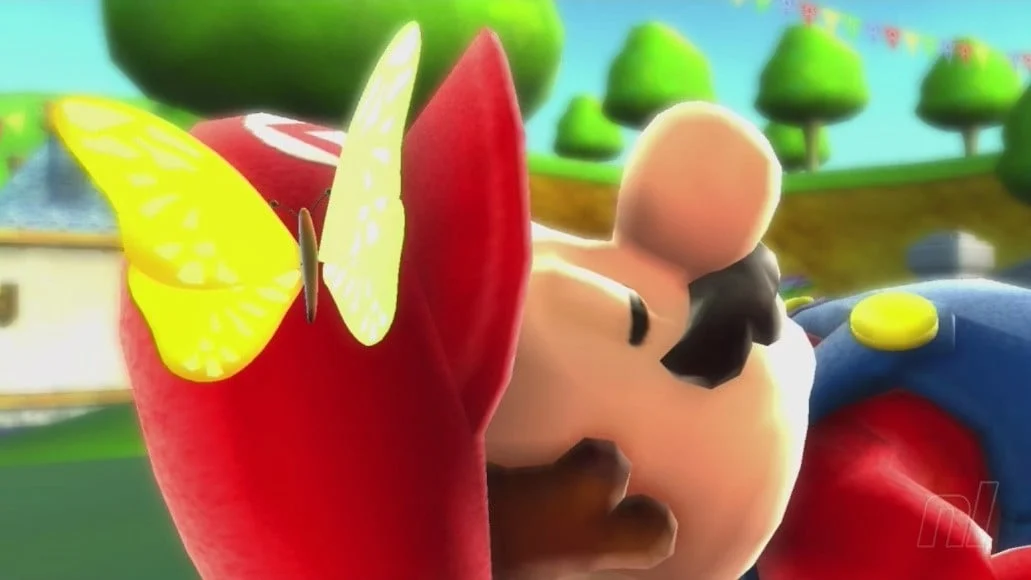
For nearly two decades, a beloved Nintendo masterpiece remained just beyond the author’s grasp. This is the story of a late but profound appreciation for Super Mario Galaxy, and the surprising revelations that led to its ultimate conquest.
For many, Super Mario Galaxy is an undisputed titan of the Nintendo Wii era, a game that redefined 3D platforming with its boundless creativity, breathtaking spectacle, and masterful game design. Its "Launch Stars" are often cited as cinematic marvels, each a miniature symphony of visual and auditory cues – the spinning wind-up, the triumphant arpeggio, the pregnant pause before a cannon-blast launch into the cosmic unknown. The camera work, too, was revolutionary, tracing Mario’s journey through the stars with a fluidity that left a "gleaming contrail of light and delight" before pulling back to perfectly frame a triumphant landing. This is not merely gameplay; it’s the "music of movement," a testament to innovative design that, for the author, simply "hasn’t got old."
Yet, paradoxically, this universally acclaimed title was, for the author, a persistent source of frustration. Despite multiple attempts and the passage of nearly twenty years, Super Mario Galaxy remained a game that felt "crap." This lengthy period of disconnect highlights a crucial aspect of gaming enjoyment: it’s not always about inherent quality, but also about the player’s receptiveness, their evolving expectations, and the subtle recalibrations that can unlock a game’s true potential.
The Two-Decade Standoff: Initial Disappointment and Persistent Doubts
The author’s initial encounters with Super Mario Galaxy were marked by a profound sense of something being "amiss." Despite acknowledging its "clearly gorgeous kingdom of planets," the gameplay itself felt "stiff" and "off-beat." The "gamefeel," a crucial element for any 3D Mario title, was perceived as "flat in the hands," with the "joke always slightly too late in the interface between me and this clearly gorgeous kingdom of planets." This critical detachment was so ingrained that it even found its way, albeit politely, into the author’s professional bio on Nintendo Life, a testament to the enduring nature of their skepticism.
This persistent inability to connect with a game so widely lauded fostered a sense of personal inadequacy. It was a challenge to reconcile the overwhelming positive reception with their own lukewarm experience. The author admits to a "practised forensic analysis of its slightly stiff moveset," a deep dive into the mechanics that, rather than fostering understanding, only served to reinforce their negative preconceptions. The expectation for a 3D Mario game was rooted in the fluid, responsive controls of its predecessors, particularly Super Mario 64 and the "over-maligned" Super Mario Sunshine. Galaxy‘s distinct approach to movement and interaction, while groundbreaking for many, felt alien and jarring to this established framework.
The author recounts being stuck on a particularly arduous challenge: the "daredevil run against Bouldergeist," a segment that proved "very long and boring to retry." This specific hurdle, coupled with the overarching feeling of disconnect, cemented Galaxy as a personal "final boss of Not For Me But Good For You Guys (also, What Is Wrong With You Guys?)." It was a game that seemed to possess all the hallmarks of greatness, yet consistently failed to resonate on a personal level.
The Unlikely Catalyst: Penny’s Big Breakaway and the Power of Recalibration
The turning point, the unexpected catalyst that began to dismantle nearly two decades of resistance, was a seemingly unrelated Penny’s Big Breakaway. This game, developed by members of the Sonic Mania team, particularly those involved in the acclaimed Android port of Sonic 2, immediately piqued the author’s interest. The promise of a "yo-yo as wheels and as a grapple-line" evoked a visceral excitement, a recognition of latent potential reminiscent of the initial impressions of Viewtiful Joe and Shadow of the Colossus. The mechanics of momentum management, rolling, gravity, and swinging held a profound appeal, amplified by the author’s personal habit of carrying an actual yo-yo as a tactile source of playfulness.
However, the initial experience with Penny’s Big Breakaway mirrored the Galaxy saga. It was found to be "zany and try-hard," plagued by "irritating" music during Quick Time Events and "stilted and slow" mechanics. The disappointment was palpable, leading the author to seek external validation, to "gauge the conversation" and ensure it wasn’t a solitary misjudgment.
It was through reading online reviews, specifically those that highlighted "good movement" and the promise of "skate-game combos," that a subtle shift began to occur. The author’s love for skating games, a genre that thrives on flow and intricate movement, provided a new lens through which to view Penny’s Big Breakaway. Approaching the game with a new strategy, focusing on maintaining long combos and seeking "new pockets of opportunity," the difference was "profound." The mechanics, once perceived as clunky, now revealed their "awesome potential," allowing for fluid transitions from "tug-pulling through the air" to "rocketing forward flight with a mid-air yo-yo axel." The game’s true strength, its emphasis on "flow and continuity," was finally appreciated.
This recalibration was further amplified by the game’s environments, particularly the "surreal bathhouse waterpark" of Bubblin, with its "skyscraper scale" and "incredible music." The synergy between the refined movement and the immersive atmosphere proved "revelatory, absolute." Suddenly, even the previously irritating QTEs became palatable, and the game was kept downloaded, a testament to its newfound appeal.
The Ripple Effect: Applying the "Click" to Donkey Kong Country: Tropical Freeze
The transformative experience with Penny’s Big Breakaway sparked a crucial realization: perhaps this conscious effort to "switch up my approach" could be applied to other games that had previously eluded the author’s grasp. The prime candidate was the "now-legendary" Donkey Kong Country: Tropical Freeze, a game revered by many but repeatedly bounced off and deleted by the author, even reaching the "beloved Grassland Groove."
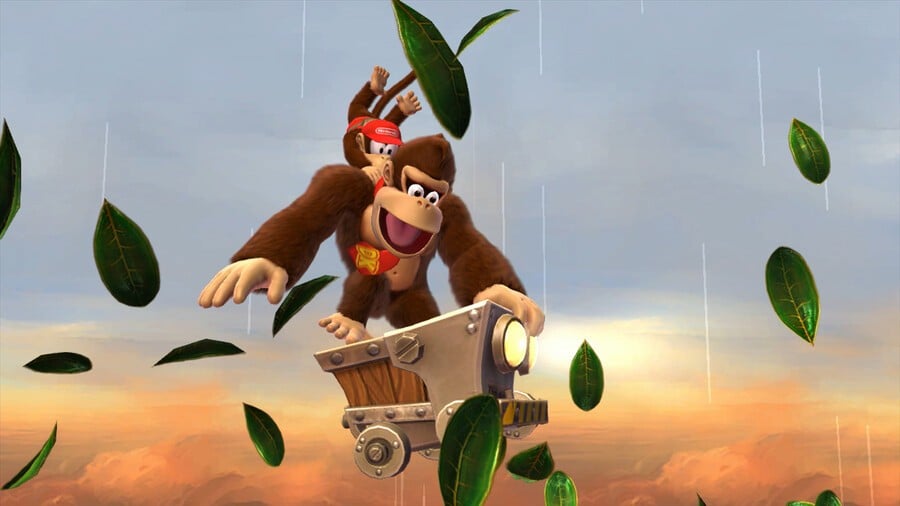
The success was, once again, striking. The initial hurdle was a misunderstanding of core mechanics. The author hadn’t realized that holding the "roll" button in Tropical Freeze didn’t equate to running as it did in prior Country games. This misinterpretation had instilled "uncertain distrust to controls." Furthermore, a perceived need for "unbroken fluidity" was at odds with the game’s "heavier, more considered platforming." By consciously slowing down, both in gameplay and in their internal "metronomic pace of expectation," the author began to appreciate the deliberate, nuanced challenges Tropical Freeze presented.
The thematic elements of the game also played a significant role. The "Fugu fish boss" provided a point of intense focus, forcing the author to truly engage. The subsequent "Juicy Jungle world," with its "machinery, mood, and music," began to weave its spell. This immersion culminated in a "polar bear duel scored by genuinely one of the most epic boss themes," a moment that cemented the author’s conversion. The things that had initially "irked" them now seemed "moot and irrelevant." The game was subsequently 100%-ed, and the author now holds a deep appreciation for mechanics like the "roll-jump," a testament to the "wild" difference a shifted perspective can make.
Beyond the Core: Other Games That Found Their Audience
The principle of recalibration extended to other titles as well. A Highland Song, a game the author "lost myself in enough to make my own paper map of its highlands," benefited from a review that emphasized the journey as much as the destination, a subtle shift in focus from temporal pressure to environmental immersion. Final Fantasy XII, initially played at a "wrong time" for proper appreciation, found its audience years later when the author had the "room in my life to accommodate and adore it." The author even speculates that the "playful, less reverent approach" fostered by watching content from creators like Videogamedunkey might have contributed to a more open-minded engagement with certain games.
The overarching lesson is profound: "You can’t be persuaded to like a thing with logic, but sometimes you might be borderline enough that a recalibration of expectation, or approach, or timing can help you enjoy more things." This encapsulates the essence of how a game, even one with universally acclaimed design, can fail to connect until the player’s own internal framework shifts.
The Return to the Cosmos: Super Mario Galaxy Redeemed
With this newfound understanding of the power of recalibration, the author, with trepidation but a glimmer of hope, decided to revisit Super Mario Galaxy. The initial proposition of retrying the game was met with a degree of pessimism, given its long-standing status as a personal gaming enigma. The author’s ingrained preferences, shaped by Super Mario 64 and the often-misunderstood Sunshine, favored a direct interplay between Mario’s core moveset and the level design. Galaxy‘s unique approach, with its cosmic playground and detached movement, had always felt like a departure from this core formula.
However, the attempt to approach Galaxy with a fresh perspective proved successful. The author suggests a potential shift towards a more "2D Mario of bread-and-butter (gravity) jumping instead of nimble acrobatics." Alternatively, they had simply become "more open to its different flavour of fun," appreciating "being a part of each level’s calibrated machinery of drama and delight." The possibility that age and maturity might have also played a role is also acknowledged: "Maybe I’m just older."
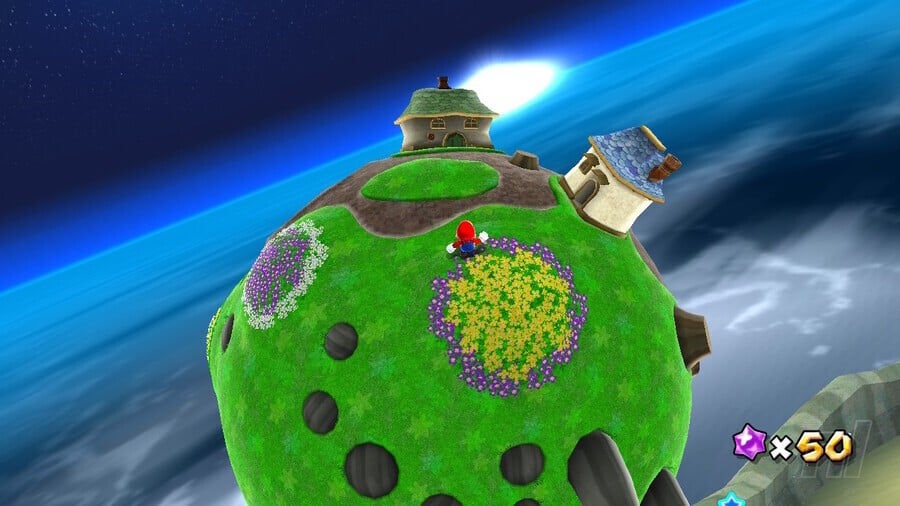
The results were transformative. The author experienced a "launch star blast," no longer irritated by post-level tallies, and now understanding the aesthetic beauty of the "matte fabric-grain of the textures." The gameplay evolved, with a conscious effort to move away from excessive ‘Y’ button presses and instead utilize "enemy-kick mid-run to maintain the flow." The pure "kinaesthetic poetry" of punting coconuts between planets in Dusty Dune Galaxy brought genuine glee, and the Toy Time galaxy was embraced as a personal "joy time."
After nearly twenty years, the author finally completed Super Mario Galaxy and, more importantly, loved it. The once-elusive click had finally occurred, leading to an eager anticipation for Super Mario Galaxy 2. The journey from dismissal to adoration underscores the profound impact of player perspective and the enduring magic that can be unlocked when one’s approach aligns with a game’s intended experience. The author is now, thankfully, "on this side of the click."
This personal odyssey serves as a powerful reminder that even the most celebrated games can be initially overlooked. The pursuit of enjoyment in gaming is not always a linear path; it often involves a willingness to adapt, to question our own preconceptions, and to embrace the possibility that the magic we seek might just be a matter of perspective.











No comments yet. Be the first to join the conversation!