

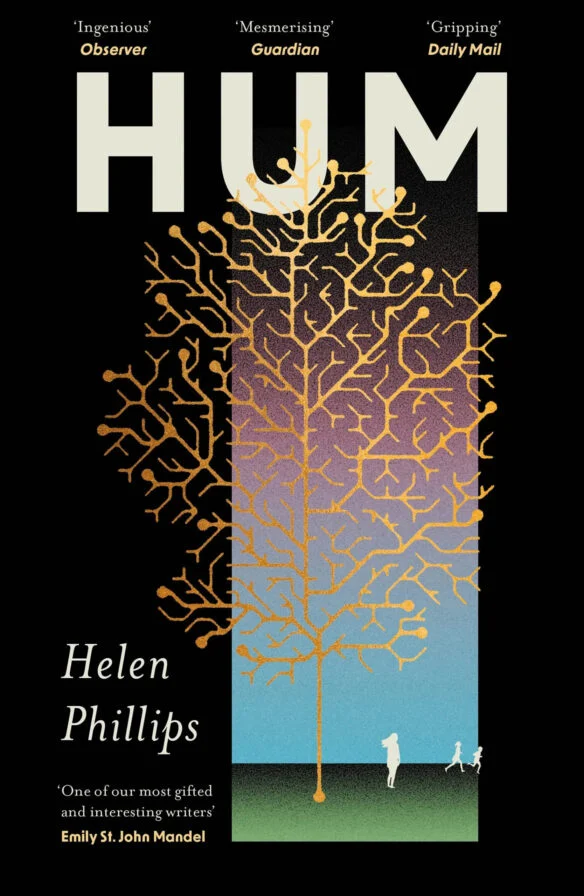
In a literary landscape increasingly defined by the urgency of the planetary crisis, the Climate Fiction Prize has cemented its status as a vital arbiter of speculative excellence. On May 27, 2026, the literary world gathered at the prestigious Kings Place in London to celebrate the winner of the second annual Climate Fiction Prize. Author Helen Phillips was awarded the £10,000 top honor for her chillingly prescient novel, Hum, a work that masterfully interrogates the convergence of ecological collapse, the rise of pervasive surveillance, and the encroaching shadow of artificial intelligence.
A Vision of the Near Future
Hum is set in a world that feels uncomfortably adjacent to our own. It presents a society fractured by environmental degradation and technological displacement. The narrative centers on May, a protagonist whose life is upended when she loses her employment to artificial intelligence—a struggle that resonates with contemporary anxieties surrounding the rapid automation of the global workforce.
Desperate to survive in a surveillance-heavy state, May enters a harrowing arrangement: she becomes a human subject for experimental procedures designed to alter her facial features, effectively rendering her invisible to the invasive algorithms monitoring the populace. Her search for refuge eventually leads her to one of the last remaining botanical gardens, a sanctuary that serves as a poignant, if costly, symbol of the natural world’s fragility.
Critics have lauded the novel for its lyrical prose and its ability to weave complex philosophical questions about what it means to be human in an era where technology has begun to outpace our capacity for adaptation. By positioning the "hums"—intelligent robots—as both an existential threat and a mirror to human behavior, Phillips crafts a narrative that is as much about the human psyche as it is about the climate.
Chronology of the 2026 Competition
The path to the 2026 Climate Fiction Prize was marked by intense competition and a rigorous selection process that highlighted the diverse ways authors are tackling the "cli-fi" genre.
- Initial Submissions: The prize opened its call for entries in late 2025, inviting submissions from publishers across the globe. The mandate was clear: the works had to engage substantially with the climate crisis.
- The Longlist Announcement: Early in 2026, the judges unveiled a longlist of titles that spanned various sub-genres, from post-apocalyptic thrillers to cautionary dystopian dramas.
- The Shortlist Selection: By April 2026, the field was narrowed to a final group of contenders, each representing a unique perspective on the climate emergency.
- The Jury Deliberation: The panel, composed of environmental scientists, climate journalists, and literary critics, engaged in an extensive evaluation period, weighing the scientific plausibility of the novels against their literary merit.
- The Awards Ceremony: The culmination of the process took place on May 27 at Kings Place, London, where Phillips was officially crowned the second-ever winner of the award.
Supporting Data: Why Climate Fiction Matters
The rise of the Climate Fiction Prize is not merely a trend in publishing; it is a response to a documented shift in public consciousness. Data from various literary research firms indicates a 40% increase in the consumption of speculative fiction centered on environmental themes over the last five years.
The Prize serves as an essential bridge between scientific data and public imagination. While climate reports provide the raw data—rising sea levels, carbon parts-per-million, and biodiversity loss—literature provides the emotional infrastructure to process those numbers. The £10,000 prize money serves as both an incentive for established authors to pivot toward these urgent themes and a financial lifeline for emerging writers to dedicate the necessary time to deep, research-heavy narrative projects.
Official Responses and Juror Insights
The selection of Hum as the winner was unanimous among the jury, who praised Phillips for her ability to synthesize disparate themes into a cohesive, unsettling whole.

"In Hum, we found a rare balance," noted the head of the jury during the ceremony. "Helen Phillips has managed to avoid the pitfalls of didacticism. Instead of lecturing the reader on the dangers of climate change or the ethics of AI, she shows us a world where these things have already occurred, and where the human heart is still struggling to navigate the consequences. It is a masterpiece of modern anxiety."
Helen Phillips, in her acceptance speech, reflected on the role of the writer in the climate era. "We often think of climate change as a scientific or political problem," Phillips remarked. "But it is fundamentally a human problem. It is about how we love, how we survive, and how we choose to treat the living things that share our planet. Hum is my attempt to look into the darkness and find the threads of humanity that remain."
Implications for the Future of Literature
The victory of Hum signals a maturation of the "climate fiction" genre. In its early days, cli-fi was often relegated to the edges of science fiction, frequently categorized as "disaster literature." With the success of prizes like this, the genre is moving toward the literary mainstream.
The Role of Technology in Environmental Narrative
Phillips’ focus on the intersection of AI and climate is particularly significant. As the tech industry faces increasing scrutiny over its carbon footprint—from the energy-intensive training of Large Language Models to the disposal of hardware—the literary community is beginning to explore the "technological cost" of the green transition. Hum acts as a crucial cultural artifact that documents this emerging tension, forcing readers to consider whether the digital future we are building is compatible with the biological future we need to preserve.
The Influence of the Prize on Global Discourse
The Climate Fiction Prize does not exist in a vacuum. By elevating works like Hum, the organization effectively dictates which themes are discussed in book clubs, university classrooms, and media outlets globally. The prestige of the prize ensures that the winning novel will reach a wider audience, thereby fostering a broader public discourse on the climate crisis.
For authors and publishers, the existence of a dedicated prize creates a "climate-positive" feedback loop. Publishers are now more likely to acquire and promote works that engage with environmental themes, knowing there is a high-profile platform that will validate and elevate those efforts.
A Legacy of Engagement
As the Climate Fiction Prize looks toward 2027, the success of the 2026 ceremony underscores the enduring power of narrative to shape our response to the greatest challenge of our time. Hum is more than just a winning novel; it is a testament to the resilience of the human spirit in the face of an uncertain future.
Helen Phillips has provided us with a mirror, reflecting not only the potential disasters that await us if we continue on our current trajectory but also the profound, lingering humanity that we must work to protect. As the literary world turns the page on this year’s awards, the dialogue between art and science has never been more vibrant, nor more necessary. Through Hum, the Climate Fiction Prize has once again proven that the most effective way to address the future is to imagine it with both eyes wide open.










No comments yet. Be the first to join the conversation!