

As the post-pandemic tourism boom continues to sweep across Japan, the "minpaku"—the country’s private lodging sector—has found itself at a critical crossroads. Once championed by the national government as a vital pillar of the tourism-led economy, these short-term rental properties are now the target of a tightening regulatory net. Across Tokyo, municipal authorities are moving from promotion to restriction, as residents reach a breaking point over the noise, waste, and neighborhood instability that have followed the rapid expansion of these rentals.
The Surge of Short-Term Rentals
The numbers tell a story of explosive growth. According to data from the Japan Tourism Agency, the number of registered minpaku properties in Japan stood at 31,000 as of May 2025. Just one year later, that figure had swelled to over 40,000. Under current national law, owners are permitted to rent out vacant homes or individual rooms to tourists for up to 180 days per year.
However, this growth has come at a significant cost to local social cohesion. In dense urban environments like Tokyo, where residential tranquility is highly prized, the constant turnover of international tourists—often unfamiliar with local waste disposal protocols or noise curfews—has created a recurring friction between visitors and their long-term neighbors.
Chronology of a Regulatory Shift
The trajectory of minpaku policy has undergone a radical transformation over the last decade.
- 2018: Japan enacted the Minpaku Law, aimed at formalizing the industry and providing a legal framework for home-sharing to meet the surge in tourism demand.
- 2023–2024: The rapid increase in listings began to outpace local oversight. Complaints from residents regarding late-night noise, trash mismanagement, and security concerns began to flood municipal offices.
- June 2025: A pivotal moment occurred when the Japan Tourism Agency officially shifted its stance. Recognizing the mounting friction, the agency notified local governments that they are now empowered to use municipal ordinances to ban minpaku services entirely if they are found to undermine the living environment of residents.
- July 2025: Chiyoda Ward implemented a revised ordinance that strictly restricts the establishment of new private lodging services near schools and in high-density residential areas, mandating owner-occupancy for any new permits.
- April 2026 (Forthcoming): The Tokyo Metropolitan Government is set to extend its lodging tax to include stays at minpaku facilities, signaling a move toward fiscal parity between private rentals and traditional hotels.
The Shinjuku Case Study: Ground Zero of the Conflict
Nowhere is the tension more visible than in Shinjuku Ward, which hosts the highest concentration of registered minpaku facilities in the capital. The ward’s approach has shifted from administrative monitoring to active enforcement.
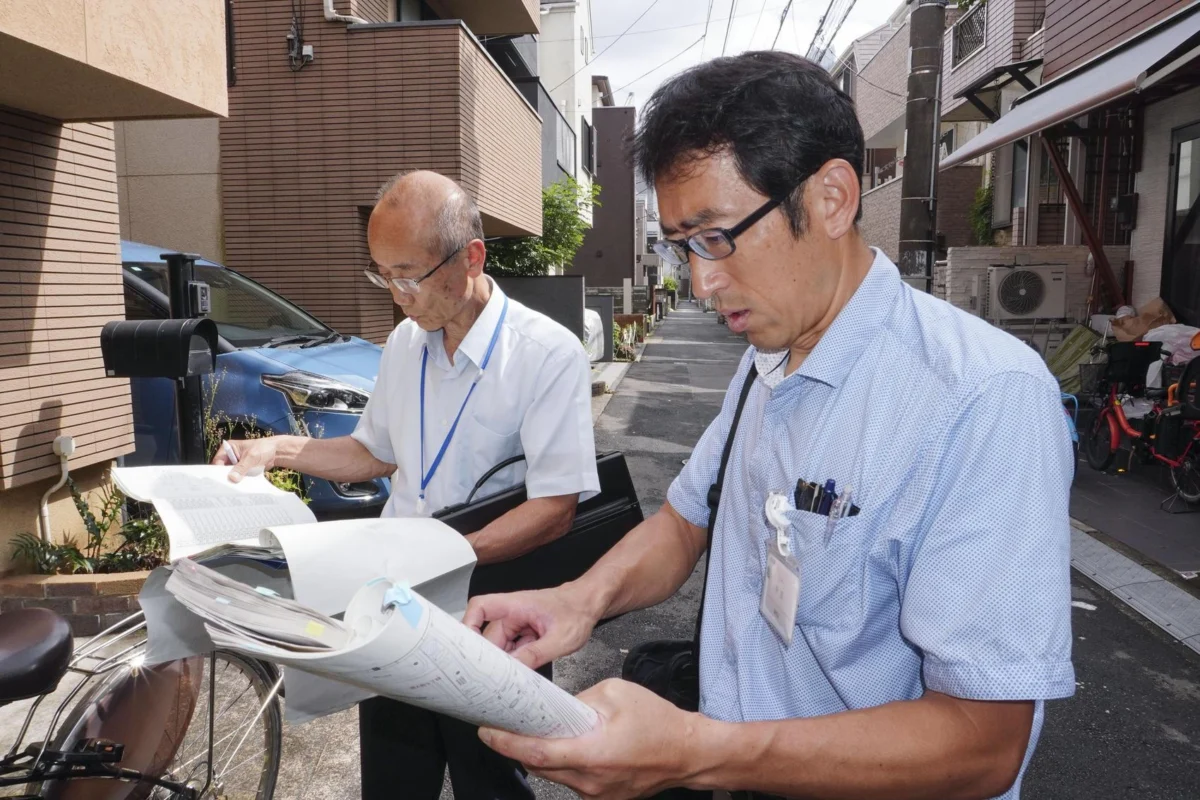
In June, Shinjuku officials conducted a series of targeted inspections on a weekday—a time when many short-term rentals are restricted from operating. The results of these spot checks were illuminating. At one site, officials discovered a group of travelers from Italy and Egypt, despite the property lacking the required weekday permit.
The interaction highlighted the disconnect between the tourism economy and residential reality: officials were forced to play the dual role of tourism ambassadors and code enforcers, handing out flyers detailing Japanese waste disposal and noise etiquette to confused tourists. During these same inspections, officials uncovered multiple properties that failed to display mandatory signage or were operating entirely without the required municipal approval.
The data underscores the scale of the frustration. In fiscal 2025 alone, Shinjuku Ward recorded 1,334 formal complaints related to home rentals—a staggering 1.7-fold increase compared to the previous year. This culminated in December 2025, when the ward issued its first-ever formal business cessation order to a non-compliant operator.
Regional Responses and Policy Divergence
The dissatisfaction is not confined to the capital. In Osaka, a city that aggressively courted the home-sharing market during the initial push for deregulation, the strategy has largely backfired. The city has become a cautionary tale, with local government resources stretched thin by a flood of public grievances regarding the degradation of residential quality of life.
In response to these systemic failures, Tokyo’s wards are taking individual, localized paths to reclaim their neighborhoods:
Toshima Ward: Tightening the Time Cap
Known for its vibrant Ikebukuro district and strong ties to subculture tourism, Toshima Ward has opted for a surgical reduction of business scope. By revising its local ordinance, the ward slashed the maximum operating cap for minpaku facilities from the national standard of 180 days down to 120 days. This reduction is intended to force operators to choose between professional hospitality and residential stability.
Chiyoda Ward: Proximity Restrictions
Chiyoda has taken a more preventative approach. By banning the launch of new services near schools and in heavily populated zones unless the owner resides on-site, the ward is effectively prioritizing the safety and comfort of families over the expansion of the tourist economy.
The Fiscal and Ethical Implications
The introduction of the Tokyo Metropolitan Government’s lodging tax on minpaku stays, effective April 2026, represents more than just a revenue-generating measure. It is a symbolic acknowledgment that private lodging is no longer an "informal" or "niche" sector. By bringing these properties into the same tax structure as hotels, the city is demanding that these operators contribute to the infrastructure and public services that tourists utilize.
However, the rapid tightening of regulations has sparked a debate among urban planning experts. Toru Azuma, a professor at Rikkyo University, argues that while regulation is necessary, a "one-size-fits-all" approach may be counterproductive.
"The state should allow more leeway to local municipalities," Professor Azuma noted. He suggests that rather than imposing blanket bans, the government should focus on the capacity of municipalities to perform real-time oversight. He warns that strengthening regulations across the board could drive illegal operators further underground, making them even harder to monitor or manage.
Looking Ahead: The Future of Urban Tourism
The tension between the tourism industry and the residential sector in Tokyo serves as a microcosm of a global challenge: how to balance the economic benefits of the sharing economy with the fundamental right of residents to live in safe, quiet, and predictable environments.
As Japan moves toward its goal of becoming a global tourism powerhouse, the lesson from Tokyo is clear: local residents are no longer willing to trade their quality of life for the convenience of global travelers. The era of the "unregulated minpaku" is ending, replaced by a new, more rigid era of neighborhood-first governance.
For property owners, the mandate is increasingly clear: if you wish to operate in the Japanese capital, you must now prioritize local compliance, transparency, and social responsibility. For the local authorities, the challenge remains to find the delicate balance between maintaining a global city that welcomes millions of visitors and protecting the local character that makes those neighborhoods worth visiting in the first place.
As of early 2026, the trajectory suggests that while the minpaku sector will continue to exist, it will do so under the strict, watchful gaze of a city that has finally decided to put its residents first.











