

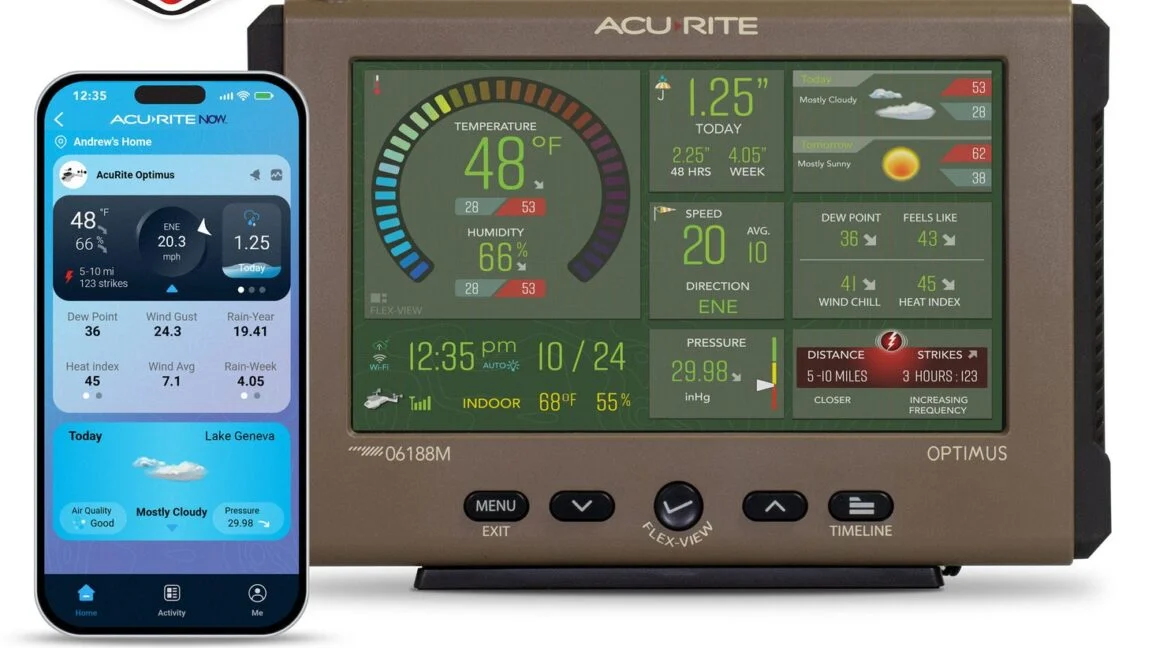
For years, hobbyist meteorologists and home automation enthusiasts have relied on AcuRite’s ecosystem to track everything from local barometric pressure to backyard rainfall. However, a sweeping digital transformation announced by the company has sparked significant backlash among its most loyal user base. By May 30, 2026, AcuRite will officially sunset its long-standing "My AcuRite" application, forcing thousands of users to migrate to the newer "AcuRite Now" platform.
While the company frames the transition as an evolution toward "smarter, more connected solutions," the migration has been met with skepticism and frustration. Users cite a loss of functionality, concerns over subscription-based features, and a perceived degradation in data precision.
The Chronology of a Digital Transition
The friction between AcuRite and its customers began in early 2025 with the launch of the "AcuRite Optimus," a new-generation weather station designed to work exclusively with the newly developed AcuRite Now app. At the time, existing customers assumed that the new app would exist alongside the legacy "My AcuRite" platform—which had served as the hub for the company’s devices since 2016.
For over a year, this dual-app environment persisted. However, in April 2026, the company began sending out mass communications to its user base, delivering a firm ultimatum: the My AcuRite service would be discontinued by May 30, 2026. This announcement effectively ended the grace period for users of legacy hardware, signaling that the company’s focus had shifted entirely to the Tuya-powered SmartLife IoT ecosystem.
As the deadline approaches, the transition has highlighted the fragile nature of modern "smart" hardware, where the utility of a physical device is tethered to the longevity and quality of a software service.
The Core Conflict: Why Users Are Resisting the Change
The dissatisfaction surrounding the migration is not merely a rejection of change, but a reaction to the specific technical shortcomings of the AcuRite Now platform. Community forums, most notably the WxForum, have become ground zero for user grievances.
Loss of Granularity and Data Management
One of the most persistent complaints involves the loss of data precision. Long-time users, who are accustomed to seeing temperature readouts to the decimal point, have reported that AcuRite Now rounds data to whole numbers. For those who track micro-climates or conduct scientific amateur observations, this "dumbing down" of data is a significant downgrade.
Furthermore, the new app has introduced logistical hurdles that did not exist in the previous version. Users report being unable to easily rename multiple temperature sensors, a feature that is essential for those monitoring different zones of a property—such as a basement, a greenhouse, a garage, and an attic. The inability to organize these sensors efficiently within the user interface has turned what was once a seamless monitoring experience into a cumbersome administrative task.
The "Desktop Gap"
In the modern era of smart home management, many users prefer to monitor their environmental data via a web browser on a desktop computer. The My AcuRite app provided a robust web interface that allowed for easy data analysis. Currently, AcuRite Now is primarily a mobile-first application, leaving desktop users without a dedicated, optimized way to view their information. While AcuRite has stated they are "hoping" to add a desktop version in the near future, the lack of a concrete timeline has left many power users feeling abandoned.
The Business Model Shift: Pay-to-Play Weather Data
Perhaps the most controversial aspect of the transition is the integration of the "AcuRite Now+" subscription model.
Historically, AcuRite users enjoyed free integration with third-party weather services like Weather Underground (WU). This connectivity allowed individuals to contribute their local, hyper-accurate data to a global network of climate stations. Under the new AcuRite Now infrastructure, while the integration with services like Weather Underground remains technically possible, it is no longer a standard, free feature for all.
AcuRite Now+ introduces a tiered subscription service, starting at $2 per month. This subscription acts as a gatekeeper for features that were once considered standard, such as extended data history. While My AcuRite provided a sufficient baseline for historical tracking, the new model restricts users to 30 days of history unless they pay for the premium subscription, which unlocks 365 days of data. For enthusiasts who view their weather stations as long-term data collection tools, this pivot to a recurring revenue model feels like a "tax" on hardware they have already purchased.
Official Response and Corporate Strategy
AcuRite has defended the transition by pointing to the benefits of the Tuya SmartLife ecosystem. By aligning with Tuya—a massive, global IoT platform—AcuRite argues that it is positioning its devices to be more "future-proof."
In an official FAQ addressing the migration, the company stated:
"As part of our continued investment in delivering smarter, more connected solutions, the My AcuRite app will be winding down. To ensure uninterrupted access to your weather data and to unlock even more capabilities, all users should transition to AcuRite NOW before May 30th, 2026."
The company emphasizes that the AcuRite Now platform is compatible with thousands of third-party products, including smart plugs, lighting, and motorized blinds. From a corporate strategy perspective, AcuRite is attempting to pivot from being a "weather station company" to a "smart home lifestyle company." By integrating with the broader Tuya ecosystem, AcuRite hopes to allow users to trigger home automation events—such as automatically closing blinds when a storm is detected or turning on a fan when the indoor temperature rises—based on the readings from their weather station.
However, for the core demographic of weather hobbyists, these "smart home" features are secondary to the primary goal of meteorological observation. The disconnect between what the company is selling and what the users are demanding remains the central issue.
Implications for the Internet of Things (IoT)
The AcuRite situation serves as a cautionary tale for the broader IoT industry. It illustrates the "sunset problem"—the reality that when a company decides to shut down a server or pivot a software strategy, the physical products held by the consumer can instantly lose value or utility.
The Problem of "E-Waste"
When an app becomes the only interface for a physical product, the software effectively becomes the product’s "soul." If the software is inferior, the hardware is perceived as broken. This creates a risk where functional, high-quality sensors end up in landfills simply because the manufacturer decided to change the software bridge connecting them to the user.
Consumer Trust and Brand Loyalty
For a company like AcuRite, which relies on a reputation for precision and durability, the alienation of its "power users" is a high-risk gamble. When long-time customers—who have likely recommended the brand to friends and family—take to forums to describe the new app as a "bad joke," it damages the brand equity that the company has built over decades.
Data Ownership and Interoperability
The transition also highlights the importance of data portability. Users are increasingly concerned about who owns the data generated by their home devices. When a company moves from an open or semi-open data model to a closed, subscription-locked model, it shifts the power dynamic significantly. The fact that users must pay for their own historical data access is a point of contention that will likely continue to be debated as more hardware manufacturers adopt the "Software as a Service" (SaaS) model.
Looking Ahead: The Future of the Platform
As the May 30 deadline approaches, the company is in a race against time to polish the AcuRite Now experience. Their support pages suggest that they are actively working on updates, including the ability to organize on-screen sensors and restore the granular naming capabilities that users lost during the initial transition.
For the average consumer, the shift might be invisible, as they may simply download the new app and continue to view their basic temperature readings. But for the core community of weather enthusiasts, the transition represents a fundamental change in the relationship between the brand and its customers.
Whether AcuRite can deliver on its promises to "soon" provide the features users are missing will determine whether this transition is remembered as a necessary technological upgrade or a disastrous misstep in brand management. For now, the sentiment among the user base remains wary, as they wait to see if the company will prioritize the needs of its long-time enthusiasts or the requirements of its new, broader IoT strategy.
In the world of connected devices, the lesson remains clear: technology is only as good as the experience it provides, and a smart device that creates more work for its owner is, ultimately, not very smart at all.












No comments yet. Be the first to join the conversation!