Jia Lissa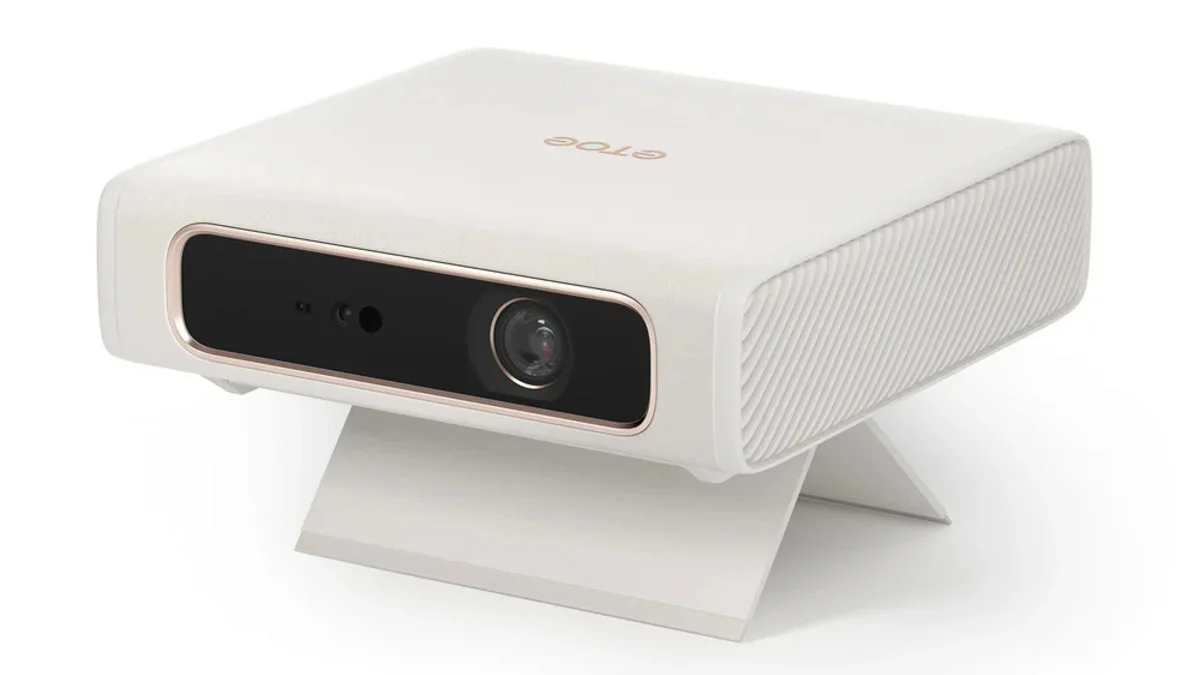
The portable projector market has long been a battlefield of trade-offs. Historically, consumers were forced to choose between the compact convenience of "pico" projectors—which often lacked brightness and color accuracy—or the bulky, high-performance units that tethered users to a wall outlet. ETOE (Eazy to Enjoy), a brand carving out a niche in the home entertainment sector, aims to bridge this divide with the launch of its second-generation portable flagship: the ETOE Dolphin 2.
Moving away from the cylindrical aesthetic of its 2025 predecessor, the Dolphin 2 represents a complete design overhaul, signaling a pivot toward premium performance. By integrating triple-laser technology, Google TV certification, and robust battery capabilities, ETOE is positioning the Dolphin 2 not just as a gadget, but as a primary entertainment hub for the modern, mobile lifestyle.
Main Facts: A Technical Overview
The ETOE Dolphin 2 is built to serve as an all-in-one cinematic solution. While the original Dolphin model was celebrated for its portability, the second generation prioritizes image fidelity and smart ecosystem integration.
Core Specifications at a Glance:
- Brightness: 800 ANSI Lumens, a 300-lumen improvement over the original model.
- Color Science: 110% BT.2020 color gamut, facilitated by a high-end RGB triple-laser light source.
- Resolution: Native 1080p, with the capability to decode 4K content.
- Smart OS: Fully certified Google TV, providing native access to the Google Play Store and over 10,000 streaming applications.
- Audio: Dual 5W speakers featuring Dolby Digital and Dolby Digital Plus sound processing.
- Portability: A 54Wh internal battery capable of two hours of continuous playback, doubling as a high-speed power bank via USB-C.
The device is powered by the MediaTek MT9630 quad-core processor, paired with 2GB of RAM and 32GB of internal storage. This hardware configuration ensures that the Google TV interface remains snappy, even when multitasking between high-bitrate streaming services.
Chronology: The Journey to the Dolphin 2
To understand the significance of the Dolphin 2, one must look at the trajectory of ETOE’s product roadmap over the past 24 months.
2025: The Foundation
The original Dolphin projector was released as a compact, cylindrical device aimed at entry-level users. It was designed primarily for casual movie nights and portability, sacrificing peak brightness for form factor. It was a successful entry point, but user feedback consistently highlighted a demand for better color depth and a more mature smart operating system.
Early 2026: Design Iteration
Throughout the first quarter of 2026, engineering teams at ETOE shifted focus toward the "Triple-Laser" standard. The transition from a cylindrical to a rectangular form factor was a deliberate decision to accommodate the improved cooling systems required for a more powerful laser engine, ensuring the unit remains thermally stable during long-form playback.
June 2026: The Official Launch
ETOE officially announced the pre-sale of the Dolphin 2 in mid-June. The company timed the launch to coincide with the summer travel season, aiming to capture the market of outdoor cinema enthusiasts and travelers who demand a "big screen" experience without the complexity of traditional projector setups.
Supporting Data: Why Triple-Laser Matters
The most significant upgrade in the Dolphin 2 is the adoption of an RGB triple-laser light source. In the projector industry, this technology is considered the gold standard for image quality.
Unlike single-laser or LED projectors that use color wheels (which can often lead to "rainbow effects" and diminished color accuracy), triple-laser systems project pure red, green, and blue light beams directly. The 110% BT.2020 color gamut coverage is particularly impressive for a portable device, as it allows the Dolphin 2 to display colors that are more vibrant and accurate than most standard living room televisions.
The 800 ANSI lumens, while modest compared to fixed-installation units, represent a massive leap for a battery-powered device. When paired with the 1080p native resolution and 4K decoding support, the projector is well-equipped to handle high-dynamic-range (HDR) content, bringing out detail in shadows and highlights that would otherwise be lost on lesser hardware.
Furthermore, the physical design includes a specialized gimbal-like hinge, allowing for a tilt range of -40 degrees to 76 degrees. This eliminates the need for books or makeshift stands to project onto a ceiling—a feature that highlights the company’s focus on user ergonomics.
Official Responses and Market Positioning
In a statement accompanying the launch, ETOE representatives emphasized that the Dolphin 2 is designed for the "frictionless" viewer. "We wanted to create a device that disappears," said a spokesperson for the company. "When you have a projector that works instantly with Google TV, has a native voice assistant, and doesn’t require a power outlet, the technology stops being the focus and the content takes center stage."
The integration of Google TV is a strategic move. By opting for a certified platform rather than a proprietary interface, ETOE has bypassed the common pitfalls of portable projectors, which often lack licensing for major streaming services like Netflix, Disney Plus, and Prime Video. With the Dolphin 2, users gain access to the same interface found on high-end smart TVs, complete with Google Assistant voice control, allowing users to search for movies or control smart home devices directly from their projector remote.
Implications for the Portable Projector Market
The release of the Dolphin 2 sets a new benchmark for what consumers should expect in the $900–$1,000 price range.
1. The Death of the "Compromise" Projector
The industry is moving away from low-resolution, low-brightness "toy" projectors. By offering 1080p resolution and a professional-grade color gamut, ETOE is signaling that portability no longer requires a sacrifice in visual fidelity.
2. The Power Bank Trend
The decision to include USB-C fast charging that functions in both directions—allowing the projector to act as a power bank for smartphones—is a smart acknowledgement of the user’s mobile needs. As power-hungry devices become the norm, having an extra 54Wh of energy on hand is a tangible value-add for campers and commuters alike.
3. Pricing and Competitive Landscape
Priced at $1,043, with an early-bird incentive bringing it down to $927, the Dolphin 2 is positioned as a premium-midrange device. It is priced aggressively enough to compete with major manufacturers like Anker (Nebula) and XGIMI, yet it offers a feature set that, on paper, punches above its weight class. The success of this product will likely depend on how well the software optimization holds up under sustained use, but the inclusion of native Google TV gives it a significant advantage over competitors running outdated Android versions.
Final Thoughts: Is the Dolphin 2 for You?
The ETOE Dolphin 2 is an ambitious step forward for the company. It balances the need for high-end aesthetics with the practical demands of an on-the-go lifestyle. For those looking to replace a secondary TV or create a portable cinema setup for the backyard, the combination of triple-laser accuracy and the Google TV ecosystem makes it a compelling candidate.
While the $1,043 MSRP is a significant investment, the early-bird discount makes the Dolphin 2 a highly attractive proposition for early adopters. As the device rolls out to the US and European markets, it will be interesting to see if the real-world battery life and thermal performance live up to the high expectations set by the technical specifications. If ETOE can deliver on the promise of a "big screen anywhere" experience, the Dolphin 2 may very well become the new standard for the portable projector category.
Pre-orders for the ETOE Dolphin 2 are currently live on the official ETOE website, with early-bird pricing valid through June 28, 2026.


 Suro Senen
 Ali Ikhwan