Jia Lissa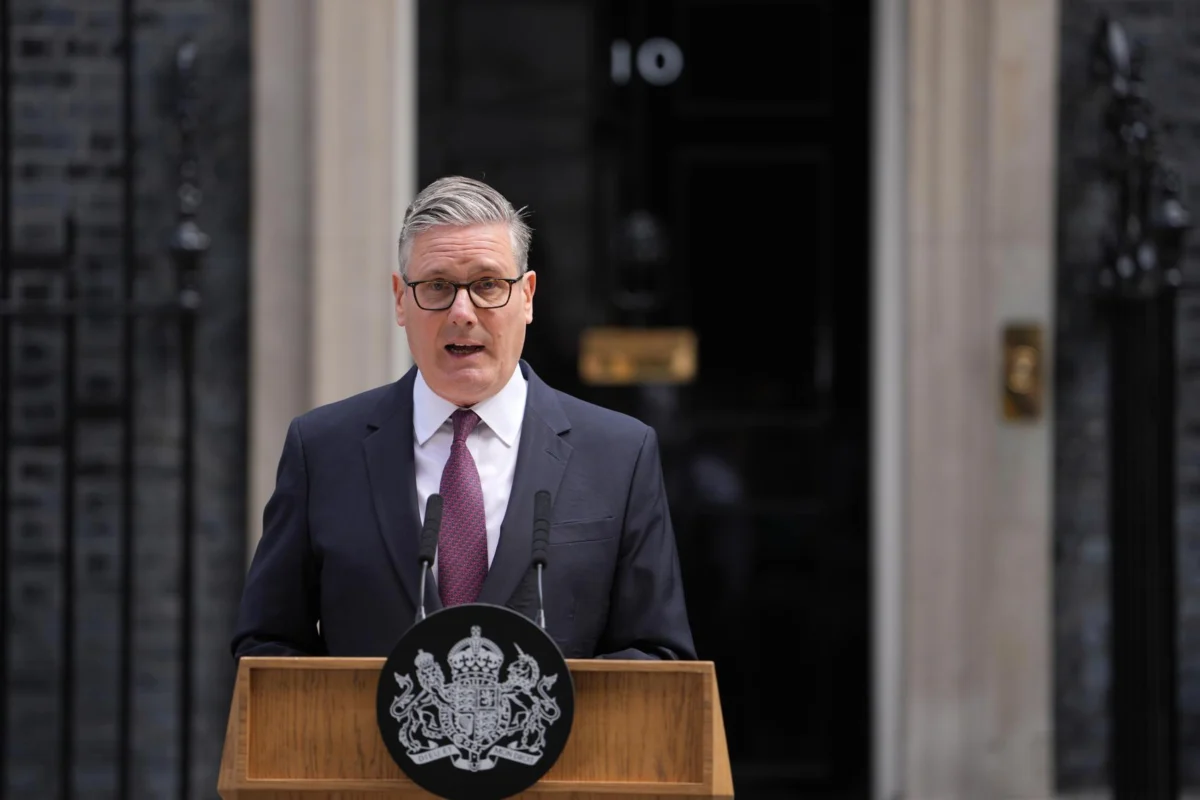
LONDON — In a dramatic address delivered from the steps of 10 Downing Street—the very same podium where he stood just two years ago to herald a "new era" of governance—Prime Minister Keir Starmer announced his resignation on Monday. The move marks a stunning, swift conclusion to a premiership that began with a landslide electoral victory in July 2024 and ends under the crushing weight of plummeting approval ratings and internal party revolt.
Starmer confirmed he will remain in office as a caretaker prime minister, overseeing the machinery of state while the Labour Party initiates a leadership contest to select his successor. The transition is expected to conclude by September 1, when Parliament returns from its summer recess.
The Anatomy of a Collapse: Main Facts
The resignation comes after weeks of intense speculation and mounting pressure from within the Parliamentary Labour Party (PLP). Despite his party’s historic mandate in 2024, Starmer’s administration has been defined by a perceived inability to translate campaign promises into tangible results.
"The question my party is asking now is whether I am best placed to lead us into the next general election," Starmer stated, his voice wavering with visible emotion as he addressed a somber gathering of Cabinet ministers, staff, and journalists. "I have heard the answer of my parliamentary party to that question, and I accept that answer with good grace."
The catalyst for this departure was the landslide victory of former Greater Manchester Mayor Andy Burnham in a special parliamentary election held just last week. Burnham, long viewed as a charismatic alternative to Starmer’s technocratic approach, effectively leveraged his regional popularity to force the Prime Minister’s hand. Starmer confirmed he has already briefed King Charles III on his decision to step down, initiating the formal process of political succession.
A Chronology of Declining Fortunes
The trajectory of Starmer’s premiership serves as a cautionary tale of modern political volatility.
- July 2024: Keir Starmer leads the Labour Party to a sweeping landslide victory, promising economic rejuvenation and the restoration of public services.
- Late 2024 – 2025: Initial honeymoon period fades as economic growth stagnates. Public dissatisfaction grows regarding the cost-of-living crisis.
- Early 2026: Controversy erupts over the appointment of Peter Mandelson as U.K. Ambassador to the United States, given his past ties to Jeffrey Epstein. The move is widely viewed as a political blunder.
- Mid-2026: Labour begins hemorrhaging voters to the resurgent Green Party on the left and Nigel Farage’s Reform UK on the right.
- June 2026: Andy Burnham wins a critical special parliamentary election, positioning himself as the focal point for dissent within Labour.
- July 6, 2026: Following a weekend of intense deliberation, Starmer concedes his position.
- July 9, 2026: Official nominations for the Labour leadership contest are set to open.
The Weight of Policy Failure and External Pressure
Starmer’s exit is not merely the result of internal maneuvering; it is the culmination of a broader inability to solve deep-seated structural issues. His government struggled to deliver on its primary pledge: to repair the nation’s tattered public services.
The decision to appoint Peter Mandelson as the U.K.’s representative in Washington served as a lightning rod for criticism. Critics argued that the appointment displayed a lack of judgment and a disconnect from the values of the electorate. Simultaneously, the U.K. political landscape was being reshaped by external forces. Reform UK, under the populist leadership of Nigel Farage, has successfully tapped into voter frustration over immigration, consistently outperforming expectations in national polls.
International relations have also provided a complex backdrop. While Starmer earned accolades for his steadfast support of Ukraine against Russian aggression and his efforts to stabilize the regional fallout from the Iran conflict, his relationship with the United States grew increasingly strained. U.S. President Donald Trump, known for his acerbic critiques of foreign leaders, was quick to weigh in on the news of the resignation.
"Keir Starmer will resign as Prime Minister of The United Kingdom," Trump posted on his social media platform. "He failed badly on two very important subjects—IMMIGRATION AND ENERGY (OPEN NORTH SEA OIL!). I wish him well!"
The Road Ahead: Leadership and Coronation
With the vacancy now confirmed, the Labour Party faces a critical juncture. All eyes are on Andy Burnham. As he prepares to be sworn in as a member of Parliament, the question remains whether he will face a competitive contest or be elevated to the party leadership by consensus.
Wes Streeting, who resigned as health secretary last month in a pointed protest against Starmer’s leadership, has publicly declared his intention to run. However, political analysts suggest that should the momentum behind Burnham prove overwhelming, other potential candidates may withdraw to avoid a divisive and damaging intra-party battle.
The timeline for the transition is aggressive. With nominations opening on July 9, the party intends to have a new leader installed by the time Parliament resumes on September 1. This rapid transition is intended to provide the government with a "reset" period, though it leaves little time for the new leader to formulate a coherent policy platform before facing a skeptical public.
Implications for a Divided Britain
The political fallout of Starmer’s departure is profound. Britain is approaching the 10th anniversary of the Brexit referendum—a watershed moment that continues to exert a gravitational pull on the country’s economic and political health. The resignation of the sixth prime minister in a single decade signals a persistent, underlying instability in the British system of governance.
Not all members of the Labour Party are in favor of the leadership change. London legislator Neil Coyle expressed deep frustration on social media, warning against the "media circus" and the "stitch-up" that he believes has forced out a capable leader.
"When the next leader cannot change Trump, Iran, Ukraine, Putin, Musk, broadcast editorial & algorithm bias overnight they’ll bay for his blood too," Coyle wrote. "Better keep that guillotine sharp."
Conclusion: A Legacy in Limbo
Keir Starmer’s legacy will be a complex one. He will be remembered as the leader who broke the electoral deadlock of the 2020s and restored Labour to power, yet he will also be categorized as a leader who could not navigate the ferocious demands of a polarized and economically strained nation.
As Starmer prepares to vacate 10 Downing Street, the United Kingdom finds itself at a crossroads. Whether the incoming leadership can effectively address the "flagging fortunes" of the government or whether the current political instability is symptomatic of a deeper, more systemic malaise remains the defining question for Britain’s immediate future. For now, the nation watches, waiting to see if the next occupant of Downing Street can offer the stability that has eluded the country for the better part of the last decade.


 Neng Nana
 Asro
Asro