

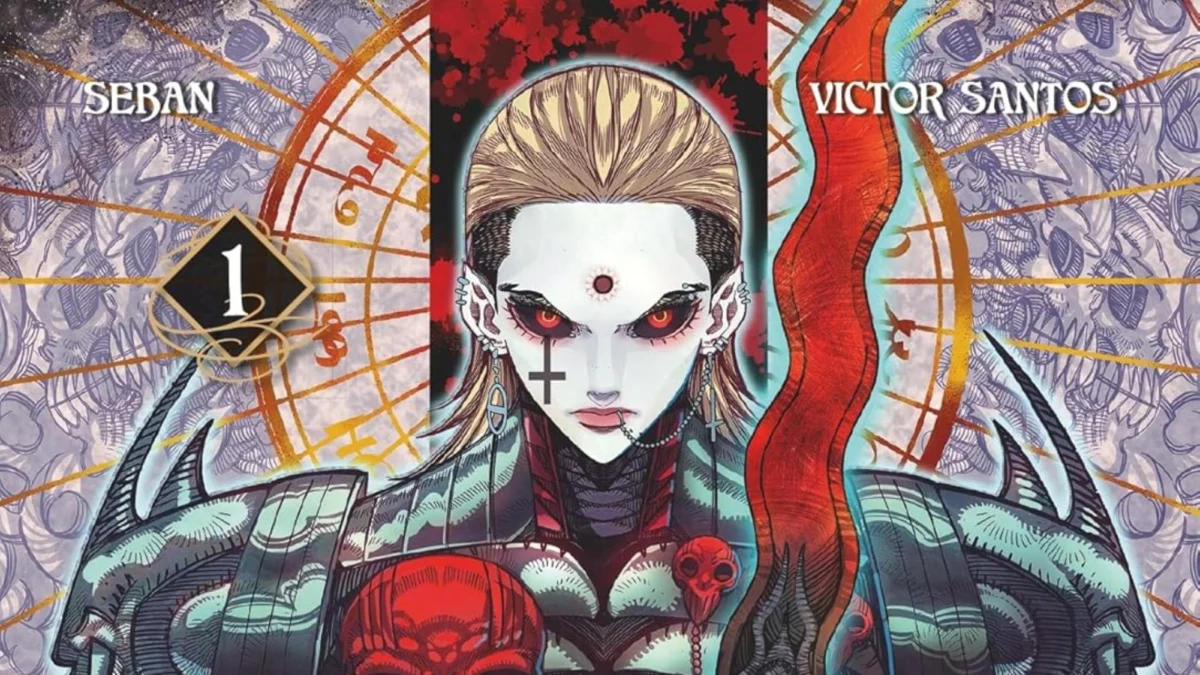
In a move that has sent ripples through the international comic book community, Panini UK has officially announced a project that bridges the divide between Franco-Belgian graphic novels and the Japanese manga industry. At the recent MCM London Comic Con, the publisher unveiled a direct manga adaptation of Requiem: Vampire Knight, the legendary dark fantasy series created by writer Pat Mills and artist Olivier Ledroit.
The announcement, delivered during a presentation on Panini’s upcoming manga slate, marks a historical curiosity: the adaptation of a Western graphic novel series into the manga format. While the cross-pollination of Eastern and Western media is nothing new, Requiem stands apart as an explicitly Western property being reimagined through the stylistic lens of Japanese sequential art. With the first volume slated for release in October 2026, the industry is left to wonder if this represents a new frontier for intellectual property migration.
The Genesis of a Dark Fantasy Epic
To understand the significance of this adaptation, one must first look at the source material. Requiem: Vampire Knight, which debuted in 2000, is a maximalist, baroque masterpiece that defied the conventions of European comics at the time of its release. Born from the minds of Pat Mills—the legendary architect of 2000 AD, Judge Dredd, and Sláine—and the visually audacious Olivier Ledroit, the series is a brutal, high-concept exploration of a realm known as "Resurrection."
Resurrection is a terrifying, inverted reflection of Earth. It is a purgatory where time flows backward, causing souls to age in reverse until they fade into oblivion as fetuses. Geography is similarly twisted; oceans are replaced by continents of fire, and morality is fundamentally upended. In this world, the most heinous sinners from Earth are reincarnated as powerful, monstrous entities, while the virtuous are relegated to the bottom of the social hierarchy. It is a world where evil is not merely tolerated; it is the currency of power.
Chronology: From the Trenches of WWII to the Manga Page
The narrative follows Heinrich Augsburg, a German soldier serving on the Eastern Front during World War II. His life is cut short in a violent death, only for him to awaken in the hellish landscape of Resurrection. Reborn as a "Vampire Knight"—a member of the elite ruling class—he adopts the name "Requiem."
The series has enjoyed a quarter-century of acclaim, marked by a specific trajectory:
- 2000: The series launches under Mills’ own Nickel Editions in France, immediately garnering a cult following for its visceral, uncompromising imagery.
- Early 2000s: The series is picked up by Glénat, solidifying its place in the European comic canon. It gains traction in the UK and across Europe via Panini.
- 2005–2010: Requiem gains a massive international foothold, finding a home in the pages of Heavy Metal magazine in the United States, which helped bridge the gap between European dark fantasy and American readers.
- 2010s: The universe expands with the spin-off Claudia: Vampire Knight, featuring art by Franck Tacito, further exploring the intricate political and social machinations of Resurrection.
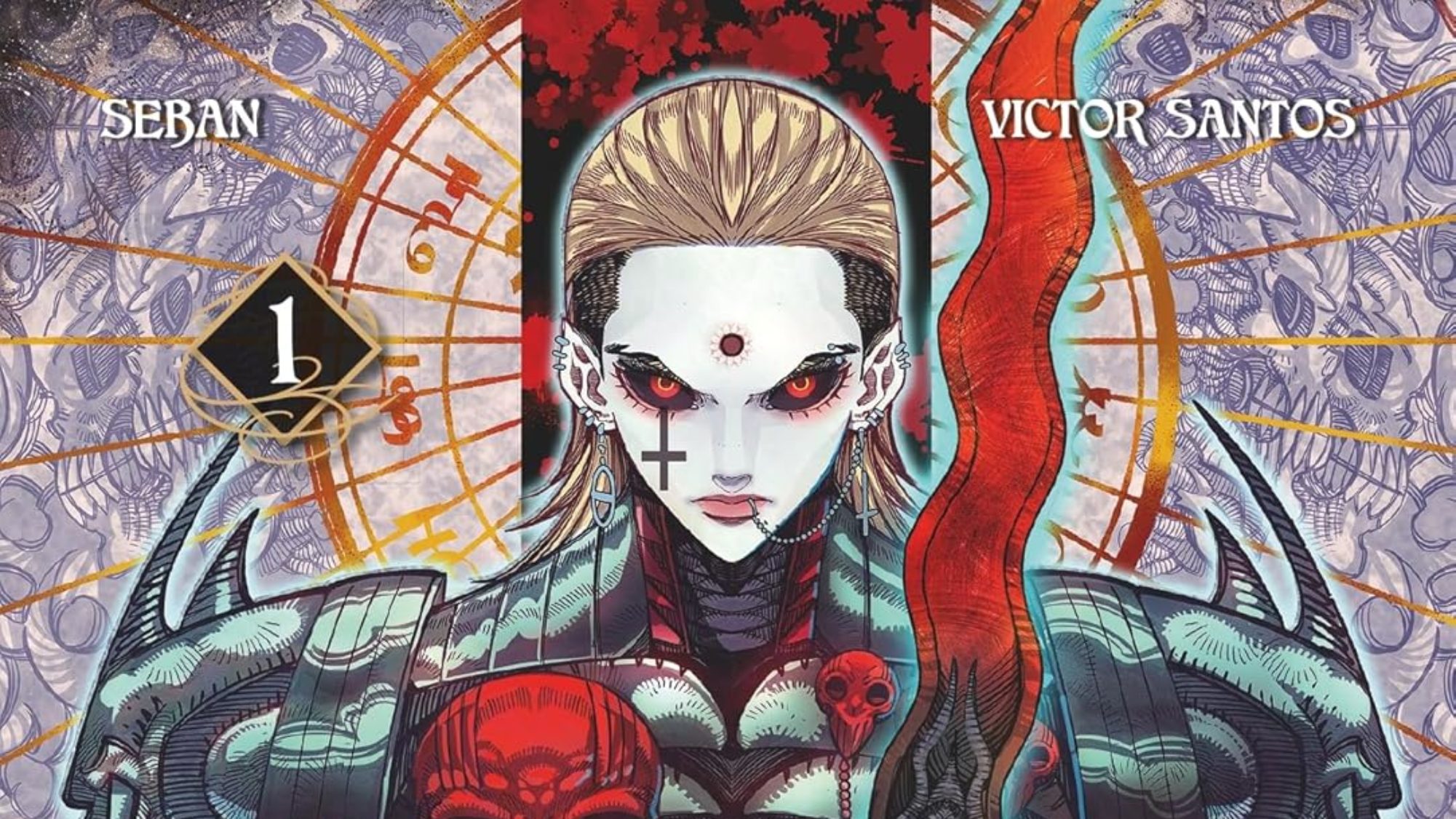
- 2026: The announcement of a full-scale manga adaptation, with the first volume scheduled for an October release, written by Victor Santos and illustrated by Seban.
Supporting Data: Why Requiem?
The decision to adapt Requiem into manga is not purely aesthetic; it is a calculated response to the material’s inherent strengths. The series has always possessed a "manga-adjacent" intensity. Ledroit’s art is notoriously maximalist—drenched in blood, gothic architecture, and demonic anatomy. This aesthetic, which balances high-fantasy sensibilities with extreme horror, is perfectly suited for the kinetic, black-and-white, panel-heavy pacing of the manga medium.
Furthermore, the character-driven drama—specifically the protagonist’s obsession with finding his lost love, Rebecca—provides a strong emotional anchor that fits the melodramatic, high-stakes nature of shonen or seinen manga narratives. By moving into the manga format, the story hopes to capture a new demographic of readers who may have been intimidated by the large-format, full-color European albums but are deeply invested in the fast-paced, serialized nature of Japanese graphic novels.
Official Responses and Creative Direction
The adaptation project is being spearheaded by the original French publisher, Glénat, in collaboration with Panini. While Pat Mills remains the foundational voice of the series, the manga is being handled by a new creative team: writer Victor Santos and artist Seban.
In the official synopsis provided for the upcoming release, the creative team emphasizes the "unrelenting tale of horror and redemption." The choice of Santos—a creator known for his own gritty, stylized noir and action works—suggests a desire to retain the brutal, kinetic energy of the original while streamlining the narrative for the manga format.
Panini UK’s presentation at MCM London made it clear that this is not merely a translation, but a total reimagining. By utilizing a Japanese-influenced visual vocabulary, the team aims to bring the "twisted mirror of Earth" to life in a way that feels fresh for both long-time fans of the graphic novels and newcomers to the franchise.
Implications: A New Era of Cross-Cultural Adaptation?
The question posed by industry observers—"Is this the first Western comic to be directly adapted as a manga?"—carries significant weight. While there have been sporadic attempts to "manga-ize" Western properties in the past (such as various licensed spin-offs of Marvel or DC characters), Requiem represents something more substantive: a prestige European intellectual property being treated with the same artistic reverence as a native Japanese series.

Breaking the East-West Barrier
For decades, the comic industry has seen a one-way flow of influence, with Western creators mimicking the visual shorthand of manga. This adaptation signals a potential pivot. If Requiem: The Manga proves successful, it could open the floodgates for a new genre of "Euro-Manga." European publishers, who hold the rights to some of the most sophisticated dark fantasy and sci-fi series in history, may find that the Japanese market—and the global manga-reading audience—is ready to consume these stories in a format that feels more accessible than the traditional Western "album."
The Challenge of Tone
The primary challenge for this adaptation will be tone. Requiem is notorious for its extreme violence, sadomasochism, and dark, cynical humor. These elements are a hallmark of Pat Mills’ writing style, honed over decades at 2000 AD. Translating this "euro-grit" into the cultural framework of manga—which, while often violent, operates under a different set of narrative tropes—will be a high-wire act. If the team succeeds, it will prove that the core themes of Requiem—love, war, and the corruption of the soul—are truly universal.
Conclusion
As we look toward October 2026, the anticipation surrounding the Requiem manga adaptation is palpable. It is a rare instance where a legacy property, having already spanned twenty-five years, is given a new lease on life in a completely different artistic medium.
Whether this becomes the first of many such adaptations or remains a singular, daring experiment, the Requiem manga stands as a testament to the enduring power of Pat Mills and Olivier Ledroit’s creation. By daring to reimagine a classic of the Franco-Belgian tradition within the structure of Japanese manga, the publishers are not just adapting a story—they are proving that the language of dark fantasy is, indeed, a universal one. As the series nears its planned conclusion in volumes 13 or 14, this new manga iteration ensures that the horrors of Resurrection will continue to haunt the pages of comic history for a new generation.










No comments yet. Be the first to join the conversation!