

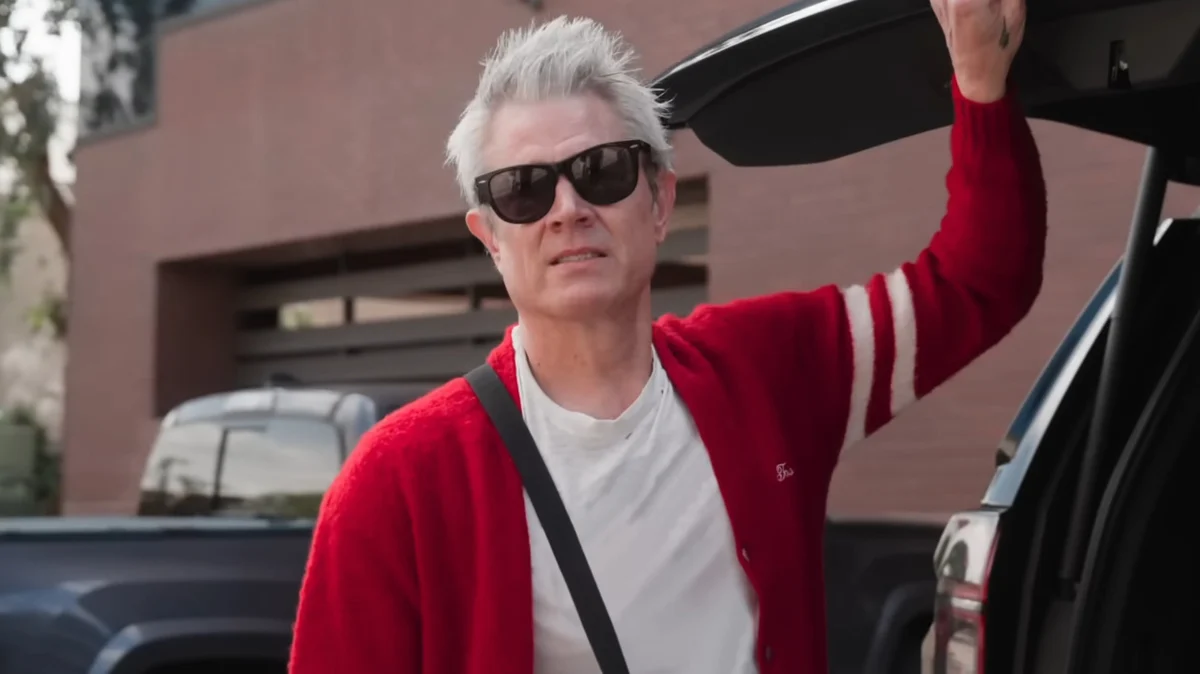
After more than two decades of defying gravity, common sense, and the limits of the human pain threshold, Johnny Knoxville and the Jackass crew have officially hung up their stunt gear. The release of Jackass: Best and Last marks the definitive conclusion to one of the most improbable and influential comedy franchises in cinematic history. However, the swan song has arrived with a whimper rather than a roar at the box office, setting an unwanted record for the series while highlighting the changing landscape of theatrical comedy.
The Numbers: A Record-Setting Low
For a franchise that has historically thrived on breaking records—mostly for the sheer audacity of its stunts—Jackass: Best and Last has set a new benchmark for the wrong reasons. The film opened to a domestic total of $8.4 million, with an additional $1.9 million from international markets, resulting in a global opening weekend of $10.3 million.
To put these figures into perspective, one must look at the trajectory of the franchise. Jackass Forever, released in 2022 to significant fanfare, capitalized on a decade of pent-up demand to earn a $23 million domestic opening. It went on to gross $80.5 million worldwide, proving that even after twenty years, the brand remained a potent theatrical force. Best and Last, conversely, has failed to capture the same cultural momentum. Even the original Jackass: The Movie (2002), which served as the franchise’s bold, unpolished leap from MTV to the multiplex, opened to $22.7 million—a figure that, when adjusted for inflation, dwarfs the current opening of Best and Last.
A Chronological Look at the Jackass Legacy
To understand the significance of this final chapter, it is necessary to chart the evolution of the Jackass phenomenon.
The MTV Origins (2000–2002)
The franchise was born from the chaotic, low-fidelity energy of the early 2000s, serving as a spiritual successor to skate culture and guerrilla-style prank television. When Jackass: The Movie hit theaters in 2002, it was met with moral panic and immense commercial success, signaling a massive shift in how audiences consumed "reality" entertainment.
The Golden Era (2006–2010)
Jackass Number Two (2006) and Jackass 3D (2010) solidified the crew as global icons. The use of 3D technology in the third installment was a masterstroke of absurdity, turning grotesque physical comedy into a visceral, immersive experience. These films were massive box-office hits, cementing the crew’s status as Hollywood outliers who could consistently out-earn traditional rom-coms and dramas.
The Transition and Spin-offs (2013–2022)
The release of Bad Grandpa in 2013 represented a pivot toward narrative-driven, hidden-camera storytelling. While successful, it lacked the ensemble chemistry that defined the core series. It wasn’t until 2022’s Jackass Forever that the original gang reunited, reminding audiences of the emotional core buried beneath the pranks—a deep, lifelong friendship.
The Final Bow (2024)
Jackass: Best and Last is not a traditional sequel. It is a compilation—a "greatest hits" package of archival footage interspersed with new, smaller-scale bits. It serves as a documentary-style victory lap, acknowledging the physical toll the stunts have taken on the performers over the years.
Strategic Retrenchment: Why the Low Numbers Don’t Hurt
Despite the record-setting low, industry analysts suggest that Paramount Pictures is not particularly concerned. In the modern theatrical landscape, "low" numbers are relative.
Jackass: Best and Last was produced on a lean budget of approximately $10 million. In the era of $200 million superhero blockbusters, this budget is nominal. Paramount marketed the film with transparency; they did not attempt to sell it as a sprawling, high-budget spectacle. Instead, they positioned it as a fan-focused epilogue.
The studio’s strategy here is multi-faceted:
- The Library Effect: The release of a new film, even a smaller one, creates a "halo effect" that drives viewership for the entire Jackass library on streaming platforms and increases sales of home media box sets.
- Counterprogramming: The film was strategically released to serve as counterprogramming to larger, more family-oriented or high-concept films. When other major releases underperform—such as the recent, widely publicized struggles of the Supergirl feature—a low-risk title like Best and Last serves as a reliable placeholder that ensures theaters have product on their screens without requiring massive marketing spend.
- VOD and Streaming Potential: The film’s value extends far beyond its theatrical run. Its performance on VOD and eventually on Paramount+ is likely to yield high profit margins given the low barrier to entry.
The Cultural Implications: The End of an Outlier
The decline in box office interest for this final entry raises questions about the future of stunt-based comedy in theaters. The Jackass franchise succeeded because it was a product of a specific time—an era before viral social media clips made every backyard stunt easily accessible on a smartphone screen.
When Jackass debuted, the idea of watching high-definition, high-budget stunts performed by professionals was a novelty. Today, the "creator economy" has democratized the prank genre. Audiences can find similar content on TikTok or YouTube for free. Consequently, the "event" nature of a Jackass movie has diminished.
However, Best and Last succeeds in its own way by leaning into nostalgia. It reminds viewers that these were not just random people doing stunts; they were a group of friends who grew up together, suffered together, and aged together on screen. The "muted" nature of this victory lap is perhaps the most honest way for the franchise to end. It acknowledges that the cast is older, their bodies are battered, and the world has moved on, yet the camaraderie remains.
Official Stance and Future Prospects
While Paramount has not officially ruled out the possibility of future spin-offs or brand extensions, the sentiment from key figures—including Johnny Knoxville and director Jeff Tremaine—is that the core Jackass experience is finished.
"We’ve pushed our luck as far as we can," Knoxville noted in recent interviews, highlighting the need to prioritize longevity and health over the next outrageous stunt. This sense of finality is reflected in the film’s tone. There is no attempt to "reboot" the series with a younger cast; the film is firmly rooted in the history of the original crew.
Conclusion: A Fitting Farewell
The commercial performance of Jackass: Best and Last should not be viewed as a failure of the brand, but rather as a successful winding down of a legacy. For two decades, the Jackass team defied the rules of Hollywood, proving that a group of misfits could become one of the most profitable comedic ensembles in history.
If this is indeed the final stunt, it leaves behind a complicated but undeniably influential legacy. The franchise fundamentally changed the nature of comedy, blurring the lines between reality TV, stunt performance, and cinema. While the final box office numbers might be a footnote in the history of the franchise, the cultural footprint left by Knoxville and his cohort is indelible. They taught a generation that it’s okay to be ridiculous, that pain is temporary, and that, in the end, it’s all just for a laugh.








