

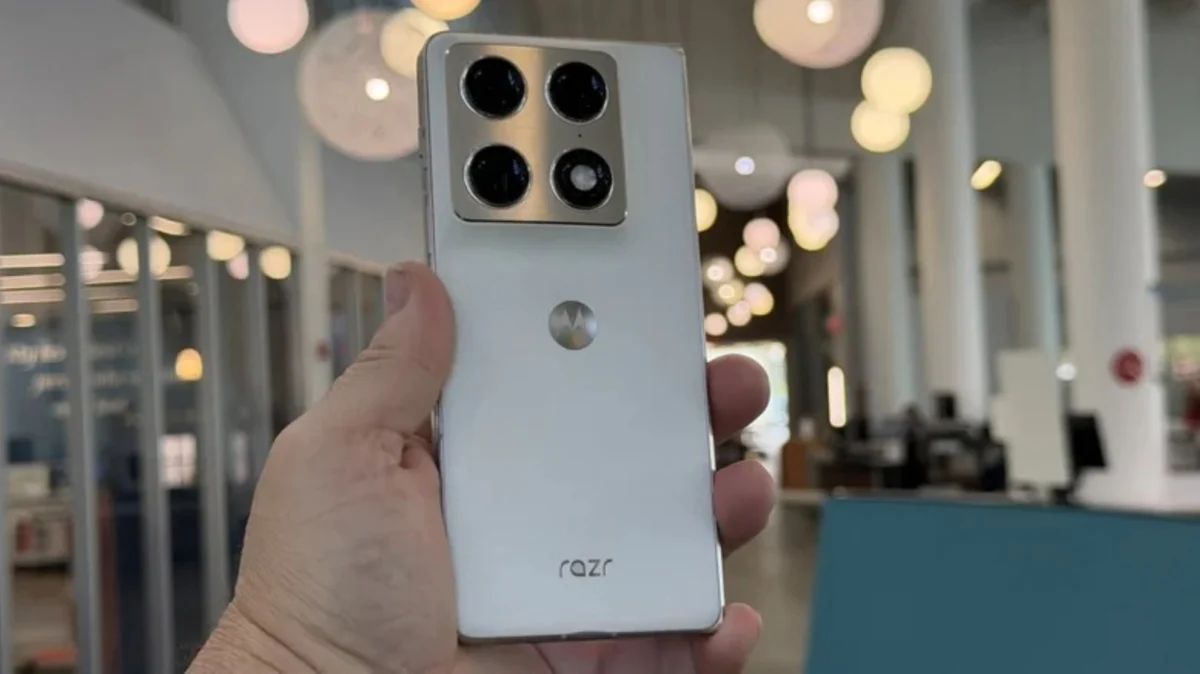
The foldable smartphone landscape in the United States has undergone a seismic shift. For years, the market was a duopoly dominated by Samsung’s iterative refinements and Google’s software-first approach. However, with the arrival of the new Motorola Razr Fold, the segment has finally expanded into the "book-style" category—devices that unfold into a tablet-sized canvas. While the Razr Fold has garnered critical acclaim for its premium build and refined aesthetics, it exists in a complex ecosystem defined by trade barriers, shifting consumer expectations, and the looming shadow of Apple’s rumored entry into the space.
For the American consumer, choice remains limited. While global markets are flooded with innovative, thin, and powerful hardware from Chinese manufacturers, the U.S. consumer is largely restricted to domestic carrier-approved devices. This article explores the current state of the foldable market, the top five alternatives to the Razr Fold, and the implications for a future where folding screens may become the industry standard.
1. The State of the Foldable Market: A Chronology of Innovation
The history of the modern foldable began in 2019, a year that served as a "proof of concept" phase for the industry. Samsung’s original Galaxy Z Fold was a prototype-level device that suffered from durability concerns, yet it set the stage for what was to come.
- 2019–2021 (The Formative Years): Samsung established the segment, while Motorola attempted to revive its iconic brand identity through nostalgia-driven, flip-style devices.
- 2022–2024 (Refinement): Google entered the fray with the Pixel Fold, leveraging its position as the architect of Android to challenge Samsung’s UI dominance. During this period, the industry focused on minimizing the "crease" and perfecting hinge mechanics.
- 2025–2026 (The Current Era): We have reached a point of maturity. Hardware is no longer about "will it break," but "how thin can it be?" The Motorola Razr Fold marks a pivot point where established flip-phone players are moving into the power-user, book-style market.
2. Top Five Alternatives to the Motorola Razr Fold
If you are currently evaluating the Razr Fold but are hesitant to pull the trigger, the market offers several compelling, high-performance alternatives.
The Samsung Galaxy Z Fold 7: The Industry Titan
Samsung remains the elephant in the room. Over seven generations, the Z Fold has evolved from a "chunky brick" into a device that rivals the dimensions of the slab-style Galaxy S26 Ultra.
- Strengths: Unrivaled ecosystem integration, massive app support, and a refined inner display with a significantly reduced crease.
- Weaknesses: Battery performance and charging speeds. At 4,400mAh and 25W charging, the Z Fold 7 feels sluggish compared to the silicon-carbon battery tech utilized by newer competitors.
- Market Position: Starting at nearly $2,000, it remains a premium status symbol, though potential buyers should keep an eye on the imminent launch of the Z Fold 8.
The Google Pixel 10 Pro Fold: The Software-First Powerhouse
Despite a mouthful of a name, the Pixel 10 Pro Fold is perhaps the most "agile" foldable on the market.
- Key Advantage: Google’s first-party software advantage provides the cleanest Android experience, complete with long-term update support.
- The "PixelSnap" Ecosystem: The inclusion of magnetic back-plate technology (similar to MagSafe) is a game-changer for accessory compatibility.
- Drawbacks: Multitasking is surprisingly limited. While the hardware is capable, the software currently only supports two-app side-by-side configurations, a step behind the competition.
The Motorola Razr Ultra (2026): The Minimalist’s Choice
For those who find the book-style foldables too cumbersome, the Razr Ultra remains the gold standard for flip-style devices.
- Design Philosophy: Motorola distinguishes itself through texture and material science, offering finishes like wood and Alcantara that Samsung’s glass-and-metal slabs cannot match.
- Performance: Despite a stagnant processor compared to last year’s model, the Snapdragon 8 Elite remains a beast. However, a $200 price increase has left some critics questioning the value proposition.
The Samsung Galaxy Z Flip 7: The Lifestyle Foldable
The Z Flip series is responsible for the mainstream normalization of foldables. It is designed for the user who wants a smartphone that shrinks for portability rather than expands for productivity.
- Performance: It utilizes an Exynos processor, which, while efficient, lacks the raw power of the Qualcomm chips found in its counterparts.
- Target Audience: It is a minimalist device. To unlock its full potential (like running multiple apps on the cover screen), users must delve into Samsung’s "Good Lock" suite, making it a "tinkerer’s" phone rather than an out-of-the-box powerhouse.
The Honor Magic V6: The Forbidden Fruit
The Honor Magic V6 represents the best of what the U.S. market is currently missing.
- Why it’s an outlier: It features the cutting-edge Snapdragon 8 Elite, a massive 6,660mAh battery, and IP68/IP69 water and dust resistance.
- The Reality Check: Because it is not officially sold in the U.S., it requires importation. For the average consumer, this means no carrier support, potential issues with Google Services, and no local warranty. It is a device for the adventurous, not the pragmatic.
3. Supporting Data: Battery and Durability Metrics
A critical differentiator in 2026 is the adoption of silicon-carbon battery technology. The Motorola Razr Fold and the Honor Magic V6 utilize these high-density cells, allowing for larger capacities in thinner chassis.
| Device | Battery Capacity | Charging Speed | Water/Dust Rating |
|---|---|---|---|
| Razr Fold | 6,000mAh | High (Fast) | IP48/49 |
| Z Fold 7 | 4,400mAh | 25W | IPX8 |
| Honor V6 | 6,660mAh | Ultra-Fast | IP68/69 |
These metrics highlight a growing divide: while Samsung focuses on brand cachet and software polish, the newer entrants are winning the "spec sheet" war regarding longevity and ruggedization.
4. Official Responses and Industry Outlook
Manufacturers remain cagey regarding their long-term roadmaps, particularly with the looming entry of Apple into the folding market. Industry analysts suggest that Apple’s entry will serve as a "legitimacy multiplier." When Apple finally unveils its folding device, it will likely force the U.S. carriers to harmonize their support for folding form factors, potentially opening the door for more international brands to enter the U.S. market.
Motorola, for its part, has defended its pricing by citing the "AI industry’s insatiable hunger for hardware," which has driven up the cost of premium components. Samsung, meanwhile, continues to double down on the "ecosystem" argument, emphasizing that the value of a Z Fold is not in its hardware alone, but in the seamless integration with tablets, wearables, and PCs.
5. Implications for the Future of Mobile
The transition from "slab" to "fold" is no longer a niche curiosity; it is the natural evolution of the smartphone. However, several implications remain:
- Software Fragmentation: As devices like the Razr Fold and the Pixel Fold offer different multitasking paradigms, Android developers face a fragmented landscape. Writing an app that works seamlessly on a 6-inch cover screen, a 7.6-inch inner screen, and a 10-inch tablet is a significant engineering hurdle.
- Protectionism vs. Innovation: The U.S. market’s reliance on carrier-sold devices acts as a barrier to innovation. If domestic manufacturers like Motorola and Samsung do not face stiff competition from international brands like Honor or Xiaomi, the rate of hardware innovation may slow.
- The Durability Threshold: The move toward IP69 ratings is critical. As these devices become more expensive, the "fear factor" regarding debris entering the hinge must be eradicated for foldables to capture the mass market.
Final Verdict
The Motorola Razr Fold is a triumphant entry into the book-style category, but it is not a unilateral winner. The Samsung Galaxy Z Fold 7 remains the king of the ecosystem, the Pixel 10 Pro Fold is the best choice for pure software enthusiasts, and the Honor Magic V6 proves that the best hardware often exists just outside our reach. For the consumer, the choice boils down to a balance between raw power, software longevity, and the willingness to step outside the traditional "carrier store" experience. As we move into the second half of 2026, the question is no longer if you should buy a foldable, but which version of the future you want to hold in your pocket.












No comments yet. Be the first to join the conversation!