

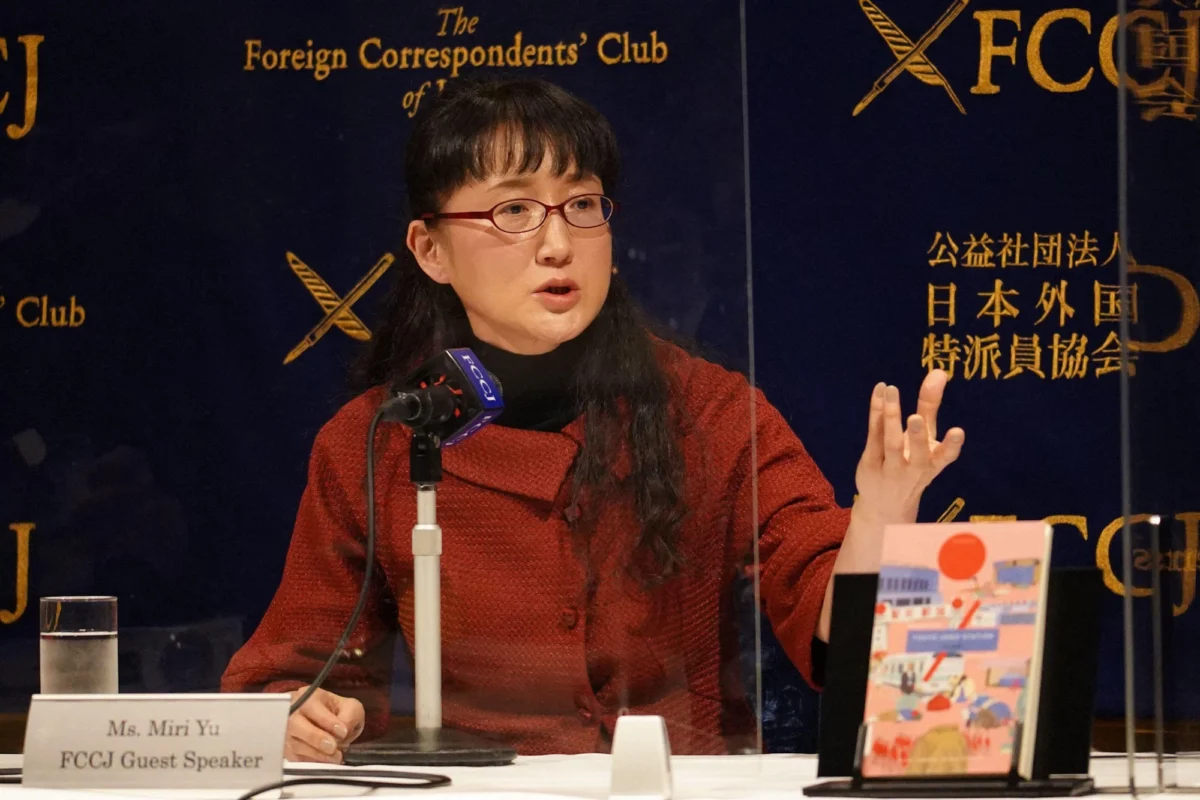
Japan’s long-standing debate over national identity and the place of foreigners within its borders has reached a volatile new inflection point. In an era defined by rapid demographic shifts and a polarized digital landscape, the boundaries of who is considered "Japanese" are being aggressively redrawn by nationalist rhetoric. At the center of this firestorm is one of the nation’s most decorated literary figures: Yu Miri.
The acclaimed novelist, known for her profound explorations of the human condition and her own Zainichi Korean heritage, has become the target of a vicious online campaign. Her crime, in the eyes of her detractors, was simply speaking out against the rising tide of anti-foreigner sentiment in Japanese political discourse. The resulting vitriol has transformed a routine political disagreement into a national reckoning over belonging, legitimacy, and the health of Japanese democracy.
The Catalyst: A Call for Civility
The conflict began on the social media platform X (formerly Twitter), where Yu Miri, an Akutagawa Prize-winning author whose work Tokyo Ueno Station garnered international acclaim, issued a critique of the "Japanese First" rhetoric utilized by political factions such as the Sanseito party. Following the previous year’s Upper House election, Yu observed a disturbing normalization of exclusionary attitudes.
Rather than engaging with her critique on a policy or ideological level, a segment of the online population responded with raw, xenophobic hostility. The consensus among her attackers was chillingly uniform: as a person of Zainichi Korean descent, Yu possessed no standing to comment on the internal affairs of the Japanese state.
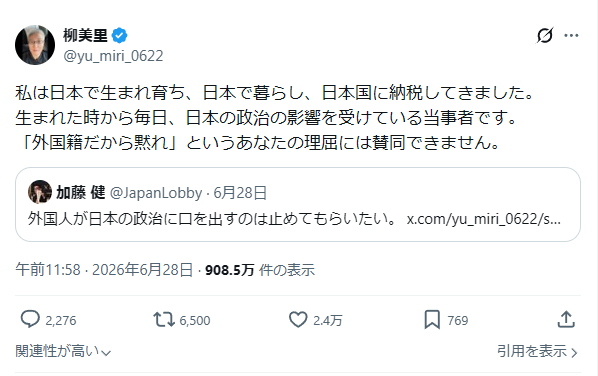
In a defiant response that resonated across the country, Yu wrote: "I was born and raised in Japan, I live in Japan, I pay taxes in Japan. Every day since I was born, I’ve been under the influence of Japan’s government. I can’t get on board with your sophistry arguing that I should shut up because I’m a foreign national."

Chronology of a Digital Siege
To understand the gravity of this incident, one must examine the timeline of the escalation:
- Pre-Controversy Context: Since the 2010s, nationalist movements in Japan have increasingly pivoted from street-level demonstrations to the digital sphere. The "Japanese First" slogans championed by emerging political groups began gaining traction, creating an environment where exclusionary language was increasingly framed as "patriotism."
- The Initial Post: Yu Miri, leveraging her platform as a respected intellectual, posted a thread calling for a more inclusive society and warning against the erosion of democratic norms through hate speech.
- The Backlash: Within hours, the thread was flooded with vitriolic comments questioning her right to speak. The discourse quickly devolved from criticizing her political stance to attacking her ancestral identity.
- The Institutional Defense: Recognizing that the silence of the establishment would only embolden the attackers, Hatori Ryo, an editor at the influential Weekly Gendai, took to X to condemn the abuse. "I can’t turn a blind eye to discrimination," he stated, setting off a wave of support from civil society.
- Broadening the Debate: The incident catalyzed a nationwide conversation, moving beyond the individual case of Yu Miri to address systemic issues regarding the treatment of minority voices in the public square.
Understanding the "Zainichi" Context
To understand why this controversy is so deeply felt, one must acknowledge the history of the Zainichi Korean community. This group consists of ethnic Koreans who have maintained roots in Japan, often tracing their residency back to the period of the Japanese occupation of Korea (1910–1945).
While many Zainichi Koreans have lived in Japan for three or four generations, they occupy a complex legal and social position. Despite their deep integration into the workforce, the tax system, and the cultural fabric of Japan, they are often subjected to the "perpetual foreigner" trope. For decades, they have navigated structural barriers in employment and public life. The 2016 Hate Speech Elimination Act was designed to curb such discrimination, yet as the case of Yu Miri proves, the legislation has struggled to keep pace with the migration of hate speech into the algorithmic echo chambers of social media.
Supporting Data: The Migration of Hate
Researchers who track extremist activity in Japan have noted a significant evolution in the methodology of hate speech. According to reports from the Justice Ministry and academic observers, the decline of physical, street-based protests—which were heavily criticized during the 2010s—does not indicate a decrease in xenophobia. Instead, it signals a strategic migration.
Digital platforms provide a veil of anonymity that encourages radicalization. Recent data suggests that the volume of anti-foreign sentiment on X and other platforms has surged, particularly around election cycles. Recognizing this, the Japanese government has initiated plans for a nationwide survey of online hate speech, the first of its kind. The goal is to collect empirical data to inform future legal frameworks that might address digital harassment without infringing upon freedom of speech.
Official and Civil Responses
The defense of Yu Miri by her editor, Hatori Ryo, was a watershed moment. In a society where the literary and media establishment often remains neutral to avoid controversy, Hatori’s intervention signaled that the threshold for acceptable discourse had been crossed.
"Foreign nationals and ethnic minorities who live in Japan have every right to express political opinions about the society in which they reside," Hatori argued. This sentiment was echoed by thousands of users who adopted hashtags calling for an end to the harassment, effectively turning the tide of the conversation from one of victimization to one of solidarity.
This reaction highlights a growing divide in Japan between those who define national identity through blood and origin, and those who define it through civic participation, contribution, and shared future.
The Implications: Who Belongs to Japan?
The case of Yu Miri is a diagnostic test for modern Japan. It reveals that the country is currently grappling with three primary tensions:
- The Definition of "Citizen": As Japan faces a demographic crisis and a shrinking workforce, it is increasingly reliant on foreign residents and immigrants. The friction seen in the attacks on Yu suggests that while the economic reality of Japan is changing, the social and psychological barriers to acceptance are hardening.
- The Digital Public Square: The inability of current legal frameworks to address online harassment has created a "Wild West" environment. The upcoming Justice Ministry survey is an admission that the current approach is insufficient to protect public figures—and ordinary citizens—from targeted, identity-based abuse.
- The Future of Democracy: A democracy is only as strong as its ability to integrate diverse viewpoints. By attempting to silence voices based on heritage rather than merit or argument, the nationalist fringe is attempting to narrow the scope of the Japanese public.
Ultimately, the controversy serves as a stark reminder that the battle for Japan’s identity is not merely being fought in the halls of the Diet, but in every comment section, tweet, and public statement.
Yu Miri’s resilience, supported by a significant segment of the public, suggests that there is a robust movement in Japan that rejects the exclusionary vision of the nationalist fringe. However, the path forward remains fraught. As the country approaches a future defined by a more globalized population, the ability of Japanese society to define itself not by the "purity" of its inhabitants, but by the inclusivity of its discourse, will be the ultimate measure of its progress.
The question remains: will the digital age be used to tear the social fabric apart, or will it be the platform where a more modern, inclusive definition of "Japanese" is finally forged? For now, the story of Yu Miri stands as a compelling, albeit sobering, case study in that ongoing struggle.











