

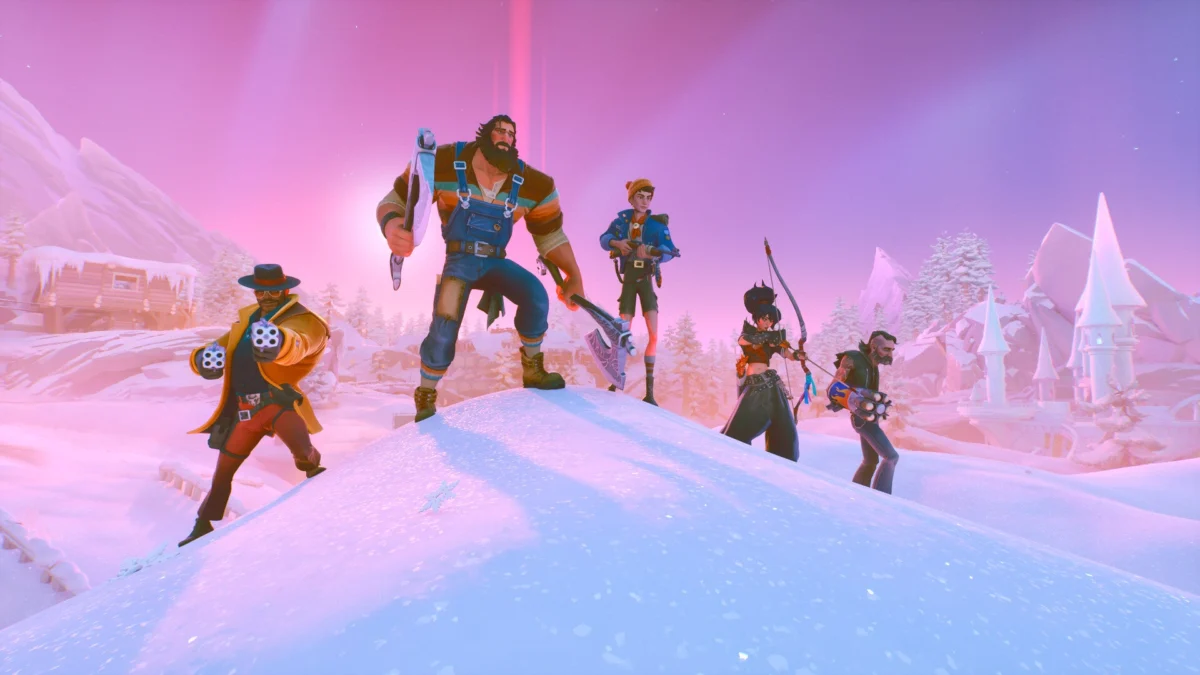
The landscape of the modern video game industry is increasingly defined by a paradox: while the tools for development have never been more accessible, the barriers to achieving commercial viability have never been higher. Night Street Games, the indie studio behind the recently released hero shooter Last Flag, has become the latest developer to confront this harsh reality. Only days after publicly assuring its player base that the project would continue to receive support, the studio has confirmed a reduction in its workforce, citing financial performance that fell short of internal projections.
The Chronology of a Failed Launch
The trajectory of Last Flag serves as a stark case study in the volatility of the current market. Designed as an antidote to the predatory nature of the modern "live service" model, Last Flag was marketed as a complete experience—a game devoid of battle passes, aggressive microtransactions, or the treadmill of seasonal content that defines contemporary AAA shooters.
The Initial Pivot
At the beginning of this month, the studio reached a critical juncture. Faced with dismal player retention and low engagement figures on Steam, the team made the difficult decision to halt active development on new content. In an open letter to the community, Night Street Games admitted that they had failed to find the "sustainable audience" required to maintain a standard development cadence.
Crucially, the studio attempted to manage expectations while maintaining a sense of stability. They promised that while console development and future expansion would be put on hold, the game would not be shuttered. They pledged a series of final updates, including a tenth character, a new map, and the introduction of leaderboards, intended to provide the existing community with a polished "complete" experience. "Last Flag isn’t going anywhere," they stated on Steam, emphasizing that the project was not being abandoned.
The Downward Spiral
Despite these assurances, the financial reality behind the scenes proved more dire than the studio’s public-facing messaging suggested. Within days of pledging to keep the game alive, the economic pressure became untenable. Executive Producer Jonathan Jelinek confirmed via LinkedIn that the studio had not achieved the anticipated financial success, resulting in an immediate reduction in the size of the development team.
Examining the Financial and Structural Factors
To understand why Last Flag struggled, one must look at the competitive landscape of the hero shooter genre. Dominated by industry titans like Blizzard’s Overwatch 2, Valve’s Team Fortress 2, and Riot Games’ Valorant, the genre has become a graveyard for smaller projects that lack the massive player bases necessary to sustain competitive multiplayer environments.
The "Indie" Disadvantage
Night Street Games entered the fray with a distinct philosophy: avoid the "live service" trap. They hoped that by offering a premium, finished product, they could appeal to players disillusioned by the monetization schemes of the AAA giants. However, this strategy faced a fundamental hurdle: hero shooters are, by their very nature, reliant on a large, active population. When the player count drops below a certain threshold, matchmaking times soar, skill-based matchmaking becomes erratic, and the game loses its "life," rendering it unattractive to new arrivals.
Lack of Capitalization
For an independent studio, the runway is significantly shorter than that of a publicly traded publisher. Without the backing of a major venture capital firm or a massive publisher, Night Street Games likely relied on initial sales to fund ongoing maintenance. When those sales failed to materialize at the necessary volume, the "financial reality" Jelinek referenced became an existential threat. The decision to reduce staff is rarely made for profit-taking in the indie sector; it is almost exclusively a defensive maneuver to extend the studio’s lifespan, even if that lifespan is now focused on maintenance rather than growth.
The Human Cost: A Call for Support
The most sobering aspect of this development is the human impact. In his LinkedIn statement, Jelinek’s tone was one of professional regret and advocacy for his former team. "Some exceptionally talented developers were affected by this decision," he noted, pivoting quickly to a request for industry peers to assist those laid off.
This cycle of hiring and firing is symptomatic of a broader issue within the gaming industry, where developers are often the first to bear the brunt of miscalculated market strategies. When a project fails to meet commercial expectations, it is rarely the initial concept or the underlying tech that is blamed by management, but the headcount that supported it. For the developers who spent months, if not years, crafting characters, maps, and mechanics for Last Flag, the sudden layoff is a professional setback that highlights the precarity of working in mid-sized or indie studios.
Industry Implications: The Future of Niche Shooters
The struggle of Last Flag raises critical questions about the viability of the "premium indie shooter" model. Is it possible for a small studio to compete in a genre that requires massive scale?
The Death of the Middle Class
The industry is increasingly bifurcated into massive, billion-dollar live-service juggernauts and hyper-niche, low-budget indie titles. Mid-sized projects that require significant ongoing development but lack the marketing budget to break through the "noise" of the Steam store are finding it increasingly difficult to survive. Last Flag fell into this dangerous middle ground. It had high production values—evident in the technical proficiency of its Unreal Engine implementation—but lacked the "stickiness" required to keep players engaged long-term.
Lessons for Future Developers
What lessons can future developers take from the Last Flag situation?
- Community Engagement is not a Safety Net: No matter how much a community loves a project, if the game does not reach a critical mass of players to sustain its infrastructure, "heart" and "good intentions" are not enough to keep the lights on.
- The "Anti-Live Service" Pitch is Risky: While players often vocalize hatred for microtransactions, the industry has proven that the recurring revenue generated by those models is what keeps games alive. By choosing not to implement these, Night Street Games limited their ability to weather a slow post-launch period.
- Transparency vs. Stability: The rapid pivot from "we aren’t going anywhere" to "we are reducing staff" suggests that leadership may have been caught off guard by the speed of their financial decline. For developers, this underscores the importance of maintaining an agile financial strategy that can pivot long before a crisis occurs.
Conclusion: The Path Ahead for Night Street Games
As the dust settles, the future of Last Flag remains uncertain. While the studio has promised that the game will not be shuttered, the reduction in staff suggests that the quality and frequency of the promised updates may be significantly compromised. The "tenth character" and "new map" now stand as potential final milestones for a project that, despite its noble goals, could not overcome the inertia of a crowded and unforgiving market.
For now, the industry’s eyes turn to the affected developers. The outpouring of support on platforms like LinkedIn is a testament to the camaraderie of the game development community, but it does little to alleviate the structural instability that triggered the layoffs in the first place. As the hero shooter genre continues to evolve, the story of Last Flag will likely be cited as a cautionary tale: a reminder that even with the best intentions and talent, the market remains the final, and often most brutal, judge of success.











No comments yet. Be the first to join the conversation!