Laily UPN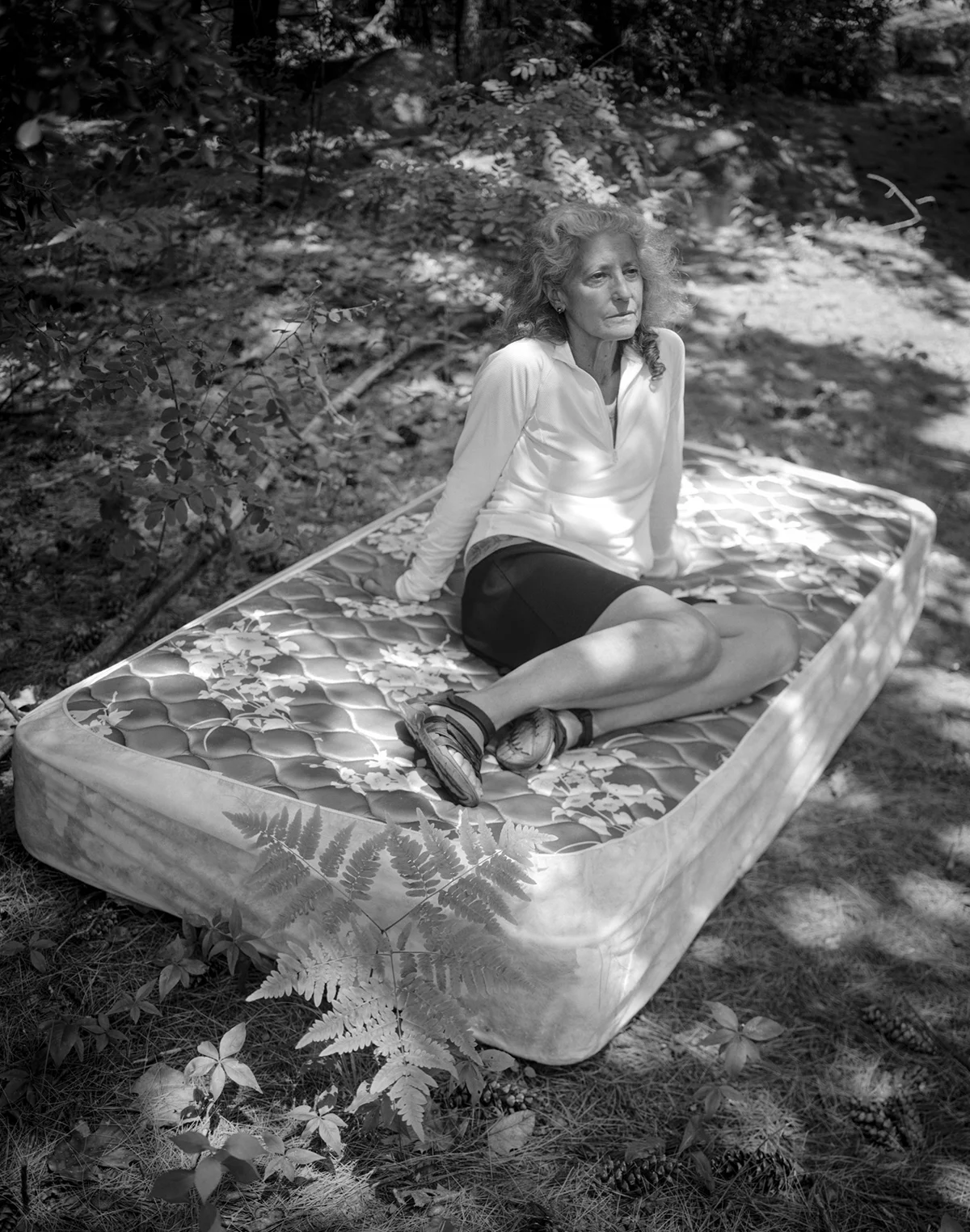
In the quiet, high-contrast frames of lens-based artist Rachel Jump, the human experience is distilled into a meditation on what we are given and what we choose to keep. Her latest body of work, Everyone is Icarus, serves as a poignant intersection between clinical reality and poetic endurance. Born from the sudden, jarring discovery of a hereditary disorder within her father’s genetic profile, the series acts as an archive of a family navigating the sudden visibility of a hidden, biological vulnerability.
For Jump, a Chicago-born artist and Rhode Island School of Design alumna currently pursuing her MFA at the University of New Mexico, the camera is not merely a tool for documentation; it is a medium of performance. Through black-and-white photography, she constructs images that are grounded in the architecture of memory and metaphor, using her own family as the primary subjects in an exploration of identity, resilience, and the inescapable weight of lineage.
The Genesis of a Narrative: A Chronology of Discovery
The trajectory of Everyone is Icarus began not in a studio, but in a doctor’s office. The catalyst was a series of genetic tests performed on Jump’s father, the results of which acted as a rupture in the family’s collective sense of security.
The Turning Point
The revelation of a hereditary condition—one that heightens susceptibility to various, potentially debilitating illnesses—shifted the family’s internal landscape overnight. For years, these traits had existed in the shadows, unacknowledged and unnamed. Once they were codified in clinical data, the family was forced to reckon with a new reality: their biological future was no longer a blank slate, but a path with a predetermined incline.
The Artistic Response
Following the diagnosis, Jump began the arduous process of translating this abstract clinical threat into visual language. Over several years, she transitioned from capturing the mundane aspects of domestic life to creating staged, symbolic tableaux that reflected the emotional burden of the news. By 2023 and into 2024, the project evolved into its current form: a cohesive visual essay that explores the "aftermath" of clarity.
Supporting Data: The Intersection of Genetics and Art
The weight of Everyone is Icarus lies in its ability to bridge the gap between hard science and the soft edges of human emotion. While the project is deeply personal, it speaks to a broader cultural moment in which genetic testing has become a pervasive feature of modern healthcare, forcing families to confront their "biological destiny" earlier than ever before.
The Burden of Predictive Medicine
According to recent clinical psychology research, the "genetic discovery" moment often triggers a state of prolonged anticipatory grief. When an individual learns of a hereditary susceptibility, the cognitive load shifts from living in the present to monitoring for future decline. Jump’s photography captures this precise state of limbo. The black-and-white aesthetic—a hallmark of her practice—strips away the distraction of color, forcing the viewer to focus on the textures of skin, the tension of a posture, and the heavy atmosphere of a room shared by those awaiting a change in health.
The Performance of Resilience
In Everyone is Icarus, the subjects are not merely victims of their DNA. They are participants in a performance of care. Data regarding family systems theory suggests that when one member of a unit faces a crisis, the family’s "interpersonal resilience" is tested by how they redistribute support. Jump’s images depict this: hands holding hands, bodies leaning into one another, and the quiet, domestic rituals that become life-rafts when the external world feels fragile.
Official Perspectives: The Artist’s Statement
The philosophy driving Everyone is Icarus is articulated with profound clarity by Jump herself. She views the work not as a tragedy, but as a deliberate act of navigation.
"Through this collaboration, we guide each other through the weight of newfound clarity," Jump explains. "Supporting one another as we confront how our lineage and shared experiences shape our sense of identity. What aspects of ourselves do we choose to inherit, and what parts lie beyond our control?"
This interrogation of "agency" is the crux of the project. Jump challenges the deterministic view of genetics. If we are born with a blueprint that suggests illness, do we have the power to define our identity in spite of it? Her work suggests that while we cannot edit our genetic code, we can edit the narrative we construct around it.
"My photographs reveal not only the physical and psychological traits we inherit but also how we decide to reconcile with those truths," she notes. "Through this narrative, I hope to uncover the balance between acceptance and agency, highlighting my family’s recognition and defiance toward the path that has been carved out for us."
Implications: The Legacy of Inherited Narratives
The implications of Everyone is Icarus reach far beyond the confines of the gallery space. By turning the lens inward on her own kin, Jump asks a universal question: How much of who we are is a choice, and how much is merely the unfolding of a biological program?
Redefining the Family Archive
Traditionally, family photography serves to preserve moments of joy—birthdays, holidays, and milestones. Jump disrupts this convention by using the camera to archive vulnerability. She transforms the "family album" into a space for complex, difficult truths, effectively expanding the definition of what a family portrait can—and should—contain.
The Myth of Icarus as a Modern Metaphor
The title Everyone is Icarus serves as a brilliant thematic anchor. In Greek mythology, Icarus flies too close to the sun, his wax wings melting under the heat of his ambition and his hubris. In Jump’s interpretation, the "sun" is the harsh light of scientific truth—the genetic data that reveals our mortality. We are all Icarus, she suggests, because we all fly through life with the inherent fragility of our bodies, attempting to soar even as we know the wax might melt.
The Intersection of Art and Advocacy
The project serves as a quiet form of advocacy for those living with chronic and genetic conditions. By aestheticizing the struggle, Jump elevates the experience of the patient and their family, moving it out of the sterile, fluorescent-lit environment of the hospital and into the realm of shared human history. It provides a visual language for experiences that are often described as "indescribable" or "unbearable."
Conclusion: Acceptance and Agency
As Rachel Jump continues her studies at the University of New Mexico, Everyone is Icarus stands as a testament to the power of the photographic medium to act as a reconciling force. The project does not promise a cure, nor does it offer a resolution to the genetic realities her family faces. Instead, it offers something arguably more valuable: a mirror.
In these photographs, we see the defiant act of staying present. We see the way love is redirected to compensate for the limitations of the body. We see the family as a collaborative entity, working in tandem to hold the weight of a shared history while simultaneously looking toward an uncertain future.
The ultimate takeaway from Jump’s work is the reclamation of the self. By choosing to document the reality of their situation, Jump and her family have taken ownership of the narrative. They are no longer just carriers of a disorder; they are the authors of their own resilience. In the interplay between the light and shadow of her prints, we find the answer to her initial inquiry: we may not be able to choose our inheritance, but we have total agency over how we hold it.
Through Everyone is Icarus, Rachel Jump has created more than a body of work; she has created a roadmap for anyone standing on the precipice of a life-altering truth, proving that even when the path is carved for us, we can choose the pace, the tone, and the dignity with which we walk it.


 Basiran