

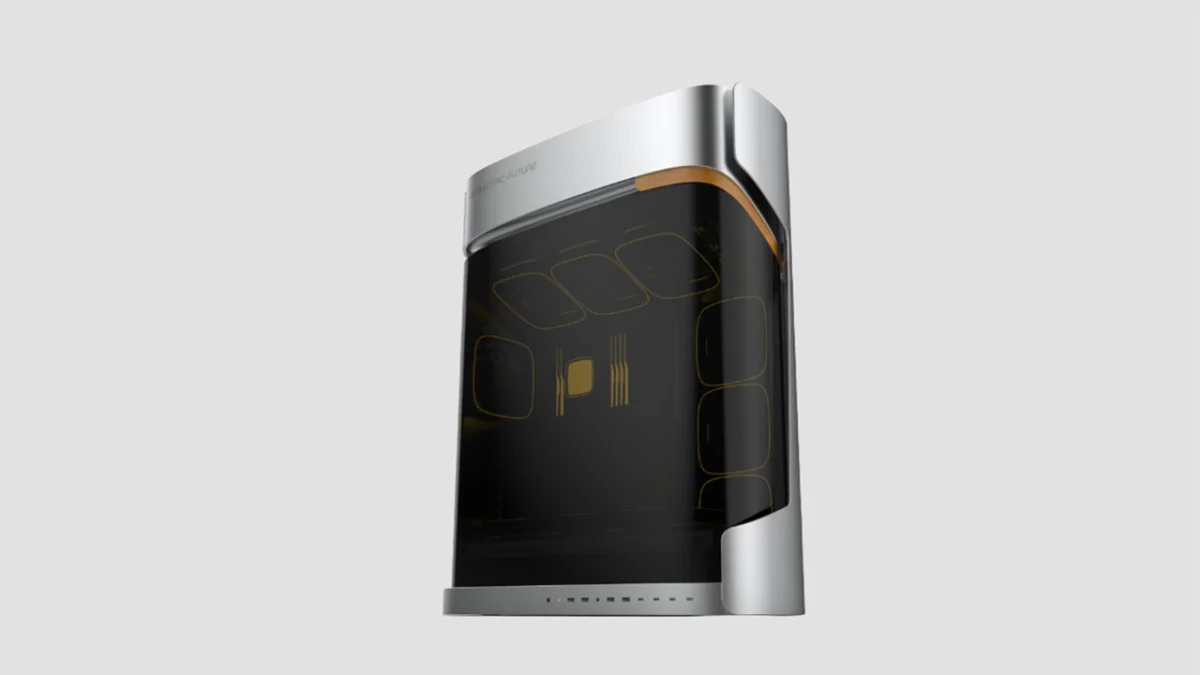
At this year’s Computex 2026, the PC enthusiast community witnessed a paradigm shift in chassis design. Geometric Future, a company known for challenging the traditional "box" constraints of computer cases, has unveiled its latest flagship: the Model 9. Far more than a simple housing for hardware, the Model 9 is an architectural statement in brushed aluminum and tinted glass, blurring the line between high-performance computing equipment and modern kinetic sculpture.
Main Facts: A New Benchmark in Scale and Sophistication
The Geometric Future Model 9 is a gargantuan chassis that commands attention. With a gross internal volume of approximately 136 liters, it dwarfs standard ATX mid-towers, placing it firmly in the category of "super-towers." Its physical dimensions—measuring 750 x 300 x 608 mm—provide a cavernous interior capable of housing the most ambitious custom water-cooling loops and multi-GPU configurations.
The chassis is defined by its sweeping, curved aesthetics. Unlike the angular, rigid frames typical of current PC cases, the Model 9 utilizes a large, gently curved glass panel that wraps seamlessly from the front to the side. This is complemented by an expertly crafted rear panel, featuring curved aluminum shrouds that frame the chassis, giving it an organic, aerodynamic appearance.
Core Specifications at a Glance:
- Dimensions: 750 x 300 x 608 mm
- Volume: ~136 Liters
- Chassis Type: 3-Chamber Architectural Design
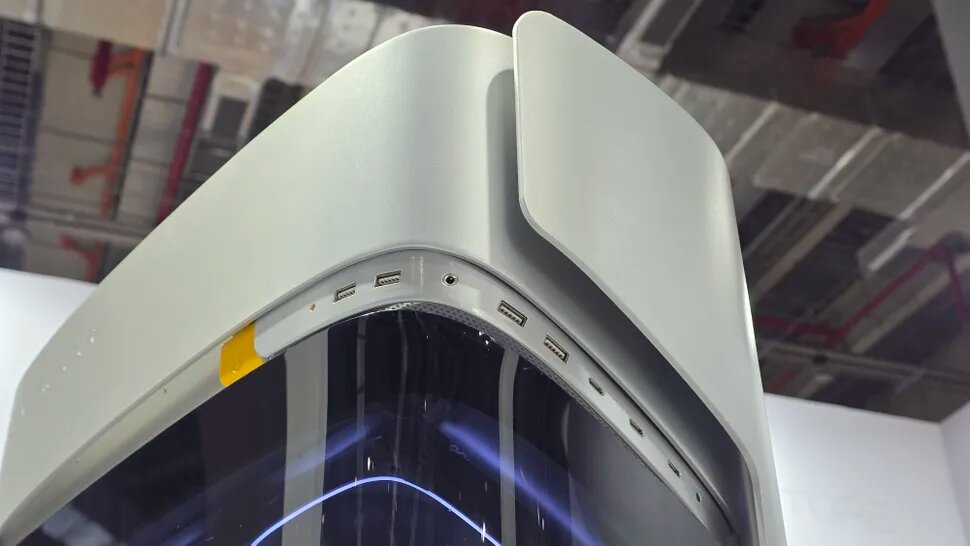
- Connectivity: 8x USB ports total (4x supporting 20 Gbps transfer speeds)
- Cooling Capacity: Support for up to 10x 140mm fans
- Material: High-grade aluminum and tinted tempered glass
Chronology of Development: From Concept to Computex
Geometric Future has spent the last 18 months refining the design language that culminated in the Model 9. Following the success of the Model 8—a chassis praised for its unique leather accents and unconventional GPU mounting—the design team sought to push the limits of material science and internal airflow management.
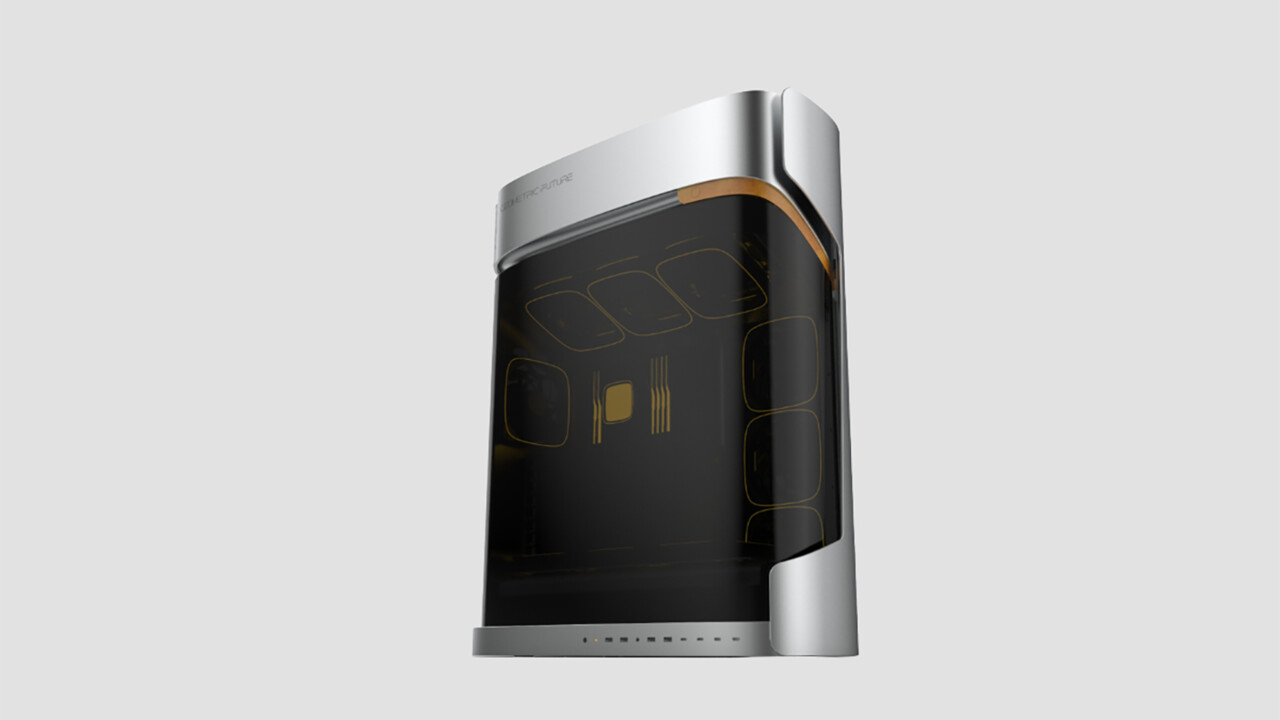
The development cycle began in late 2024, focusing on a "3-chamber" internal layout. By segmenting the power supply, storage drives, and core hardware components, engineers were able to isolate heat sources, allowing the CPU and GPU to operate in a more thermally efficient environment. The journey from the initial CAD renders to the functional prototype showcased at Computex 2026 represents a significant investment in manufacturing precision, particularly regarding the complex bending of the glass and aluminum exterior components.
Supporting Data: Architectural Innovation and Internal Logic
The internal architecture of the Model 9 is perhaps its most compelling feature. Moving away from the traditional single-compartment design, the Model 9 utilizes a sophisticated three-chamber approach:
- The Primary Hardware Chamber: This is the main display area, designed for the motherboard, GPU, and primary airflow. It supports up to ten 140mm fans, ensuring that even the most power-hungry components, such as the upcoming generation of flagship GPUs, remain well within their thermal envelopes.
- The Base/Utility Chamber: Located in the pedestal of the unit, this chamber houses the power supply unit (PSU) and a significant array of storage drives. By placing the PSU here, Geometric Future clears the main airflow path of unnecessary cabling and heat generation.
- The Overhead Radiator Chamber: A dedicated zone at the top of the chassis is optimized specifically for AiO (All-in-One) liquid cooling radiators or custom water-cooling reservoirs. By segregating the radiator from the motherboard area, the heat dissipated from the coolant is exhausted immediately without warming the air circulating over the RAM and VRMs.
The Connectivity Conundrum
One of the most discussed aspects of the Model 9 at the show has been its I/O panel. Reports from the show floor have highlighted a fascinating discrepancy: some configurations of the prototype feature the I/O panel integrated into the base, while others show it positioned above the side glass. This flexibility suggests that Geometric Future may be considering a modular design or offering specific SKUs that allow users to choose their preferred interface location—a move that would be highly welcomed by workstation users who keep their PC on the floor versus those who keep it on their desks.
Official Responses and Industry Reception
During the press briefings at Computex 2026, representatives from Geometric Future emphasized that the Model 9 was designed specifically for "the enthusiast who refuses to compromise." The company’s lead designer noted that, "In an era of AI-driven computing and massive thermal output from modern silicon, the chassis must evolve from a passive box to an active thermal engine."
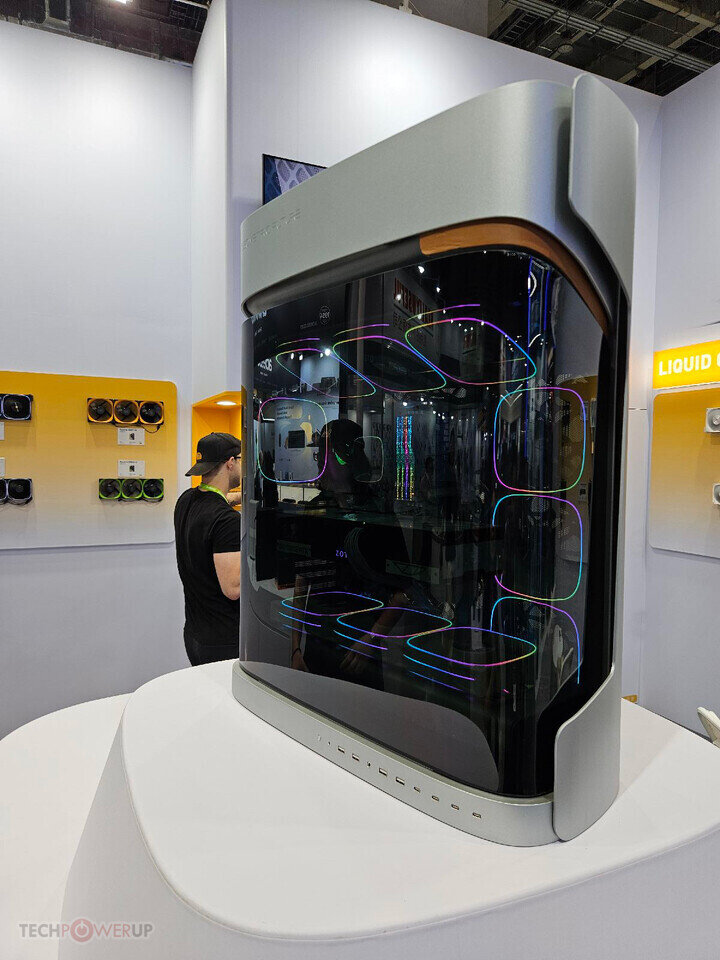
Industry analysts at TechPowerUp and Tom’s Hardware have noted that the Model 9 is a clear departure from the "gamer-centric" aesthetic of the past decade. Instead, it leans into a minimalist, "premium industrial" look. The lack of excessive RGB lighting (unless provided by the user’s own hardware) and the reliance on premium materials suggest that Geometric Future is aiming to capture the high-end creator and workstation market, rather than just the traditional gaming demographic.
Implications for the PC Component Market
The arrival of the Model 9 signals a broader trend in the PC component industry: the "Super-Case" renaissance. As high-end GPUs grow in size—often exceeding 350mm in length—and CPUs demand 420mm or even 480mm radiators for optimal cooling, small form factor (SFF) builds are becoming increasingly difficult for the average user.
The Model 9 addresses this by providing "excess capacity." It is a future-proof solution. By creating a chassis with such a massive volume, Geometric Future is betting that users will prioritize long-term compatibility and thermal overhead over portability.
The Economic Outlook
While Geometric Future has yet to announce a final MSRP or a release date, the industry is looking at the Model 8 as a baseline. With the Model 8 retailing between 180 and 200 Euro, analysts expect the Model 9, given its aluminum construction and more complex geometry, to command a premium price point, likely sitting in the 250 to 350 Euro range.
If successful, the Model 9 could force other manufacturers to re-evaluate their flagship offerings. We are likely to see a shift toward "curved architecture" in the coming year, as competitors scramble to match the sleek, high-end aesthetic that Geometric Future has defined with this release.
Final Thoughts: A Statement Piece for the Modern Era
The Geometric Future Model 9 is not for everyone. Its 136-liter footprint requires significant desk real estate, and its design is polarizing. However, for those who view their PC as a centerpiece of their home or office, it represents the pinnacle of current engineering.
By prioritizing a three-chamber layout and radical, flowing aesthetics, Geometric Future has moved the goalposts. As we look toward the remainder of 2026, the Model 9 stands as a testament to the fact that, even in a digital world, the physical vessel—the chassis—remains the most important part of the computing experience. Whether it ends up in a high-end gaming rig or a professional workstation, one thing is certain: the Model 9 is destined to be one of the most talked-about PC cases of the decade.












No comments yet. Be the first to join the conversation!