

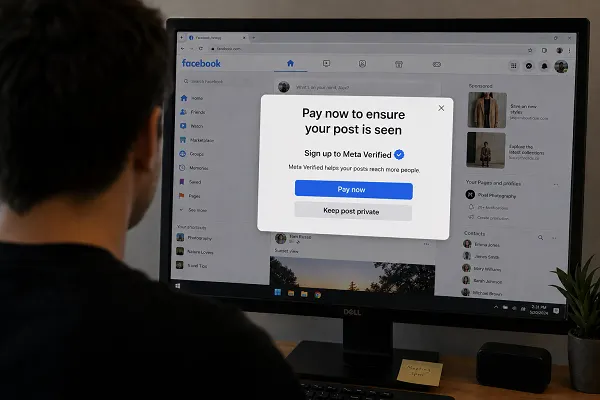
The digital landscape is undergoing a profound transformation. For nearly two decades, the social media contract has been simple: users provide their attention and personal data in exchange for free access to global communication platforms. However, recent moves by tech giants like Meta and the philosophical pivots championed by figures like Elon Musk have ignited a heated debate: Is the "free" social media model dying, and is a subscription-based future inevitable?
While platforms continue to experiment with premium tiers, the industry remains at a crossroads. As companies scramble to offset the astronomical costs of artificial intelligence, the pressure to monetize user bases directly through subscriptions is mounting—but the path toward a "pay-to-play" internet is fraught with economic and cultural risks.
Main Facts: The Shift Toward Paid Tiers
The core catalyst for this discussion is the emergence of tiered subscription models. Meta’s recent introduction of new add-on subscription packages, coupled with X’s (formerly Twitter) aggressive push for paid verification, suggests that social media companies are looking beyond digital advertising as their primary revenue engine.
The primary argument for this shift is twofold: combatting the scourge of automated bots and offsetting the massive capital expenditure required to train and maintain generative AI models. Proponents of the paid model, most notably Elon Musk, argue that making every account cost at least a nominal fee would render large-scale bot farms economically unviable. If an entity must pay to create an account, the "cost per bot" skyrockets, theoretically cleaning up the digital ecosystem.
Conversely, skeptics argue that the "free" model is the bedrock of the modern web. With billions of users worldwide, social media platforms derive their value from network effects. By placing a paywall in front of access, companies risk alienating their most valuable asset: the global, diverse, and massive audience that makes these platforms culturally relevant.
Chronology: A Timeline of Subscription Evolution
The evolution from a purely ad-supported model to the current hybrid landscape did not happen overnight.
- 2018: During a pivotal Congressional hearing, Meta CEO Mark Zuckerberg reaffirmed his commitment to the core mission of his company. "There will always be a version of Facebook that is free," he stated, positioning the company’s identity against the notion of paywalls.
- 2023: Months after his acquisition of Twitter, Elon Musk radically altered the platform’s landscape by launching X Premium. He publicly floated the idea that, eventually, X might have to move to an entirely paid model to survive the onslaught of AI-driven bot armies.
- 2024–2025: Meta began rolling out its "Meta Verified" program, a subscription service offering verification and enhanced features. Simultaneously, platforms like Snapchat (Snapchat+) and YouTube (YouTube Premium) continued to refine their subscription offerings, albeit with varying degrees of success.
- Late 2025/Early 2026: Meta reported that 98% of its revenue still stems from advertising, highlighting the massive mountain they would need to climb if they were to pivot away from the ad-based model.
Supporting Data: The Subscription Reality Gap
Despite the industry buzz surrounding subscriptions, the numbers suggest that users are not yet ready to pay for their social experience en masse. When examining the conversion rates of existing premium services, the "paywall" concept faces a harsh reality check.
- X Premium: Despite being the most vocal proponent of paid social, X has struggled to convert its user base. Industry estimates suggest fewer than 1% of X’s total monthly active users subscribe to its premium services.
- Snapchat+: Considered a "relative success" within the industry, Snapchat has reached approximately 25 million subscribers. However, this represents only about 2.6% of its total monthly audience.
- YouTube Premium: With a stronger value proposition—ad-free viewing and music integration—YouTube sees around 4.5% of its user base paying for the service.
- Meta Verified: While Meta has remained tight-lipped regarding official figures, analyst estimates suggest that roughly 35 million users have signed up for Meta Verified. While an impressive absolute number, it equates to less than 1% of Meta’s massive, three-billion-user-strong ecosystem.
- The LinkedIn Outlier: LinkedIn remains the gold standard for subscription models. Estimates suggest that nearly 18% of its member base pays for premium features. This success is likely driven by the professional nature of the platform, where a subscription provides a direct, measurable return on investment (ROI) through job searches and networking.
These figures illustrate a fundamental truth: unless a subscription provides tangible utility—such as professional advancement or music streaming—the average user is highly resistant to paying for social connectivity.
Official Responses and Strategic Pivot
The tech giants have approached the subscription question with varying degrees of transparency. Mark Zuckerberg remains committed to a dual-track strategy: keep the core product free to maintain the scale required for advertising dominance, while offering high-end, AI-powered "add-on" experiences for power users.
Elon Musk’s stance remains more radical. He has characterized the development of AI as a turning point where "bot armies" have become so sophisticated that traditional moderation is impossible. His assertion—that "paid verification is the only way to fight bots"—remains a core tenet of X’s operational philosophy, even if it has not yet resulted in the widespread adoption he envisioned.
Meanwhile, in Europe, the situation is dictated by regulation rather than strategy. Meta has been forced to offer an ad-free, paid subscription version of its apps in the EU to comply with the Digital Markets Act (DMA) and GDPR, which limit how companies can track users for advertising purposes without explicit consent.
The Economic Burden of AI
If the shift to paid subscriptions is not entirely about user behavior, what is it about? The answer lies in the server room. The cost of artificial intelligence is staggering. Reports from last year indicated that xAI was burning through $1 billion per month in compute costs alone.
Meta is sinking hundreds of billions into AI infrastructure—datacenters, GPUs, and the energy required to run them. Every time a user interacts with an AI chatbot, it incurs a marginal cost. When millions of users do this simultaneously, the overhead becomes unsustainable for a pure ad-supported model.
Currently, Meta’s non-advertising revenue—which includes VR hardware, AI glasses, and subscription data—hovered around $4.8 billion in 2025. When measured against the tens of billions spent on AI development, this is a drop in the ocean. Even if Meta were to generate $100 billion in AI-related subscriptions, it would take over a decade just to break even on their current capital expenditure. This economic reality is why companies are desperate to monetize AI features; they are looking for ways to pass the cost of innovation directly to the consumer.
Implications: The Future of the "Social" Web
What does this mean for the average user?
- A Bifurcated Web: We are likely moving toward a "freemium" future. The "base" experience—scrolling, posting, and connecting—will remain free because it is essential for the data collection that fuels the advertising machine. However, "pro" experiences, AI-enhanced tools, and ad-free browsing will move behind a paywall.
- The Rise of AI Tiers: Rather than charging for access to the app itself, platforms will likely charge for access to advanced AI agents. You might get the "standard" version of a social app for free, but paying $5 or $10 a month will unlock an AI assistant that summarizes your feed, drafts your posts, or manages your content.
- The Trust Divide: As platforms introduce paid tiers, a new divide may emerge. Paid users may receive preferential treatment in algorithms or improved customer support, creating a "two-class" system that could further polarize the online experience.
Conclusion
The dream of a fully "free" internet is effectively being replaced by a more complex reality. While social media giants have no intention of killing the golden goose—the massive, free, ad-supported audience that drives their valuation—they are clearly looking for new ways to diversify their income streams to combat the rising costs of infrastructure and AI.
For now, the subscription model remains a niche choice for a small percentage of power users. However, as AI becomes woven into the very fabric of how we use these apps, the definition of "essential features" will evolve. While you may never have to pay just to have an account, the premium, high-utility features of tomorrow will almost certainly come with a monthly price tag. The era of the "free" internet is not ending, but it is certainly becoming more expensive.












No comments yet. Be the first to join the conversation!