

By Krystal Scanlon | May 27, 2026
As OpenAI prepares for a landmark public market debut—slated for as early as September 2026—the artificial intelligence giant finds itself at a critical crossroads. With valuations hovering near the $1 trillion mark, the company is no longer just a research lab or a consumer tech darling; it is rapidly transforming into a global advertising powerhouse.
However, just 15 weeks into its ChatGPT ad pilot, the transition is proving far from seamless. OpenAI is currently grappling with the classic, painful growing pains that have defined every major digital ad platform before it: the friction between scale and safety, the struggle to balance automation with editorial control, and the chasm between advertiser expectations and product reality.
Main Facts: The Monetization Mandate
The stakes for OpenAI’s advertising business are astronomical. While the company has long relied on enterprise subscriptions and API usage, it has set its sights on a massive, long-term revenue play: advertising.

The strategy is clear: transform the conversational search experience into a high-intent marketing engine. By surfacing brands within the flow of AI-generated responses, OpenAI is attempting to rewrite the playbook for digital discoverability. However, the early data suggests that while the market is receptive to the idea, the execution remains tethered to technical and infrastructural limitations. OpenAI is effectively building the plane while flying it, attempting to scale an ad network on top of a revolutionary, yet still maturing, LLM (Large Language Model) architecture.
A Chronology of the Ad Pivot
The journey toward a monetized ChatGPT has been rapid and reactive.
- February 9, 2026: OpenAI officially launches its ChatGPT ad pilot. The industry watches with bated breath as the first sponsored links appear within user conversations.
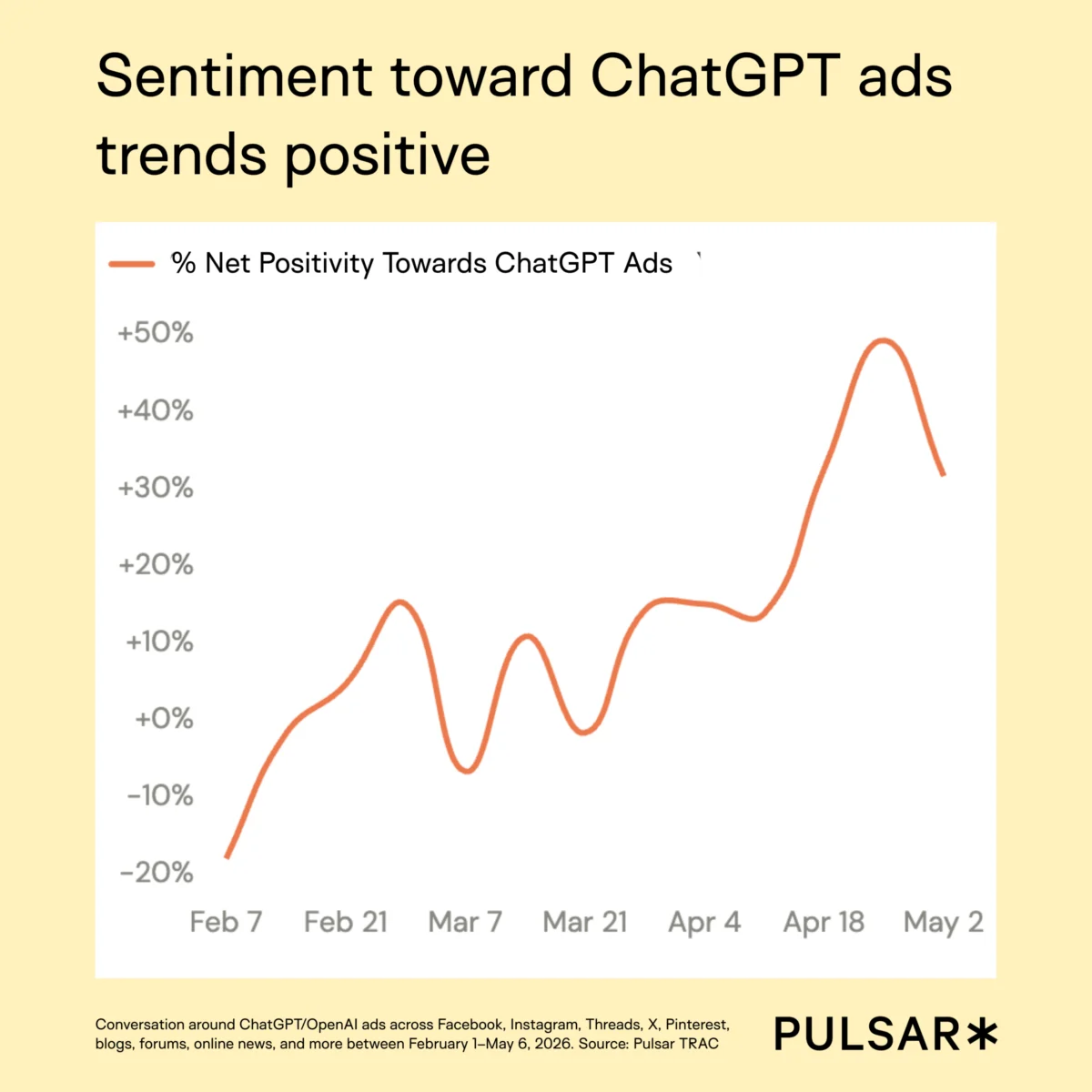
- February 2026: Public reaction is initially negative, marred by skepticism regarding the integration of ads into a product previously marketed as a clean, helpful assistant.
- March 2026: OpenAI secures a high-profile, albeit controversial, deal with the U.S. Pentagon, signaling its intent to diversify revenue beyond pure consumer tech.
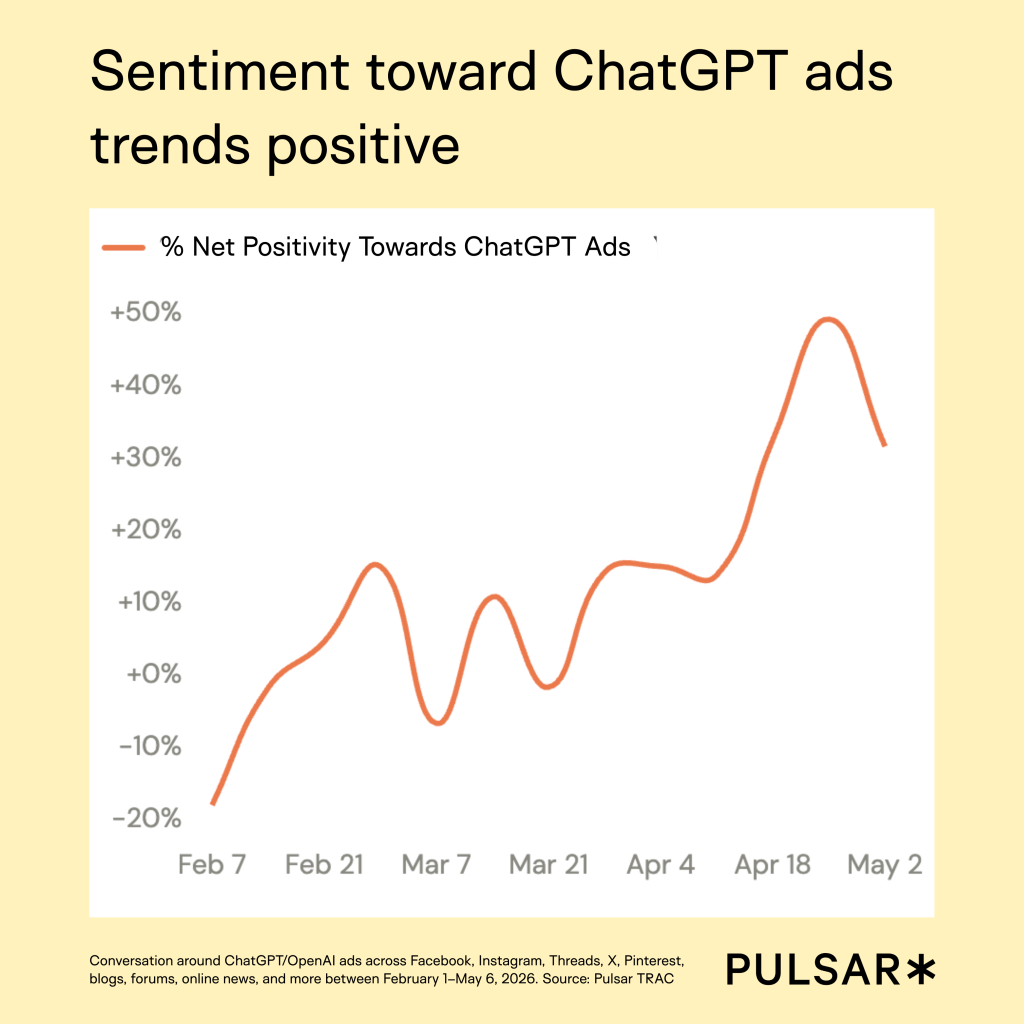
- April 2026: Sentiment analysis from Pulsar shows a massive shift. Public perception flips from a -17.9% net sentiment at launch to a positive 49.3% by mid-April. Marketers and business leaders begin to view the ads as a sign of the platform’s "maturity" and commercial viability.
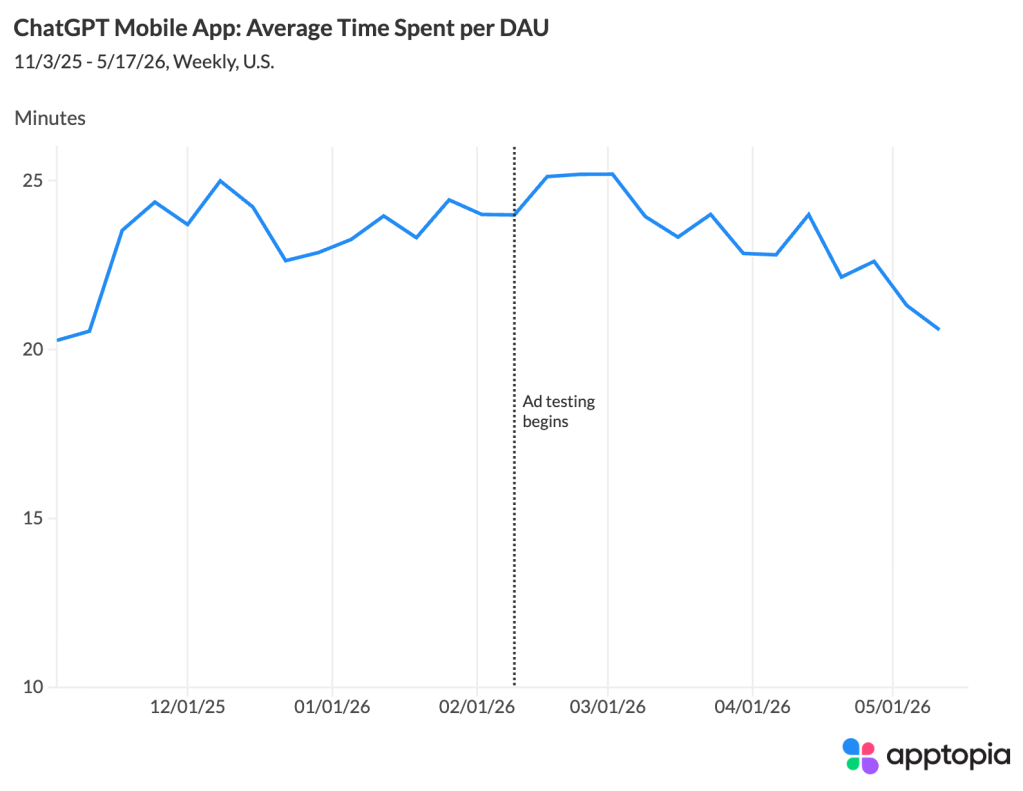
- May 2026: As the pilot continues, data from Apptopia reveals a sobering reality: daily engagement time per user has begun to decline, raising questions about whether the integration of ads is impacting the user experience.
Supporting Data: The Disconnect Between Forecasts and Reality
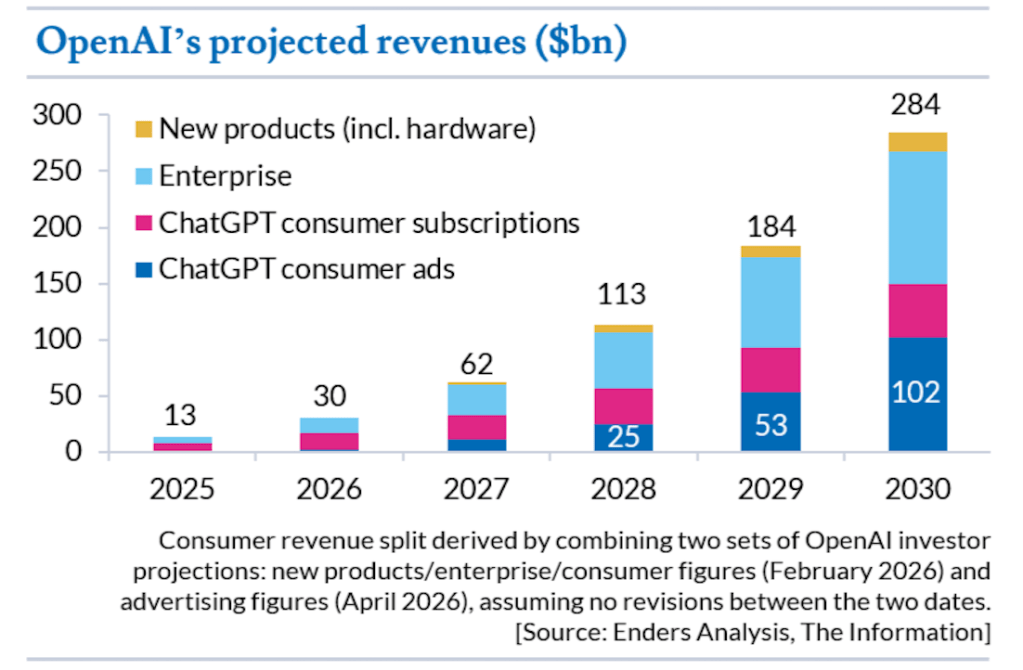
The divergence between OpenAI’s internal projections and current market performance is stark. According to industry reports, OpenAI is forecasting that its advertising revenue will hit $2 billion by the end of 2026. By 2030, the company projects that this figure will swell to an eye-watering $102 billion.
The Growth Trajectory
Enders Analysis paints a picture of exponential growth, projecting that OpenAI will record $25 billion in consumer ads within the next two years—an 1,150% increase from its current early-stage status. This is expected to double by 2029 and double again by 2030.
The Engagement Paradox
However, the data from Apptopia tells a more cautious story. Between March 2 and May 11, 2026, the average time spent per daily active user on ChatGPT fell by 18.3%, from 25.2 minutes to 20.6 minutes. Even the platform’s "power users"—the top 10% by engagement—saw a decline of 14.5%.
While these figures do not explicitly prove that ads are causing user attrition, they underscore a broader trend: the platform’s stickiness is not currently keeping pace with its aggressive monetization targets.
Revenue per Interaction
To bridge this gap, eMarketer suggests that OpenAI must increase the value per query. Projections indicate a move from $0.002 per query in 2026 to $0.041 by 2030. Similarly, the Average Revenue Per User (ARPU) is expected to climb from $3.50 to $60 over the same period. This shift will require a significant leap in "ad load"—the density and effectiveness of ads served within each conversational thread.
The Changing Rules of Brand Discoverability
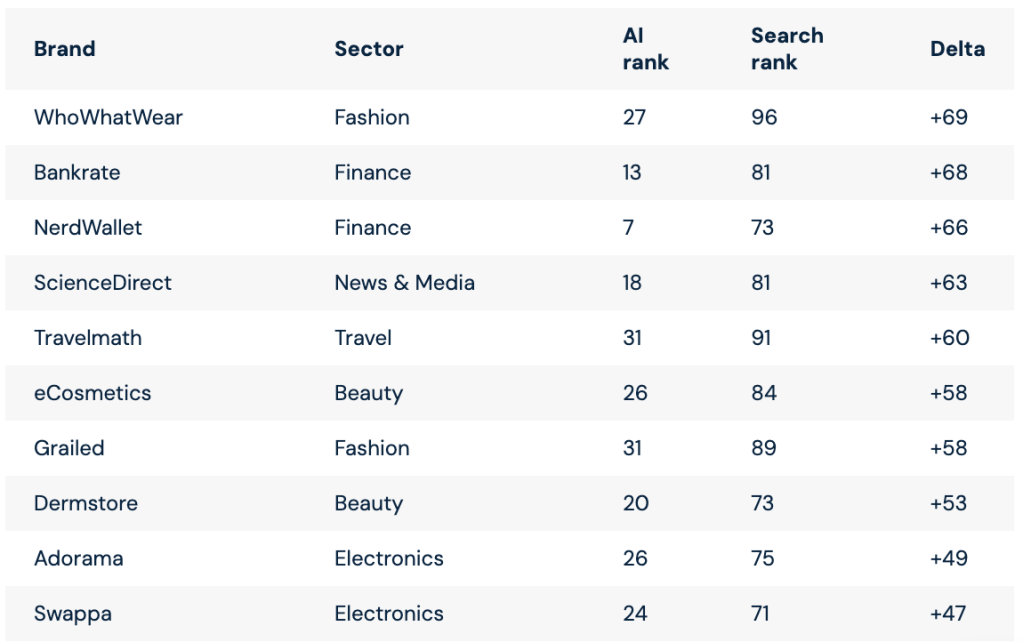
The most profound shift identified in the 2026 Generative AI Brand Visibility Index by Similarweb is the structural change in how brands surface in AI results. Traditional SEO (Search Engine Optimization) is becoming secondary to "AI-readiness."
Structuring Content for LLMs
Brands that are seeing success in the ChatGPT ecosystem are those that have optimized their digital footprint specifically for LLMs. This involves structuring website information in a way that is inherently "digestible" for AI crawlers.
Discovery in an AI environment is increasingly divorced from traditional search rankings. If a brand’s content isn’t structured to be easily extracted and interpreted by the model, it simply won’t appear in the curated, conversational responses provided to users. This has made "AI discovery" a non-negotiable line item for modern marketing budgets.
Implications: The Road to the IPO
As the September IPO approaches, the pressure on OpenAI to prove that its ad business is not just a pilot, but a scalable engine, is intense.
1. The Trust Factor
OpenAI’s brand identity has always been rooted in providing a neutral, highly capable AI assistant. The introduction of ads threatens this perception. The "backlash-to-acceptance" curve identified by Pulsar indicates that while the business community is on board, the broader user base remains sensitive. Any perceived decline in quality due to over-monetization could trigger a mass exodus of users to competitors like Anthropic.
2. The Infrastructure Bottleneck
Advertisers are currently reporting limited inventory and early-stage infrastructure constraints. OpenAI has adopted a "caution over scale" approach, which is sensible for brand safety but potentially detrimental to its revenue targets. The company must quickly resolve these technical bottlenecks to accommodate the massive influx of capital it expects from global brands.
3. The Future of Conversational Commerce
If OpenAI succeeds, it will effectively turn the entire internet into a conversational marketplace. The long-term implication is a world where "searching" for a product is replaced by "consulting" an AI that already has the commercial intent integrated into its responses. This represents the most significant shift in the digital advertising landscape since the birth of the Google search ad.
Conclusion: A High-Stakes Balancing Act
OpenAI’s transition to an advertising-supported model is a quintessential high-stakes gamble. The company is betting that it can maintain its lead in AI intelligence while simultaneously building a sophisticated, high-margin advertising business.
The numbers—$102 billion by 2030—are staggering, but they are predicated on a continued increase in user engagement and an aggressive expansion of ad-load. As of May 2026, the company is in a precarious position: it must satisfy the demands of Wall Street investors while ensuring that the very product driving its value—the user experience of ChatGPT—does not succumb to the fatigue of commercialization.
Whether OpenAI can scale its infrastructure to meet its lofty financial promises while navigating the complexities of AI-integrated advertising will define the next chapter of the tech industry. As the September IPO looms, all eyes remain on the chat box.












No comments yet. Be the first to join the conversation!