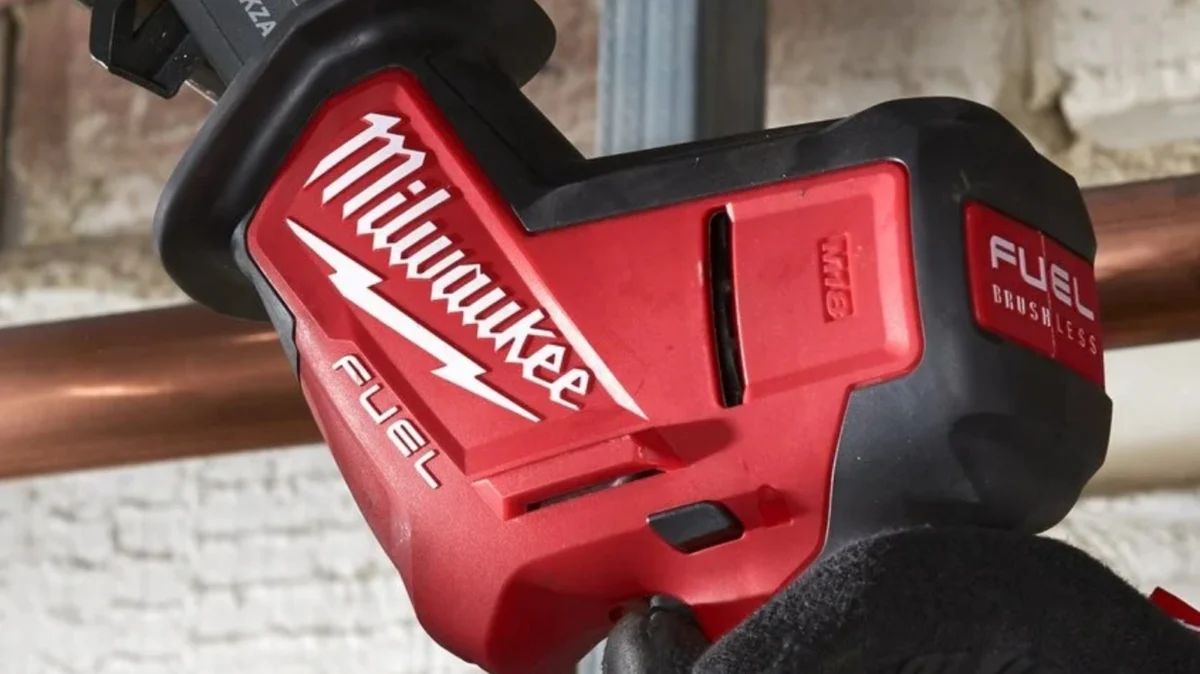
Milwaukee Tool has long solidified its reputation as a titan in the power tool industry, not merely through the sheer volume of its sales, but through a relentless commitment to proprietary innovation. By cultivating ecosystems like the M18 and M12 battery platforms and the integrated One-Key asset management system, the company has successfully tethered millions of professionals to its red-and-black hardware. However, maintaining such dominance requires more than just high-quality drills and impact drivers; it requires a forward-looking vision that anticipates the evolving needs of the modern jobsite.
A recent deep dive into the company’s intellectual property portfolio reveals a fascinating roadmap for the next generation of construction and maintenance gear. While patent filings are never a guarantee of a retail release, they serve as a definitive pulse-check on where Milwaukee’s research and development department is focusing its resources. From climate-controlled storage to intelligent, context-aware lighting, the following technologies suggest that Milwaukee is preparing to redefine the boundaries of the "connected jobsite."
The Mechanics of Innovation: Why Patents Matter
To understand where Milwaukee is heading, one must understand how it operates. The company’s strategy revolves around "closed-loop" technology. By developing proprietary battery chemistries and management software, Milwaukee ensures that its tools are not just interchangeable, but interconnected.
Patents act as the legal armor for this innovation. When the company secures a patent, it protects the R&D investment that often spans years of testing. While hardware store shelves may not see these products for months or even years, these legal filings provide a rare, unvarnished look at the engineering challenges Milwaukee is currently trying to solve. By analyzing these documents, we can identify five key areas where the company is looking to disrupt the status quo.
1. The Active Refrigeration Revolution: A Battery-Powered Cooler
The Milwaukee Packout system has become a cultural icon in the construction world, turning the humble tool crate into a modular, stackable ecosystem. However, even the best insulated coolers currently rely on the "ice-and-cold-pack" model, which is heavy, messy, and finite in its cooling capabilities.
In late 2025, Milwaukee filed patents for a fully functional, battery-powered portable cooler. This is not merely an insulated box; it is an active refrigeration unit. The patent outlines a sophisticated internal assembly featuring an electric compressor, a condenser, an expansion valve, an evaporator, and a dedicated circulation fan.
Key Features:
- Active Cooling: Unlike passive coolers, this unit actively manages internal temperatures, allowing for precise control.
- Power Versatility: Designed primarily for the M18 battery system, the unit also allows for DC corded power, potentially turning the cooler into an onboard charger for additional battery packs.
- User-Centric Design: The patent describes a digital interface displaying both the target and current internal temperatures.
- Packout Integration: Naturally, the unit is designed to lock into the existing Packout infrastructure, featuring the signature attachment points and heavy-duty wheels.
This development could represent a major shift in jobsite logistics, eliminating the need for daily ice runs and ensuring that food and beverages stay at food-safe temperatures throughout the duration of a grueling shift.
2. Culinary Comfort: The Jobsite Food Warmer
Recognizing that not every lunch break calls for a cold sandwich, Milwaukee is simultaneously developing a solution for the other end of the thermal spectrum. Recent patent filings detail a portable food-warming device that brings the convenience of a modern kitchen to the field.
Rather than utilizing microwave radiation or convection, this device functions as an intelligent, insulated slow cooker. It utilizes resistive heating elements embedded in the base and walls to provide radiant heat.
Technical Sophistication:
- Dual-Phase Heating: The user interface allows for a "fast-warm" mode for quick results and a "slow-warm" mode for maintaining temperature over a longer period.
- Programmable Scheduling: Workers can set the warmer to activate at specific times, ensuring a hot meal is ready exactly when the lunch whistle blows.
- Battery Management: The device communicates with the inserted M18 battery, analyzing its charge level to ensure it has enough energy to reach and maintain the required temperature, preventing unexpected dead batteries.
3. Intelligent Lighting: Context-Aware Illumination
Lighting is a staple of any power tool brand, but Milwaukee is looking to move beyond the simple "on/off" switch. A recent patent for a smart work light suggests a future where lighting adapts to its environment without human intervention.
The proposed system utilizes a thermal imaging camera paired with an electronic processor. This allows the light to "see" the worksite and adjust its output based on environmental context.
Potential Implications:
- Power Optimization: By detecting human presence, the light can focus its output on the specific workspace being occupied, dimming or turning off diodes in unused areas to conserve battery life.
- Safety Features: In an effort to minimize accidents, the light is designed to automatically dim when it detects the presence of passing vehicles, preventing glare that could blind operators or motorists.
- Adaptive Dimming: This technology represents a significant leap toward the "smart jobsite," where tools are as reactive and intelligent as the professionals using them.
4. The Backpack Power Supply: Modular Energy Solutions
As the industry moves away from gas-powered equipment toward high-voltage cordless alternatives, the demand for sustained power has skyrocketed. Competitors like DeWalt have addressed this with dual-voltage battery systems, but Milwaukee’s latest patent—filed in July 2025—proposes a more versatile, modular approach: the wearable backpack power supply.
This system acts as a centralized power hub, hosting up to four M18 batteries. Through a tethered adapter system, this power can be delivered to tools that require higher voltage or longer runtimes, such as string trimmers or backpack blowers.
Engineering Highlights:
- Series vs. Parallel Configuration: The system can be configured to boost voltage for high-torque applications or parallel for extended runtime on lighter tasks.
- Ergonomics: By shifting the weight of multiple batteries from the tool itself to the user’s back, the design aims to reduce operator fatigue during long periods of operation.
5. The M12 Productivity Station: Compact Power Banking
Finally, Milwaukee is looking to expand the utility of its M12 system. A new patent for a portable battery charger highlights a dual-purpose device that functions as both a charger and a power bank.
This compact unit features two M12 battery bays and offers bi-directional power flow. It can charge the batteries, or it can draw from them to power USB Type-C devices, effectively turning a tool battery into a high-capacity power station for smartphones, tablets, or small electronic devices. With its ruggedized, sealed housing, the device is built to survive the harsh environment of a jobsite, proving that Milwaukee is committed to the utility of its smallest battery platform.
Chronology of Innovation
- Mid-2025: Initial patent filings for the modular backpack power system.
- June 2025: First filings for the radiant-heat food warmer.
- Late 2025: Patent submission for the active refrigeration cooler.
- Ongoing (2026): Continuous updates and refinement of patents for context-aware lighting and M12 charging stations.
Implications for the Professional
The implications of these filings are profound. Milwaukee is clearly moving toward a "total-site" philosophy. By providing cooling, heating, lighting, and centralized power, the company is attempting to capture every aspect of the professional’s day.
For the end user, this means increased productivity and comfort. For the competition, it signals that Milwaukee is not content with leading in drills and saws alone; it intends to lead in the very infrastructure of the jobsite. While these patents remain in the planning phase, they represent a significant R&D pivot toward ergonomics, intelligent automation, and modular utility.
As we look toward the remainder of 2026 and beyond, it is likely that we will see these concepts transition from the patent office to the showroom floor, further cementing Milwaukee’s status as the brand that defines the future of work.
Disclaimer: We may receive a commission on purchases made from links in this article. Patent filings are for informational purposes and do not constitute a guarantee of future product releases.