

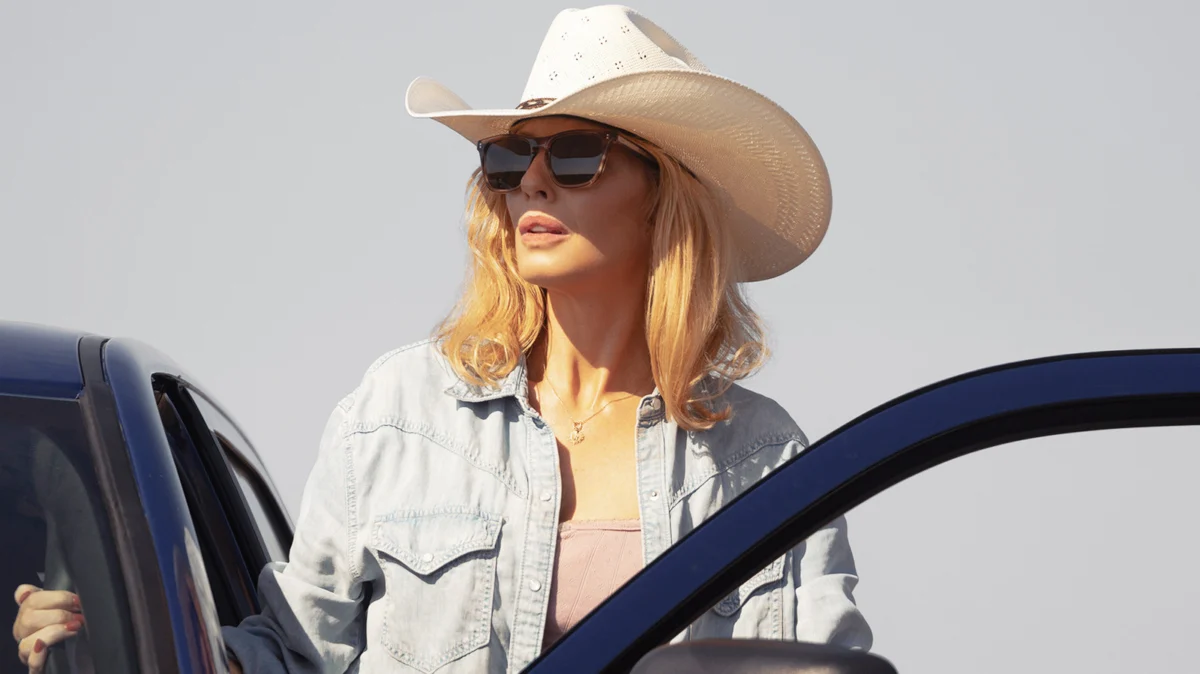
The expansion of Taylor Sheridan’s sprawling neo-Western universe has reached a fever pitch with Dutton Ranch, the highly anticipated sequel series that follows fan-favorite power couple Beth Dutton (Kelly Reilly) and Rip Wheeler (Cole Hauser) as they transplant their volatile brand of justice to the rugged landscape of Texas. While the series has successfully carved out its own identity, Episode 3, titled "Act of God Business," has sent shockwaves through the fandom by featuring a moment of haunting recognition that bridges the gap between the new show and the violent, unresolved history of the original Yellowstone saga.
In a sequence that feels both like a narrative anchor and a warning, Beth encounters a new character who serves as a dark mirror to her past. For viewers who have followed the Dutton saga since its inception, the subtext of this interaction is clear: the ghosts of Montana have followed Beth to Texas, and they are wearing a familiar face.
Main Facts: The Meeting at the Bar
The narrative core of Dutton Ranch Episode 3 finds Beth navigating the high-stakes world of luxury hospitality and high-end agriculture. In an effort to expand the brand, she travels to Dallas to negotiate a partnership with a prestigious hotel, aiming to secure a contract for the ranch’s premium beef. As is typical for the character, she maneuvers through the boardroom with surgical precision, securing the deal before retreating to the hotel bar to celebrate.
It is here that she meets Joaquin Reyes (Juan Pablo Raba), an enigmatic figure serving as a "fixer" for the 10 Petal Ranch, a neighboring operation managed by the formidable Beulah Jackson (Annette Bening). Their conversation is brief but heavy with historical weight. Reyes explains his origins: he was adopted by the Jackson family after his biological parents fell into financial ruin, leaving him to navigate the complex, often treacherous dynamics of the 10 Petal hierarchy.
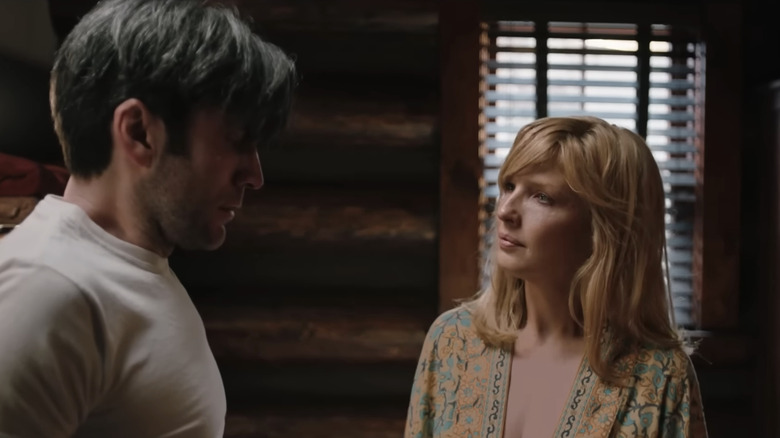
Beth, who possesses an almost supernatural ability to read the character of those around her, offers a chilling observation: she tells Reyes that he reminds her of her late brother, Jamie Dutton (Wes Bentley). This isn’t a compliment; it is a death knell. By identifying the traits of the man she despised, hunted, and ultimately executed, Beth has effectively marked Joaquin Reyes as a primary antagonist—or, more accurately, a primary target.
Chronology: From the Train Station to the Texas Plains
To understand the gravity of Beth’s comment, one must revisit the fractured timeline of the original Yellowstone series.
- The Sibling War: The relationship between Beth and Jamie was the foundational conflict of Yellowstone. From the early seasons, their dynamic was defined by a profound, irreconcilable hatred, rooted in a childhood trauma involving a forced medical procedure and the long-term emotional fallout of their father’s cold-blooded expectations.
- The Season 5 Climax: The tension finally snapped in the final chapters of the mothership series. Following a series of betrayals, legal maneuvers, and life-threatening escalations, Beth took matters into her own hands. In a sequence of calculated brutality, she orchestrated the death of her adopted brother.
- The Disposal: In a nod to the "Train Station"—the infamous dumping ground for the Duttons’ enemies—Jamie’s body was discarded in a ravine, hidden away from the prying eyes of the law.
- The Transition: As Dutton Ranch begins, we find Beth attempting to start fresh in Texas. However, the premiere episode made it clear that she brought more than just her cattle and her husband with her; she brought the tools of her trade, including a storied knife that has passed through generations of the Dutton family, appearing in 1883 and 1923 before being used to end Jamie’s life.
Supporting Data: The Parallels of the 10 Petal Ranch
The structural parallels between the 10 Petal Ranch and the Yellowstone Dutton Ranch are not subtle. The writers of Dutton Ranch have carefully curated the Jackson family dynamics to mirror the dysfunction of the Duttons.
Joaquin Reyes is, for all intents and purposes, the "Jamie" of his respective family. He is the intellectual, the adopted son who handles the legal and administrative "dirty work" to keep the family empire afloat. His brother, Rob-Wil Jackson (played by Jai Courtney), serves as the "Beth" counterpart in terms of volatile, raw aggression—having already committed a murder that forced Joaquin to step into the role of a fixer to cover the crime.
This "reasonable vs. reckless" sibling dynamic is exactly what defined the early years of the Yellowstone Ranch. When Beth looks at Joaquin, she isn’t just seeing a man; she is seeing the specific type of person who is willing to compromise their integrity to serve a family that ultimately views them as a tool. In the world of Taylor Sheridan, those who serve as fixers are often the first to be discarded when the bill for their crimes finally comes due.
Official Responses and Creative Direction
While the production team at Paramount+ has remained tight-lipped regarding the ultimate fate of Joaquin Reyes, the show’s creative direction suggests a deliberate move toward a darker, more psychological thriller aspect.
Showrunners have noted that Dutton Ranch is intentionally designed to feel more "focused" than previous spin-offs. Where Marshals has struggled to find its footing, Dutton Ranch leans into the established tropes of the Yellowstone universe. By intentionally evoking the "Jamie" archetype, the writers are providing a shortcut for the audience to understand the threat level of the new antagonist.
The inclusion of the historic knife—a recurring symbol of the Duttons’ lethal lineage—is perhaps the strongest piece of evidence that the show is heading toward a violent conclusion. By highlighting that Beth kept this weapon, the show is telegraphing that the cycle of violence is not only continuing but is being intentionally mirrored.
Implications: Is Joaquin Doomed?
The implication of Beth’s interaction with Joaquin is dire. In the Yellowstone universe, identification is synonymous with condemnation. Once Beth decides that someone fits the "Jamie" profile, her course of action is almost always set in stone.
The Moral Weight of the Fixer
Joaquin is currently caught in a cycle of cleaning up his brother’s messes, which mirrors Jamie’s attempts to protect the family name while simultaneously being loathed by the very people he serves. The fact that he is currently misleading a widow regarding his brother’s crimes suggests that he is morally compromised. In the Yellowstone moral compass, once you have crossed that threshold, there is no redemption—only retribution.
The Symbolic Knife
The significance of the knife cannot be overstated. It was carried by Elsa Dutton in 1883 and Spencer Dutton in 1923, symbolizing the family’s survival instinct. When Beth carried it to Texas, she essentially declared that she is the current executor of the family’s legacy of violence. If the blade was used to kill her brother, and she is now comparing a new rival to that brother, the trajectory for Joaquin Reyes seems to lead directly to a shallow grave.
A New Season of Vengeance
As the season progresses, viewers should expect the tension between the Duttons and the Jackson family to escalate. If Dutton Ranch continues to follow the blueprint of its predecessor, the conflict will not be resolved in a courtroom or a boardroom. It will be resolved on the range, under the heat of the Texas sun, likely with the same cold, calculating efficiency that characterized Beth’s final act in Montana.
For the audience, the arrival of Joaquin Reyes is a masterclass in narrative foreshadowing. He is a ghost from the past, a warning sign for the future, and a reminder that while the scenery may change, the blood that stains the soil remains the same. The question is no longer if Beth will strike, but rather if Joaquin—or any of the residents of the 10 Petal Ranch—will realize they are playing a game they cannot win before the blade is pulled.











No comments yet. Be the first to join the conversation!