Suro Senen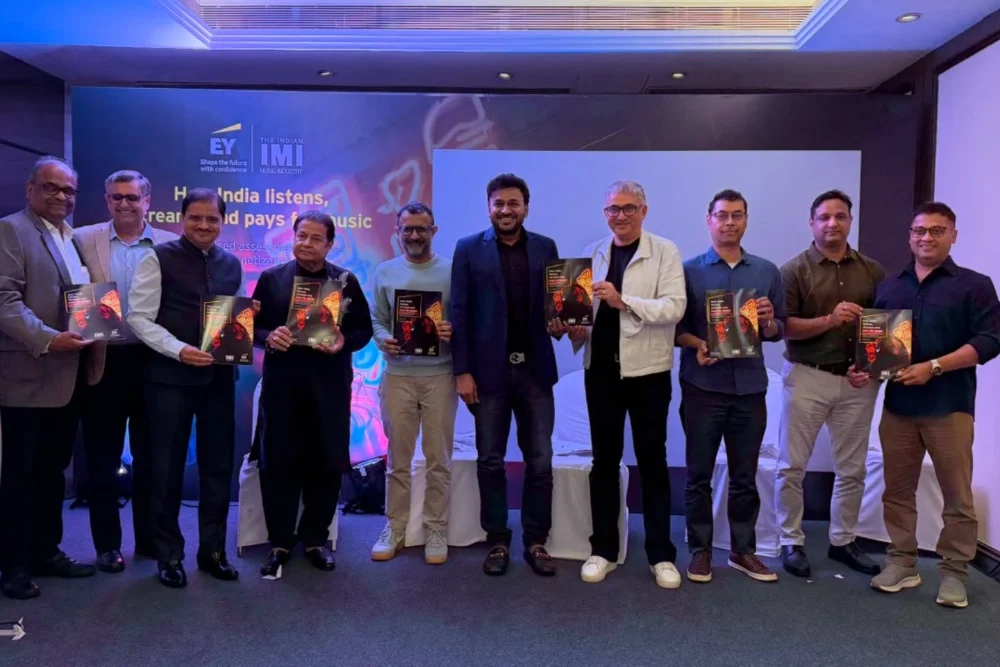
India’s music industry is currently navigating one of the most intriguing paradoxes in the global digital economy. While the nation boasts a staggering level of musical engagement—with 96% of smartphone owners consuming music and 80% listening for over an hour daily—it remains a market where paid subscription conversion lags significantly behind global peers. A new landmark report, "How India Listens, Streams and Pays for Music," released by EY and the Indian Music Industry (IMI), suggests that this landscape is on the verge of a structural transformation, projecting that the paid subscriber base will nearly double from 14 million in 2025 to between 28 million and 30 million by 2028.
As India positions itself to become the world’s third-largest economy by 2030, the music sector is attempting to pivot from a volume-heavy, ad-supported model to a value-driven, premium-subscriber ecosystem. This transition is not merely a commercial goal; it is presented as a cultural imperative to ensure the long-term sustainability of India’s vast creative community.
The State of Play: Main Facts and Market Dynamics
The Indian digital landscape is characterized by a "leapfrog" phenomenon. Much like the country bypassed landlines in favor of mobile connectivity, it jumped from physical music formats straight into a free, ad-supported streaming environment. This has created a deep-seated consumer expectation that music is a free utility.
The data underscores the challenge: while 86% of smartphone owners have paid for video streaming services, only 38% have ever invested money in audio streaming. Dedicated digital service providers (DSPs) are currently the primary home for structured listening, capturing 60% of the market. However, YouTube remains the dominant force for music discovery, largely fueled by the explosion of short-form video content. This reliance on free platforms acts as a structural ceiling, keeping subscription growth muted compared to nations like China, which has cultivated a paid subscriber base exceeding 171 million.
A Chronological Shift: From Free Discovery to Paid Patronage
The evolution of the Indian music market can be viewed in three distinct phases:
- The Pre-Streaming Era: Historically, the Indian market relied on a mix of physical media and, later, the widespread distribution of unauthorized digital files. Consumption was vast, but monetization for creators was fragmented and difficult to track.
- The Ad-Supported Boom (2015–2024): With the proliferation of affordable high-speed data and cheap smartphones, streaming platforms gained massive penetration. During this period, the industry focused on user acquisition. The goal was to hook listeners, leading to the current state where the vast majority of music consumption is ad-funded.
- The Subscription Pivot (2025–2028): We are now entering the third phase. Industry leaders are pivoting toward a tiered model. In 2025 alone, paid subscriptions grew by 37%, as platforms introduced more "friction" into free tiers and aggressively marketed premium benefits. The target of 30 million subscribers by 2028 is the first major milestone in a long-term roadmap that many industry executives believe could reach a ceiling of 50 to 75 million subscribers.
Supporting Data: The Psychology of the Consumer
To understand why the conversion rate remains low, the EY-IMI report utilized psychometric research from MindLink, surveying over 15,000 smartphone owners. The population was divided into three distinct behavioral cohorts:
1. The Payers
This group values the convenience of an ad-free experience (cited by 44%), the ability to play songs in any order (38%), and the pursuit of superior audio quality (36%). They represent the early adopters who view music as a premium service rather than a background utility.
2. The Fence-Sitters
These are the most critical target for growth. They currently use free services but express a willingness to pay if the value proposition improves. For them, reliability is key, with 34% indicating that they would pay if the service offered a more seamless, glitch-free experience. However, a significant barrier remains: 33% of this group would prefer to own their music outright rather than subscribe to a platform.
3. The Never-Payers
Representing the toughest segment to convert, 49% of this group explicitly state that music streaming is not "worth" paying for. Furthermore, 36% hold a moral or psychological objection to paying for digital products when free alternatives—specifically YouTube—are available.
Official Responses and Industry Vision
The industry’s leadership is unanimous: the status quo is unsustainable. Blaise Fernandes, CEO of the IMI, highlighted the "economic oxygen" required for creativity to flourish. In his foreword, he warned that a non-paid ecosystem eventually stifles the very creators and copyright owners who sustain the industry. "To take Indian music global… we must transition from being a passive consumer market into an active patron’s market," Fernandes stated.
Vikram Mehra, chair of IMI, expressed optimism that the consumer is ready for this shift, provided the industry delivers quality. "The eventual goal is to get India into the top five music markets of the world," Mehra noted, emphasizing that the current report serves as a validation for ongoing efforts to expand the audio-paid services ecosystem.
Ashish Pherwani, partner at EY India, reframed the current lag not as a failure, but as a massive opportunity. "The report highlights an opportunity for the industry to further strengthen subscription adoption through improved consumer awareness, differentiated offerings, and innovation," Pherwani said.
Prominent artist Badshah provided a poignant cultural perspective, asserting that "the future of music will be shaped not just by how widely it is heard, but by how deeply it is valued." This sentiment reflects a growing movement among Indian artists to educate fans on the relationship between subscription fees and the ability to produce high-quality, authentic art.
Structural Drivers of Growth
Despite the current hurdles, several macroeconomic and demographic tailwinds provide a strong tailwind for the industry:
- Smartphone Proliferation: With the smartphone base projected to grow from 584 million in 2025 to 735 million by 2030, the potential audience is expanding rapidly.
- Economic Expansion: As India tracks toward becoming the world’s third-largest economy, discretionary spending is expected to rise. Subscription revenue is projected to more than double, moving from INR10 billion in 2025 to INR22 billion by 2028.
- The Young Demographic: With 65% of the population under the age of 35, the industry is banking on a demographic that is inherently more comfortable with digital subscriptions and recurring micro-payments.
- Automotive Connectivity: The increase in the registered vehicle base—now over 400 million—provides a captive audience for premium in-car audio experiences, a segment historically untapped in India.
Implications: A Path Forward
To bridge the gap between discovery and payment, the report suggests a multi-pronged strategy:
- Hyper-Personalization: Platforms must move beyond generic playlists. Future growth lies in context-aware features that cater to specific moods, activities, and localized cultural niches.
- Strategic Bundling: Reliance on stand-alone music subscriptions may be insufficient. The report suggests deeper integrations with telecom, banking, and e-commerce platforms, where music is bundled into broader "digital lifestyle" packages.
- Holistic Ecosystems: The future of the "Super App" for music may include live event ticketing, karaoke, and creator-fan direct engagement, turning a music app into a community hub rather than just a library.
- Anti-Piracy Enforcement: While changing consumer behavior is vital, the industry remains committed to legal and structural measures to reduce the impact of piracy, ensuring that legitimate platforms are not competing with illicit, free alternatives.
The Indian music industry is currently in the midst of a profound psychological and commercial shift. By moving away from the "free-for-all" mindset of the early internet era, the sector is looking to align itself with the global standard of digital consumption. If the industry can successfully execute its strategy to convert fence-sitters through value-driven offerings and cultural advocacy, the next few years may well be remembered as the era when Indian music finally found its economic footing.

 Azzam Bilal Chamdy
 Evan Lee Salim