

The boundary between corporate marketing and high-end entertainment is not merely blurring; it is dissolving. As traditional advertising models face the headwinds of fragmented attention spans and the widespread adoption of ad-blocking technology, global brands are aggressively pivoting toward a new strategy: becoming the entertainment itself.
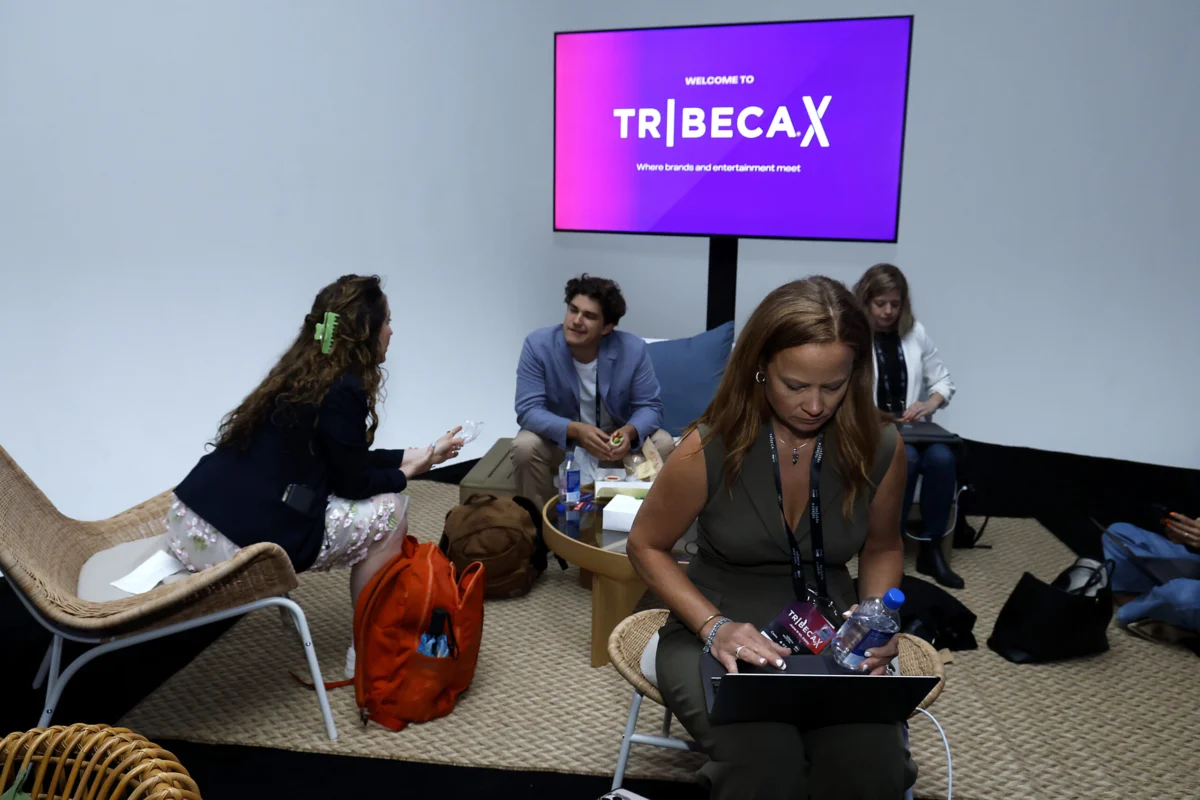
This evolution—the transition from being mere sponsors of content to being the creators, financiers, and producers of original intellectual property—will be on full display this June at Tribeca X. As the marketing-focused programming track of the prestigious Tribeca Festival enters its 10th anniversary, it serves as a bellwether for a seismic shift in how corporations view their role in the cultural zeitgeist.
The Evolution of Brand-Backed Filmmaking
For decades, the relationship between brands and Hollywood was transactional. A company would pay for a product placement, or a consumer goods giant would underwrite a commercial that ran during a popular show. Today, that model is considered quaint.
In 2024 and 2025, we have witnessed a definitive “Hollywood Pivot.” Industry heavyweights like Gap and Dick’s Sporting Goods are no longer settling for 30-second spots. They are investing in narrative storytelling—documentaries, scripted shorts, and long-form series—that hold their own against content produced by traditional streaming giants. This isn’t just advertising; it is high-fidelity storytelling designed to foster deep, long-term brand equity.
The objective is simple yet ambitious: brands want to capture the "earned attention" that only high-quality entertainment can generate. By providing value through storytelling rather than just pitching a product, these companies are positioning themselves as lifestyle pillars rather than commodity providers.
Chronology: A Decade of Tribeca X
To understand the trajectory of this movement, one must look at the history of Tribeca X, which has served as the industry’s primary laboratory for branded entertainment.
- 2015-2017: The Experimental Phase. Tribeca X launched with the goal of bridging the gap between independent filmmakers and forward-thinking brands. Initially, these partnerships were focused on short-form digital content and experiments in "branded docs."
- 2018-2020: The Professionalization Era. As digital platforms like YouTube and Instagram matured, brands began to demand higher production values. The focus shifted toward cinematic quality, hiring seasoned directors and writers from the traditional film industry to helm projects.
- 2021-2023: The Creator Economy Integration. The festival began to incorporate the influence of the creator economy, recognizing that the "brand-as-creator" model required authentic, human-centric storytelling.
- 2024-2025: The Institutionalization. This year’s 10th-anniversary milestone signals that branded content has moved from the fringes of the festival to the main stage. The influx of blue-chip corporate sponsors confirms that branded entertainment is no longer an "experiment"—it is a core pillar of modern marketing budgets.
Supporting Data: The Financials of Influence
The numbers tell a story of rapid institutional adoption. According to festival organizers, the number of brands sponsoring the Tribeca X programming track has surged by 13% year-over-year. More tellingly, revenue from these sponsorships has ballooned by 23%, suggesting that brands are not just showing up—they are paying a premium to occupy space in the prestige entertainment ecosystem.
This year’s roster of sponsors reads like a who’s who of the Fortune 500:
- McDonald’s: Moving beyond standard product placement into cultural commentary.
- Microsoft & AWS: Tech giants leveraging the festival to showcase how their infrastructure powers the future of filmmaking.
- TikTok: Recognizing that the platform that democratized short-form video is now a legitimate gatekeeper of creative talent.
- Lavazza: Continuing a tradition of high-art patronage, signaling a shift toward lifestyle-oriented storytelling.
These investments reflect a broader trend. When brands move from renting audiences via paid media to owning audiences via original content, they insulate themselves from the volatility of ad-market fluctuations.
Official Responses and Industry Perspectives
Industry analysts view this trend as a maturation of the “content marketing” concept. Sarah Jenkins, a lead consultant in branded entertainment, notes: "The brands that are succeeding are the ones that respect the audience’s intelligence. They aren’t trying to trick viewers into watching a 20-minute commercial. They are funding art, and in exchange, they earn the right to be associated with that art."
Festival leadership has emphasized that the goal of Tribeca X is not to turn the festival into a commercial trade show, but to elevate the standards of branded work. "We are looking for stories that could stand on their own merit, regardless of the brand logo at the end," says a festival spokesperson. "The 10th anniversary represents a decade of proving that marketing can be culturally additive."
However, not everyone is convinced. Critics argue that "brand-backed" content inherently suffers from creative limitations, as the brand’s image must always be preserved. Yet, the current crop of filmmakers working with these brands argues that the creative constraints often lead to more focused, innovative storytelling.
The Implications for the Future of Media
The shift toward brand-backed filmmaking carries profound implications for the media landscape.
1. The Disruption of the Agency-Studio Dynamic
Traditional ad agencies are finding themselves in competition with boutique production houses and, in some cases, the brands themselves. Marketing departments are now building in-house studios, hiring creative directors who previously worked for Netflix or HBO.
2. A New Revenue Stream for Filmmakers
Independent filmmakers, who have historically struggled to secure funding, are finding a new patron in the corporate world. While purists may debate the artistic integrity of these projects, the influx of capital allows for the production of films that might otherwise never have been greenlit by risk-averse Hollywood studios.
3. The Changing Consumer Contract
Consumers are becoming increasingly savvy. They know when they are being sold to. The successful brands of the next decade will be those that prioritize "utility or delight"—either providing a service or providing genuine entertainment. If a brand creates a film that wins a festival award, the brand effectively "buys" a level of cultural capital that no amount of traditional banner ads could ever purchase.
4. Fragmentation of Attention
As brands become media companies, the overall volume of high-quality content increases. This adds to the "content overload" facing consumers. For a brand’s film to succeed, it must be exceptional. The bar for entry is rising rapidly, which will inevitably lead to a "shakeout" where only the most authentic, high-quality projects thrive.
Looking Toward Brandweek and Beyond
The discussion surrounding this shift will not end at the Tribeca Festival. The conversation is poised to move from the festival circuit to the boardroom. Events like Brandweek are increasingly focusing on these very intersections of creativity and commerce. As industry leaders gather to debate the future of the field, the question will no longer be whether brands should be creating content, but how they can do so in a way that respects the audience and builds lasting value.
The next five years will likely see a push toward "transmedia" storytelling—where a brand launches a feature film, a companion podcast, and an interactive digital experience simultaneously. We are moving toward an era where the brand is not the sponsor of the movie; the brand is the architect of the universe in which the story lives.
Conclusion
The 10th anniversary of Tribeca X serves as a milestone for an industry in transition. As Gap, Dick’s Sporting Goods, and others continue to push the boundaries of what is possible, they are redefining the social contract between companies and consumers.
The future of brands will be decided not by who has the biggest ad budget, but by who has the best story to tell. As we look at the growing investment in branded filmmaking, it is clear that Hollywood is no longer just a place in California—it is a business model that every major brand is now eager to adopt. Whether this leads to a new golden age of sponsored art or a saturation of corporate narratives remains to be seen, but one thing is certain: the era of the brand-as-mogul has officially arrived.












No comments yet. Be the first to join the conversation!