Siti Muinah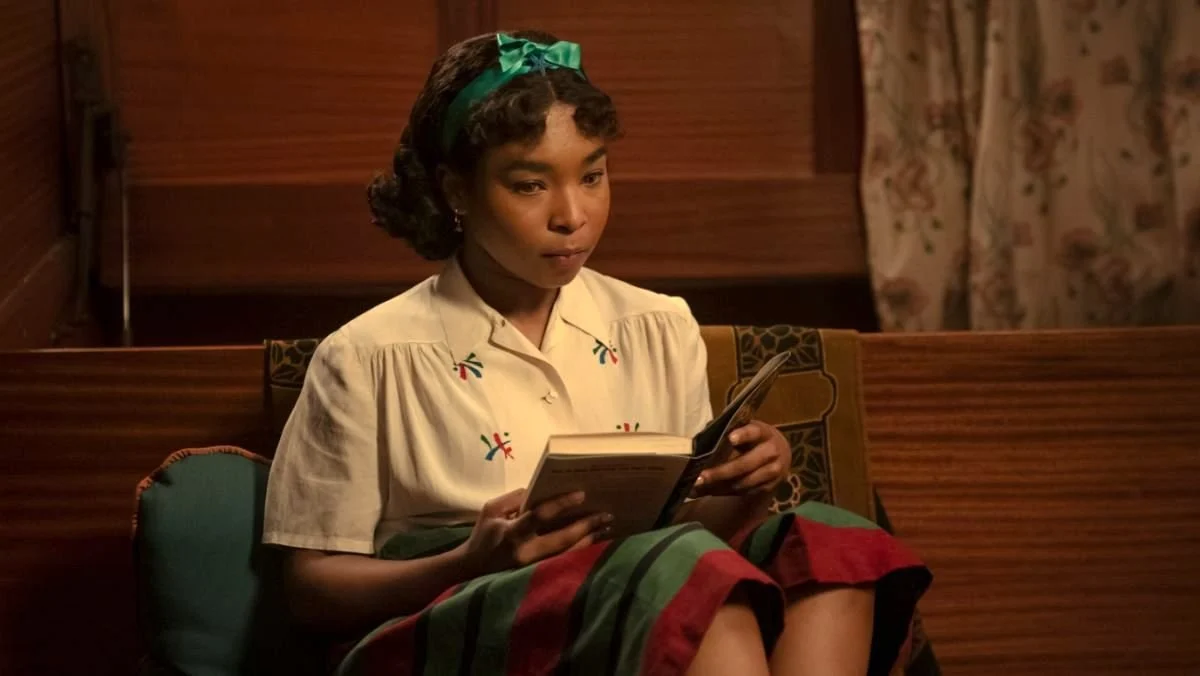
In the sprawling, gothic universe of Anne Rice’s The Vampire Chronicles, the transition from Interview with the Vampire to The Vampire Lestat has always represented a seismic shift in perspective. For two seasons of AMC’s acclaimed adaptation, Jacob Anderson’s portrayal of Louis de Pointe du Lac served as the series’ moral and emotional anchor. As the titular interviewee, Louis was the lens through which audiences experienced the dark, decadent, and often brutal history of his sire, Lestat de Lioncourt.
However, as the series enters its third season—now officially rebranded as The Vampire Lestat—the narrative focus has pivoted sharply. True to the source material, the second novel in Rice’s saga pushes Louis to the periphery. Yet, showrunners have made a bold, creative departure from the page. Rather than sidelining Louis entirely, the AMC series has crafted an expansive, original arc for him, weaving his past traumas into the current geopolitical landscape of the vampire world. This new direction not only addresses the lingering ghosts of his history but also sets the stage for a character study that defies the established canon.
The Talamasca and the Detroit Coven: A Necessary Alliance
The early episodes of The Vampire Lestat establish a high-stakes environment where the boundaries between the living and the undead are increasingly porous. At the center of this tension is the Talamasca, the shadowy, long-standing secret society dedicated to documenting and managing supernatural entities. Following a pivotal hotel meeting with his long-time confidant and journalist, Daniel Molloy, Louis finds himself cornered by the Talamasca.
The catalyst for this interaction is the "Fang Gang," a rogue vampire coven operating out of Detroit. This group has become an existential nuisance to the vampire status quo, engaging in illicit activities that range from the distribution of fentanyl to the systematic enslavement of humans as a "blood pantry." The Talamasca, preferring to operate from the comfortable distance of bureaucracy rather than the messy reality of combat, enlists Louis to dismantle the coven. They appeal to his history, specifically his cold-blooded efficiency in purging the Théâtre des Vampires in Paris decades prior.
While Louis is initially hesitant to involve himself in the petty power struggles of regional covens, the dynamic shifts when Talamasca agent Raglan James reveals the identity of the Fang Gang’s leader: a vampire known only as "Killer." When James presents an old photograph, the true weight of the situation hits home. Killer is the modern iteration of Bruce, the nomadic vampire who once subjected Claudia—Louis’s surrogate daughter—to a campaign of psychological and physical terror that left her permanently scarred. For Louis, this is not just a mission; it is a century-long debt of vengeance coming due.

A Century of Trauma: The Ghost of Bruce
To understand the visceral intensity of Louis’s mission, one must revisit the foundational trauma of the first season. Claudia’s narrative was defined by her desperate attempt to find community outside of the suffocating, toxic dynamic between Louis and Lestat. It was during this attempt that she encountered Bruce.
What began as a predatory seduction quickly devolved into a nightmare. Bruce’s abuse of Claudia was not merely physical; it was a total violation of her agency, marked by weeks of captivity and profound humiliation. When Bruce eventually abandoned her, he left behind a shell of a woman, a trauma that echoed through every subsequent choice Claudia made.
In the show’s canon, the discovery that Bruce—now operating under the alias Killer—survived the passage of time and rose to command a motorcycle-borne coven (a nod to the aesthetic established in Rice’s The Queen of the Damned) provides a rare, cathartic opportunity for closure. The writers have effectively turned a tertiary antagonist from the books into the primary obstacle for Louis’s current emotional development, bridging the gap between his past guilt and his present existential malaise.
The Execution of Justice: Vengeance in Detroit
In the third episode, titled "Toronto," the series delivers a masterclass in gothic action. Louis’s assault on the Detroit coven is clinical and unforgiving. Eschewing the complex moral hand-wringing that often defines his character, Louis enters "slayer mode." He systematically eliminates the coven’s security and liberates their human prisoners, effectively dismantling the infrastructure of their operation.
The climax of this confrontation is a study in calculated cruelty. Upon cornering Killer (formerly Bruce) and his companion, Baby Jenks—a notable callback to the wider Vampire Chronicles lore—Louis does not simply kill his target. He forces a reckoning. Drawing from the pages of Claudia’s diary, Louis reads the harrowing details of her suffering aloud to her abuser. By setting the diary pages on fire and using them as a weapon, Louis imposes a poetic, if brutal, justice. The burning of Bruce serves as the final punctuation mark on a century of pain, yet the immediate aftermath suggests that revenge is a hollow victory.

The Appearance of Regina: A Manifestation of Grief
Following the destruction of the Detroit coven, Louis’s interaction with his lover, Loumel, highlights the persistent void left by Claudia’s absence. Revenge, as it turns out, is not a panacea for grief. The narrative takes a surreal, haunting turn in the final act of the episode when Louis begins tracking a young, British waitress working at an all-night diner in New York.
The revelation that this woman, named Regina, is an exact physical doppelgänger of Claudia is the season’s most significant divergence from the novels. By reintroducing actress Delainey Hayles in this capacity, the showrunners have introduced a complex psychological layer: Is Regina a supernatural manifestation? A reincarnation? Or merely a cruel coincidence that forces Louis to confront his inability to let go? This plot point transforms the show from a standard supernatural drama into a profound exploration of trauma and the cyclical nature of loss.
Official Responses and Creative Direction
The decision to elevate Louis’s storyline in The Vampire Lestat has been met with significant intrigue from both fans and critics. In various interviews, the show’s creative team has emphasized that while they respect the foundational integrity of Anne Rice’s novels, the television medium requires a different structural approach.
"We wanted to ensure that Louis’s journey didn’t end with the conclusion of his interview," said a representative from the production team. "The novels move on to Lestat’s perspective, but we felt that Louis, having been the heartbeat of the show for two years, needed a path that honored his evolution. His connection to Claudia is the thread that holds this entire universe together, and we wanted to see how he functions in a world where he is no longer the center of his own story."
The inclusion of the Talamasca as an active participant—rather than a passive observer—also signals a shift toward a more interconnected world-building strategy. By utilizing characters like Raglan James, the series is positioning itself to weave in elements from later novels, such as The Body Thief, while maintaining the intimate, character-driven focus that defined the early episodes.

Implications for the Future of the Series
As The Vampire Lestat progresses, the implications of these changes are profound. First, the series is signaling that it is not beholden to a linear adaptation of the books. By creating original storylines for Louis, the showrunners are effectively "future-proofing" the franchise, ensuring that the characters remain relevant even when the source material shifts focus.
Second, the introduction of Regina poses a significant risk and opportunity. If the show leans too heavily into the "doppelgänger" trope, it risks undermining the finality of Claudia’s arc. However, if handled with the nuance that the series has demonstrated thus far, it could become a powerful exploration of how we project our ghosts onto the living.
Finally, the flash-forward in the series premiere—which showed a physically crippled Louis—remains the season’s most daunting mystery. It suggests that while Louis may have found a momentary release in the death of Bruce, his journey toward whatever final state he reaches is destined to be harrowing. The combination of his newfound "slayer" identity and his obsession with Regina suggests that Louis is becoming a much more dangerous, and perhaps more desperate, figure than the man who sat in the chair to give his interview.
As the series continues, viewers are left with a central question: In a world where monsters are real and memories are eternal, is there such a thing as peace? For Louis de Pointe du Lac, the answer seems to be a resounding "no." He is a man—and a vampire—defined by what he has lost, and as he steps into the spotlight of The Vampire Lestat, it is clear that he is willing to burn down whatever remains to find the answers he seeks.


 Azzam Bilal Chamdy