[Spoiler Alert: The following analysis contains minor spoilers for key plot points within the works of David Gemmell. Proceed with caution if you have yet to complete these titles.]
For decades, the name David Gemmell has stood as a bastion of heroic fantasy. His bibliography is not merely a collection of novels; it is a repository of human resilience, a literary landscape where the shadows of cynicism are consistently challenged by the blinding, stubborn light of courage. To revisit his work is to walk familiar, well-worn roads that offer both the comfort of home and the thrill of a new adventure.
Gemmell’s prose possesses a rare, kinetic energy—lean, urgent, and devoid of unnecessary artifice. Yet, beneath the pulse-pounding action lies a profound exploration of the human condition. His characters are rarely archetypes of purity; they are scarred, flawed, and often deeply contradictory. It is precisely these imperfections that grant his heroes their enduring legacy.

The Master of Heroic Fantasy: A Chronological Legacy
David Gemmell’s career began with an act of defiance against the inevitable. When he was diagnosed with what he believed to be terminal cancer, he turned to writing as a form of catharsis. The result was Legend, a novel that would not only launch his career but define the subgenre of "heroic fantasy" for a generation.
Gemmell’s writing journey moved through several distinct phases. From the sweeping, foundational epics of the Drenai Saga to the more nuanced, character-driven narratives of the Rigante series, his evolution as a writer is marked by an increasing ability to marry large-scale conflict with intimate psychological stakes. While his earlier works are characterized by a raw, visceral intensity, his later novels—such as those in the Troy trilogy or the later Rigante books—demonstrate a refined, masterful grasp of pacing and emotional depth.
The Three Pillars: An Examination of Key Works
While ranking Gemmell’s output is a task fraught with difficulty, three titles stand out as quintessential representations of his thematic concerns: Waylander, Legend, and Sword in the Storm.
Waylander: The Architecture of Redemption
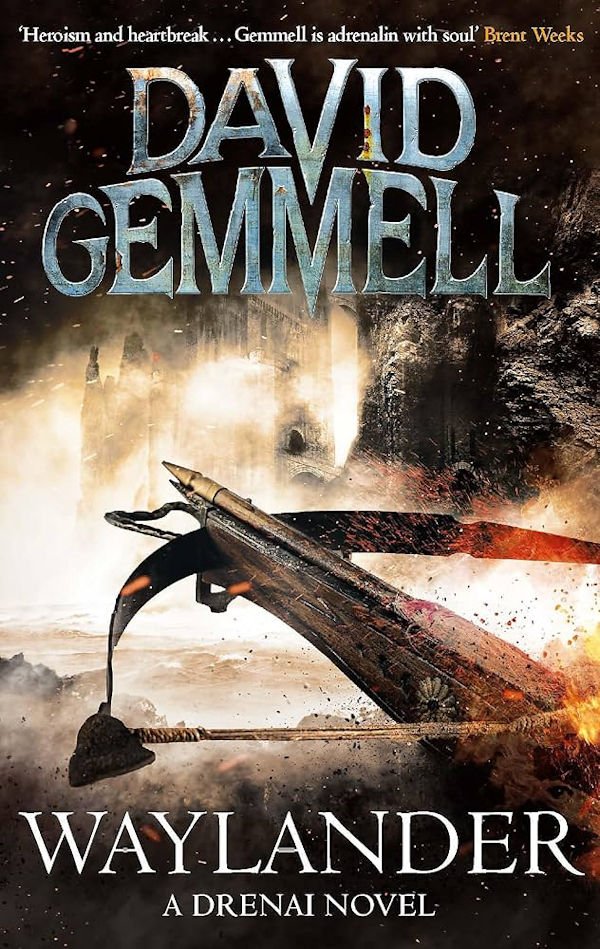
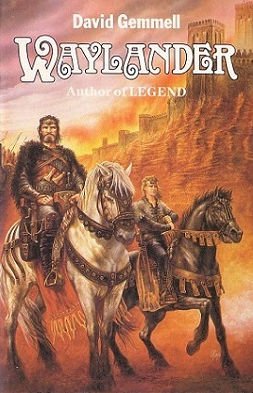
Waylander (the third book in the Drenai Saga) serves as a masterclass in character development. We are introduced to an assassin whose singular act of regicide plunges his nation into a existential crisis. The narrative trajectory is not one of triumph, but of atonement.
Waylander’s journey—from a cynical, amoral killer to a man who begrudgingly finds his conscience—is a study in the complexity of choice. When he is tasked by a mysterious stranger to retrieve the mythical Armour of Bronze, the mission serves as a crucible. Through his interactions with the priest Dardalion and the family of Danyal, Gemmell illustrates that redemption is not a destination, but a grueling process of shedding one’s past. The novel succeeds because it refuses to absolve Waylander of his sins, forcing him to live with the consequences of his actions even as he strives for a higher purpose.
Legend: The Siege of Dros Delnoch
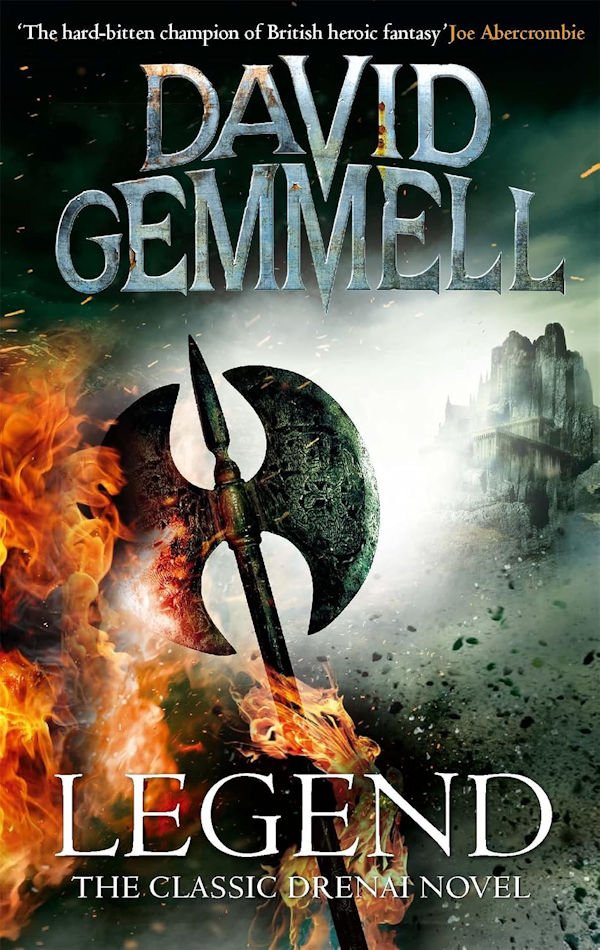
If Waylander is about internal transformation, Legend is about the external manifestation of the human spirit. It remains Gemmell’s most iconic work, centered on the aging warrior Druss, the Captain of the Axe.
The premise is deceptively simple: a massive, relentless Nadir horde descends upon the fortress of Dros Delnoch, the last line of defense for the Drenai Empire. The defenders are outnumbered, demoralized, and facing certain death. Into this vacuum of hope steps Druss. What follows is a brutal, exhausting, and deeply moving siege narrative. Gemmell captures the claustrophobia of the battlements, the fear of the soldiers, and the desperate necessity of belief. The inclusion of "The Thirty"—warrior monks who add a layer of mystical tradition—adds color to the grit, but the heart of the story remains the ordinary soldier finding the strength to stand for one more hour, one more day. Druss’s famous declaration—"I am Druss, and I have never been beaten"—is not mere bravado; it is a battle cry against the creeping nihilism that threatens to consume the defenders.
Sword in the Storm: The Making of a Legend
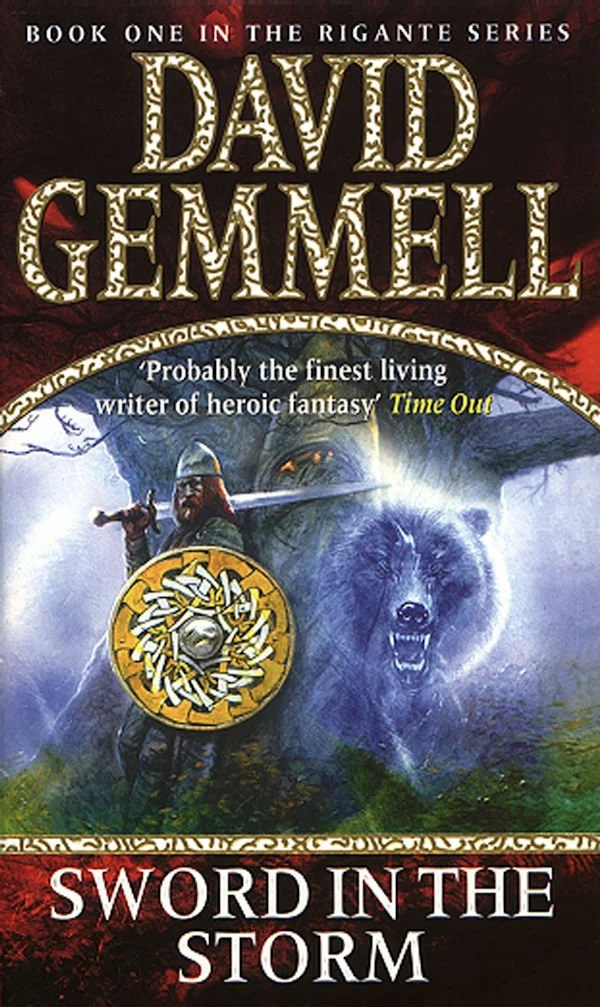
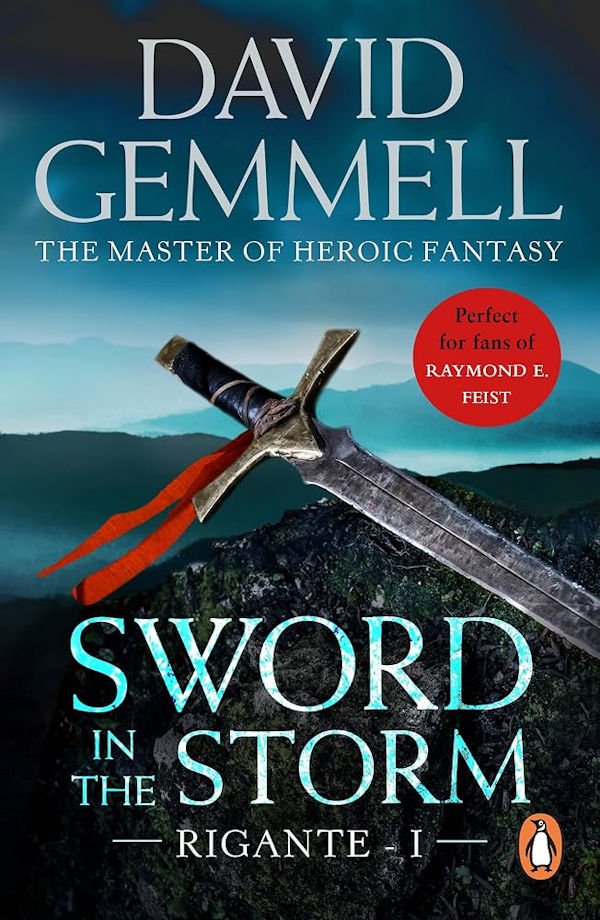
The Rigante series, beginning with Sword in the Storm, showcases Gemmell at his most evocative. Here, we follow Connavar (Conn) from the quiet beauty of Three Streams to his emergence as "Demonblade." Unlike the already-formed Druss, we witness Conn’s maturation, his mistakes, and his hardening through grief and betrayal.
Conn is perhaps Gemmell’s most complex creation. His path is paved with tragedy; the death of his wife, compounded by his own moral failings, creates a fracture in his soul that never truly heals. His subsequent act of vengeance—the slaughter of a village—marks a point of no return. Gemmell does not shy away from the ugliness of war or the darkness that victory can leave in its wake. Conn is a savior to his people, yet he is a man who carries the weight of a monster. This duality is what elevates Sword in the Storm beyond standard fantasy fare; it is a somber reflection on the cost of leadership and the thin line between a hero and a tyrant.
Supporting Data: Why Gemmell Endures
To analyze the "Gemmell effect," one must look at the structural mechanics of his storytelling. His work thrives on:
- The "Everyman" Catalyst: Whether it is a grizzled veteran or a young boy from a mountain village, Gemmell’s protagonists are grounded in relatable, human realities. They suffer from indecision, self-doubt, and fear.
- Lean, High-Velocity Prose: Gemmell eschewed the dense, descriptive world-building of his contemporaries in favor of momentum. His books are "page-turners" in the truest sense, ensuring that the reader is always thrust toward the next critical juncture.
- The Moral Core: At the center of every Gemmell novel is a question of ethics. Can the wicked be saved? Is honor meaningful in a world of cruelty? Do the few have a responsibility to die for the many?
Critics often note that while Gemmell’s world-building may lack the sheer scale of authors like J.R.R. Tolkien, his focus on the micro—the individual experience—creates a more profound emotional resonance. He provides a direct, urgent, and deeply human storytelling style that contrasts sharply with the often cold, clinical nature of "hard" fantasy.
Official Perspective and Critical Reception
Literary analysts have long debated Gemmell’s place in the canon. While some critics initially dismissed his work as "pulp," the consensus has shifted significantly. Scholars of the genre now recognize him as a pioneer of the "grimdark-adjacent" movement—a writer who understood that fantasy could be used to explore the psychological traumas of war without sacrificing the necessity of hope.
In discussions regarding his legacy, his peers often cite his work ethic and his unwavering belief in the "heroic ideal." Gemmell did not write for the sake of intellectual exercises; he wrote to inspire. He believed that literature should provide a mirror to the reader’s own potential for greatness. This perspective has cemented his status as a foundational figure for authors like Joe Abercrombie and Brandon Sanderson, who have both acknowledged the impact of Gemmell’s pacing and character-driven stakes on their own writing.
Implications for Modern Fantasy
What does the enduring popularity of David Gemmell tell us about the current state of the genre? We are living in an era where fantasy is increasingly dominated by moral ambiguity and "gray" characters. While this has allowed for sophisticated storytelling, it has also occasionally resulted in a lack of catharsis.
Gemmell’s work serves as a vital reminder that moral complexity and heroic action are not mutually exclusive. He demonstrated that a character can be a murderer and still be a hero; a leader can be a monster and still be a savior. By grounding his narratives in the reality of human suffering, he made his moments of triumph feel earned.
For the modern reader, a return to Gemmell’s bibliography offers more than just nostalgia. It offers a masterclass in how to balance the darkness of the world with the light of individual choice. In a genre that can often become paralyzed by its own cynicism, David Gemmell’s voice remains a clarion call. His stories remind us that while the odds may be impossible and the enemy may be overwhelming, the simple, stubborn act of standing your ground is, in itself, a victory.
As we look toward the future of fantasy, the legacy of David Gemmell will continue to provide the blueprint. He didn’t just write stories; he built a philosophy of courage. Whether you are a long-time devotee of the Drenai or a newcomer to the green mountains of the Rigante, the invitation remains the same: step into the fray, stand with the heroes, and witness the power of a heart that refuses to yield.