Iffa Jayyana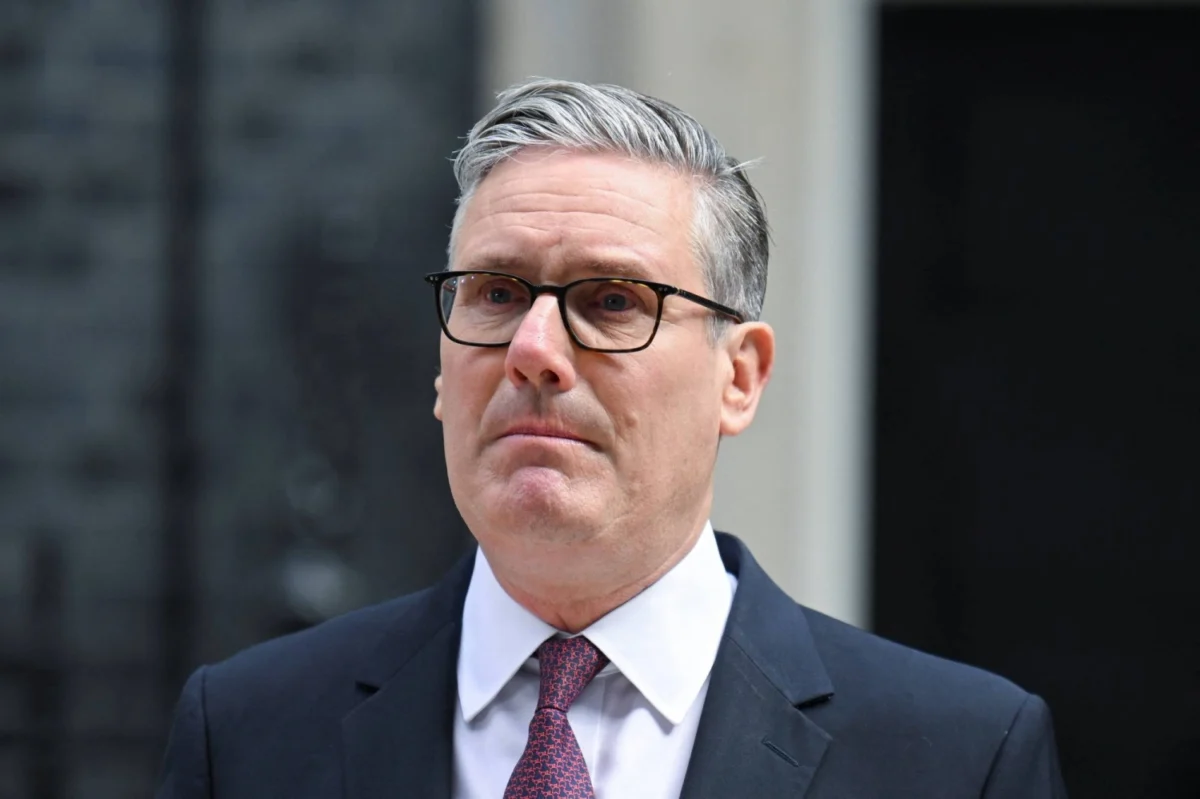
LONDON — For a man who promised to restore order to a fractured nation, the end of Keir Starmer’s premiership arrived with a quiet, somber finality on a Monday afternoon. Standing on the familiar doorstep of 10 Downing Street, the 63-year-old leader, whose ascent to power was once heralded as the dawn of a new, pragmatic era for Britain, announced his resignation.
Starmer, the former human rights lawyer who led the Labour Party to a historic parliamentary landslide in 2024, found that the very quality that once defined his political brand—a clinical, ideology-free approach to governance—eventually became the instrument of his undoing. What began as a promise of "stability and service" concluded as a cautionary tale of a leader who possessed the mechanisms of power but lacked the narrative to sustain it.
The Architecture of a Short-Lived Majority
When Keir Starmer led Labour to its most commanding parliamentary majority in modern British history in 2024, the mandate was clear: voters were exhausted by years of Conservative infighting, economic turbulence, and a series of scandals that had eroded public trust in institutions. Starmer was viewed as the "adult in the room"—a technocratic, disciplined figure who would trade the theatricality of populist politics for the reliable machinery of government.
However, the honeymoon period was uncharacteristically brief. By eschewing a grand, overarching ideology in favor of a "what works" approach to policy, Starmer left a vacuum. Within months, both the public and his own parliamentary party began to perceive this lack of a "guiding light" as a fundamental weakness. More than 20 party insiders, speaking on the condition of anonymity, described a Prime Minister who seemed perpetually reactive, lacking the bold vision necessary to articulate a coherent direction for the country.
Chronology of a Disintegration
The trajectory of Starmer’s premiership can be mapped through a series of pivots and political tremors that steadily eroded his authority.
The Rise (2024)
Labour wins the general election with a historic majority. Starmer frames his premiership around "change," promising to modernize the economy and restore public services. His early focus is on fiscal responsibility and organizational reform.
The Erosion (Late 2024 – Early 2025)
Without a clear ideological anchor, Starmer’s government struggles to reconcile competing interests within the Labour Party. Policy U-turns become frequent. The "robotic" label, which plagued him during his time as Leader of the Opposition, resurfaces as he fails to connect with the public on the cost-of-living crisis and infrastructure projects.
The Turning Point (May 2025)
Following a disastrous performance in local elections, the pressure for Starmer to resign begins to build. On May 12, after a tense lunch with his wife, Victoria, he signals his intent to fight on. He remains defiant, believing he can steady the ship.
The Final Days (Summer 2025)
The internal party consensus shifts. Senior cabinet members, previously his strongest allies, begin to express private concerns that a leadership contest is inevitable. A weekend retreat at Chequers, the Prime Minister’s official country residence, proves to be the moment of reckoning. With his wife by his side, Starmer concludes that his position is no longer tenable.
The Resignation (Monday)
Starmer appears on the steps of Downing Street. His voice breaks as he thanks his family, acknowledging that his party no longer views him as the candidate to lead them into the 2029 general election.
The Pragmatic Trap: A Lack of "Guiding Light"
Political analysts argue that Starmer’s downfall was a direct consequence of "technocratic drift." In his desire to appear as a moderate alternative to the extremes of previous administrations, Starmer often appeared indecisive. His policies—ranging from energy reform to housing legislation—were frequently subject to mid-stream adjustments, which observers interpreted as a lack of conviction.
"He treated the country like a legal brief," said one senior Labour lawmaker. "He had all the arguments, all the evidence, and all the logic. But he failed to realize that leadership requires a story. People don’t vote for a spreadsheet; they vote for a dream, or at least a destination. We never knew where we were going."
As the government faltered, the internal friction within Labour intensified. Starmer was caught between the traditional left-wing factions of the party and the centrist donors and business interests he had courted. Without a core philosophy to mediate these demands, he became a "broker of compromises," a role that satisfied no one and alienated many.
Supporting Data: The Erosion of Public Confidence
The collapse of Starmer’s approval ratings was not sudden, but rather a slow, steady drainage of capital. According to internal party polling and external tracking, the perception of the government’s performance reached a critical nadir in the spring of 2025.
- Policy Reliability: Over 60% of voters polled in late May cited "broken promises" as their primary reason for moving away from Labour.
- Approval Ratings: Starmer’s net approval rating plummeted from +15% upon his victory to -22% by the time of his resignation.
- Cabinet Unity: In the final weeks, it is reported that nearly two-thirds of his cabinet ministers were in favor of a "managed transition," signaling a total collapse of support within the party’s top echelons.
Official Responses and the Transition
Following the resignation, the political machinery of Westminster shifted immediately to the question of succession. Starmer, in his address, promised an "orderly transfer of power," emphasizing that his primary concern was the stability of the state.
"The question my party is asking now is whether I am best placed to lead us into the next general election," Starmer said in a moment of uncharacteristic vulnerability. "I have heard the answer from my parliamentary party to that question, and I accept that answer with good grace."
The party is now widely expected to look toward Andy Burnham, the former Mayor of Greater Manchester, as the frontrunner for the leadership. Burnham, known for his regional focus and ability to communicate with the "Red Wall" voters who were instrumental in Labour’s initial 2024 victory, is seen as a leader who possesses the narrative charisma that Starmer lacked.
Implications for Britain: A Future Unclear
The fall of Keir Starmer leaves a deep uncertainty over the United Kingdom. With a massive parliamentary majority still in place, the Labour Party remains in power, but the mandate is essentially orphaned. The next leader will inherit not only the government but the profound task of reconciling a party that has spent the last year in a state of quiet civil war.
For the electorate, the lesson of the Starmer years is a stark reminder of the limits of pragmatism in an age of populism. The desire for "calm" and "competence," while valid, proved insufficient to sustain a government in the face of deep-seated socioeconomic grievances.
As the political class looks toward the next election in 2029, the fundamental question remains: Can a government built on a massive, historic majority survive a crisis of identity? Keir Starmer, the man who set out to change Britain by doing the possible, discovered that in the arena of modern politics, the possible is never enough without the belief of the people.
His departure marks the end of a chapter that promised stability but delivered volatility, leaving the Labour Party to search for the "guiding light" that remained missing throughout his tenure. The transition to a new leader will be orderly, but the path forward remains shrouded in the same uncertainty that defined the Starmer years.


 Neng Nana
 Asro
Asro