

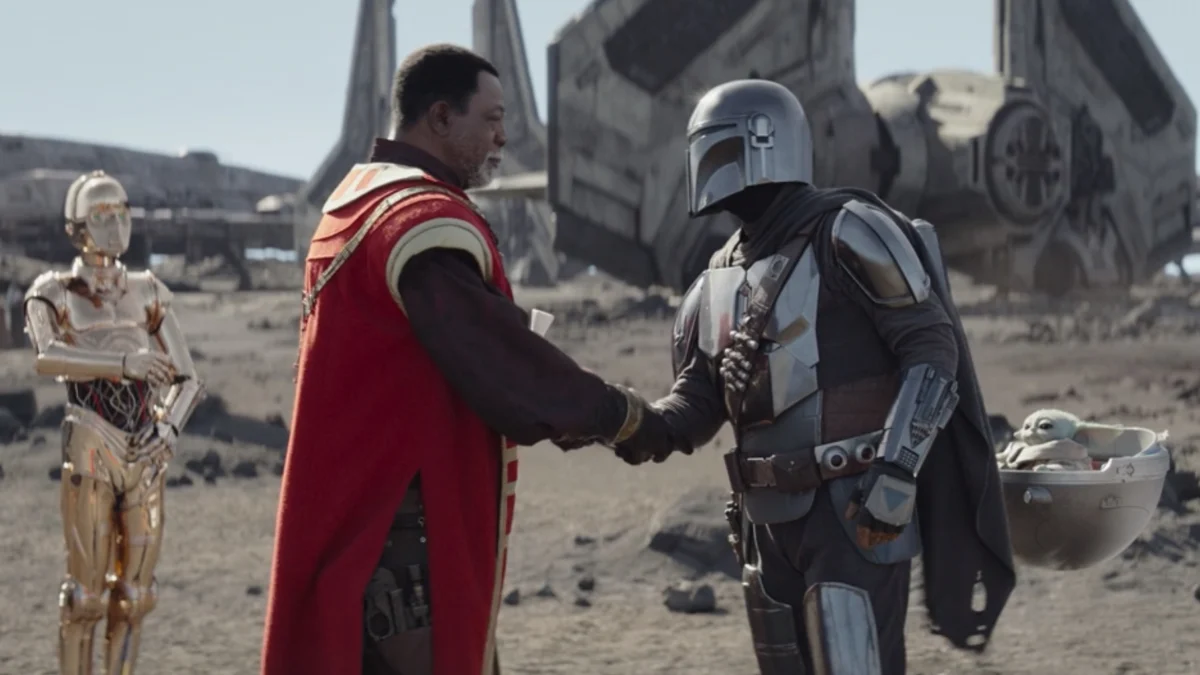
The landscape of the Star Wars franchise is, by its own admission, "fluid." For fans of the smash-hit Disney+ series The Mandalorian, this fluidity recently manifested as a seismic shift in production strategy. The announcement of the feature film The Mandalorian and Grogu—directed by Jon Favreau—was met with both excitement and confusion. While the film serves as a high-profile expansion of the beloved story, its existence effectively serves as a permanent replacement for what was once the highly anticipated fourth season of the flagship show.
For many, the transition from episodic television to a standalone theatrical event marks a definitive turning point. As Lucasfilm continues to navigate the complexities of streaming metrics, theatrical viability, and a sprawling interconnected universe, the dream of a traditional Mandalorian Season 4 appears to have been shelved in favor of a more consolidated, cinematic approach.
The State of the Galaxy: Main Facts and Strategic Realignment
To understand why the fourth season was sidelined, one must first recognize that The Mandalorian and Grogu is not merely a "movie version" of the next chapter. It is an entirely different beast. While the film continues the narrative trajectory established by the first three seasons—namely, the bond between the stoic Din Djarin and the Force-sensitive foundling Grogu—it functions under a different set of narrative constraints.
The fundamental fact is this: The Mandalorian Season 4, as it was originally conceived, is effectively dead. While showrunner Jon Favreau had completed early drafts for an entire season of episodes, the studio made a top-down decision to pivot to film. This was not a cancellation in the traditional sense of a network pulling the plug on a failing show; rather, it was a strategic reallocation of resources. Disney, facing a post-strike environment of fiscal caution and content consolidation, opted to elevate the franchise’s most reliable asset to the big screen.
Chronology of a Shift: From Scripts to Cinema
The path to this decision was not instantaneous. Following the conclusion of Season 3, which saw Din Djarin and Grogu settling into a quiet life as bounty hunters for the New Republic, writers were actively working on the scripts for Season 4.
- Pre-2023: Development on Season 4 was in full swing. Reports and interviews, including comments from actor Giancarlo Esposito, suggested that the show’s long-term arc was being mapped out to address lingering mysteries from the show’s earliest days.
- Late 2023: The Hollywood writers’ and actors’ strikes created a massive bottleneck for production. During this time, the executives at Lucasfilm and Disney began a comprehensive audit of their "Star Wars" slate.
- Early 2024: The announcement of The Mandalorian and Grogu arrived, confirming that the theatrical medium would be the home for the duo’s next adventure.
- The Present: Jon Favreau has officially directed inquiries regarding a potential Season 4 to Lucasfilm President Dave Filoni, signaling that any further television installments are, at best, a secondary consideration.
The transition from a serialized format to a feature film reflects a broader industry trend: the desire to "eventize" content. A fourth season of a streaming show, while successful, carries a high cost-per-episode ratio. A feature film, conversely, offers the potential for massive global box office returns and serves as a cleaner entry point for casual audiences who may feel intimidated by the dense continuity of a four-season television show.
Supporting Data: Why the Streaming Experiment Evolved
The rationale behind this pivot was clarified by Lucasfilm President Kathleen Kennedy in recent discussions. According to Kennedy, the streaming space provided the studio with a laboratory for experimentation. The Mandalorian served its purpose perfectly: it built an audience from the ground up, allowed for character-driven storytelling, and established a consistent visual language for the "Mandoverse."
However, there is a clear distinction between the "experimentation" of streaming and the "rigor" of the theatrical space. As Kennedy noted in a Deadline interview, the transition to film is designed to open the door to younger viewers. The goal is to provide a "gateway" experience. If a new fan walks into a theater to see The Mandalorian and Grogu, they should feel the emotional weight of the relationship without necessarily needing to have parsed every subplot regarding Mandalore’s political succession or the intricate lore of the Darksaber.
Furthermore, the "Mandoverse" had become increasingly fragmented. With The Book of Boba Fett, Ahsoka, and the various threads left dangling in The Mandalorian Season 3, the narrative load had become heavy. Consolidating these characters into a feature film format allows Lucasfilm to streamline the story, trimming the "homework" required of the audience while still rewarding the die-hard fans who have followed the journey since 2019.
Official Responses and Creative Direction
The creative team has been careful to manage expectations. Jon Favreau has been transparent about the fact that the original scripts for Season 4 could not simply be "squeezed" into a two-hour film. The scope of the television episodes was designed for a slow-burn, interconnected narrative—specifically one that was meant to heavily feature Grand Admiral Thrawn and provide a direct bridge to Ahsoka Season 2.
"There were a lot of characters, it assumed you’d watched the whole show, and it was teeing up what was happening moving into Ahsoka," Favreau explained. By shifting to a film, the team has had to scrap those specific setups. While the film will still feature the characters audiences know, it will be a more self-contained story.
Dave Filoni, now in a position of significant leadership at Lucasfilm, has described the movie as a "big celebration." This terminology suggests a move away from the complex political intrigue that defined the latter half of the show’s run and a return to the "adventure-of-the-week" spirit that made the first season such a global phenomenon.
Implications: The Future of the Mandoverse
The cancellation of a formal Season 4 carries several implications for the future of the Star Wars franchise:
1. The Death of the "Slow Burn"
The primary casualty of this decision is the serialized, character-focused development that defined the first two seasons. By moving to a film, the story will likely prioritize momentum and spectacle over the quiet, meditative moments that allowed Din Djarin to evolve from a bounty hunter into a father figure.
2. The Consolidation of Lore
For years, there was speculation about an "epic" crossover film—often referred to as the "Mandoverse movie"—that would unite every character from the Disney+ shows. The pivot to The Mandalorian and Grogu suggests that Lucasfilm may be cooling on the idea of a massive, Avengers-style crossover, opting instead to keep the franchise focused on its core, most recognizable brand assets.
3. The New Republic and the Shadow Council
One of the most disappointing aspects of the loss of Season 4 is the potential reduction in screen time for the New Republic’s political struggles and the looming threat of the Shadow Council. These elements provided a necessary context for the rise of the First Order. If the movie focuses strictly on Din and Grogu’s personal quest, these broader geopolitical stakes may be relegated to background noise or moved entirely to other spin-off projects like Ahsoka.
4. Financial Pragmatism
Ultimately, this is a business decision. With several high-profile Star Wars film projects (such as the Lando film or the Taika Waititi project) stuck in development limbo, Disney needs a win. The Mandalorian is the only Star Wars property in the post-sequel trilogy era that has maintained consistent, near-universal acclaim. By betting on a Mandalorian movie, the studio is choosing the path of least resistance.
Conclusion: A New Direction for a Familiar Face
Whether this shift is a stroke of genius or a missed opportunity remains to be seen. On one hand, The Mandalorian and Grogu represents a return to the cinematic prestige that Star Wars once commanded. It places these characters on the largest possible stage and gives them the budget to match their cultural impact.
On the other hand, it closes the door on a chapter of television history that allowed creators to take risks, explore the margins of the galaxy, and develop deep, meaningful arcs. As the "fluid" strategy continues, one thing is certain: the era of The Mandalorian as a long-form, serialized journey has concluded. In its place, a new, more condensed chapter begins—one that hopes to balance the expectations of a decade-long fandom with the need to capture the imaginations of an entirely new generation.
For the fans, the message is clear: don’t wait for a Season 4 announcement. Instead, prepare to see Din Djarin and the Child on the silver screen, where the stakes are higher, the scope is wider, and the galaxy is, once again, ripe for a new beginning.









No comments yet. Be the first to join the conversation!