For decades, Guillermo del Toro has stood as both a titan of modern fantasy and a tireless custodian of cinematic history. This week, the Oscar-winning director of The Shape of Water and Pan’s Labyrinth has transitioned from the director’s chair to the lecture podium, unveiling a deeply personal project at the Academy Museum of Motion Pictures in Los Angeles: "Guillermo del Toro Dissects Hitchcock."
The retrospective is far more than a mere screening series. It is a masterclass in visual literacy, designed to illuminate the formal genius of the "Master of Suspense" through the lens of one of his most passionate disciples. By dissecting five foundational works—Notorious, Shadow of a Doubt, North by Northwest, I Confess, and Frenzy—del Toro is not just showing films; he is teaching an audience how to truly see them.
The Evolution of a Visionary: A Chronology of Artistic Autonomy
To understand the weight of this series, one must understand the evolution of Alfred Hitchcock’s career, a trajectory del Toro meticulously traced during the opening night of the retrospective.
Before Hitchcock became the undisputed auteur of the Hollywood studio system, he was a man in chains—or, more accurately, a man under the thumb of the legendary producer David O. Selznick. Their collaboration, while producing masterpieces like Rebecca and Spellbound, was defined by a stifling "tug-of-war." Selznick, a producer who demanded that his creative fingerprint be stamped onto every frame, famously micromanaged Hitchcock, bombarding him with endless memos that sought to dictate everything from pacing to character motivation.
"He waited, stubborn and quiet, and eventually got his way," del Toro noted, describing Hitchcock’s strategy of attrition. However, the turning point in this creative battle came in 1946 with Notorious.
The shift was, in many ways, a matter of circumstance. Selznick, consumed by the runaway costs and logistical nightmare of his Western epic Duel in the Sun, found himself forced to relinquish control over Notorious. With the producer’s shadow finally receding, Hitchcock was granted the creative oxygen he required. Operating with the full, unfettered resources of RKO Pictures, he delivered a film that was both a quintessential espionage thriller and an intimate, profoundly personal exploration of romance and betrayal. It served as a catalyst, marking the moment Hitchcock moved from a highly skilled director for hire to a singular, world-building auteur.

Decoding the Craft: The Methodology of "Pure Cinema"
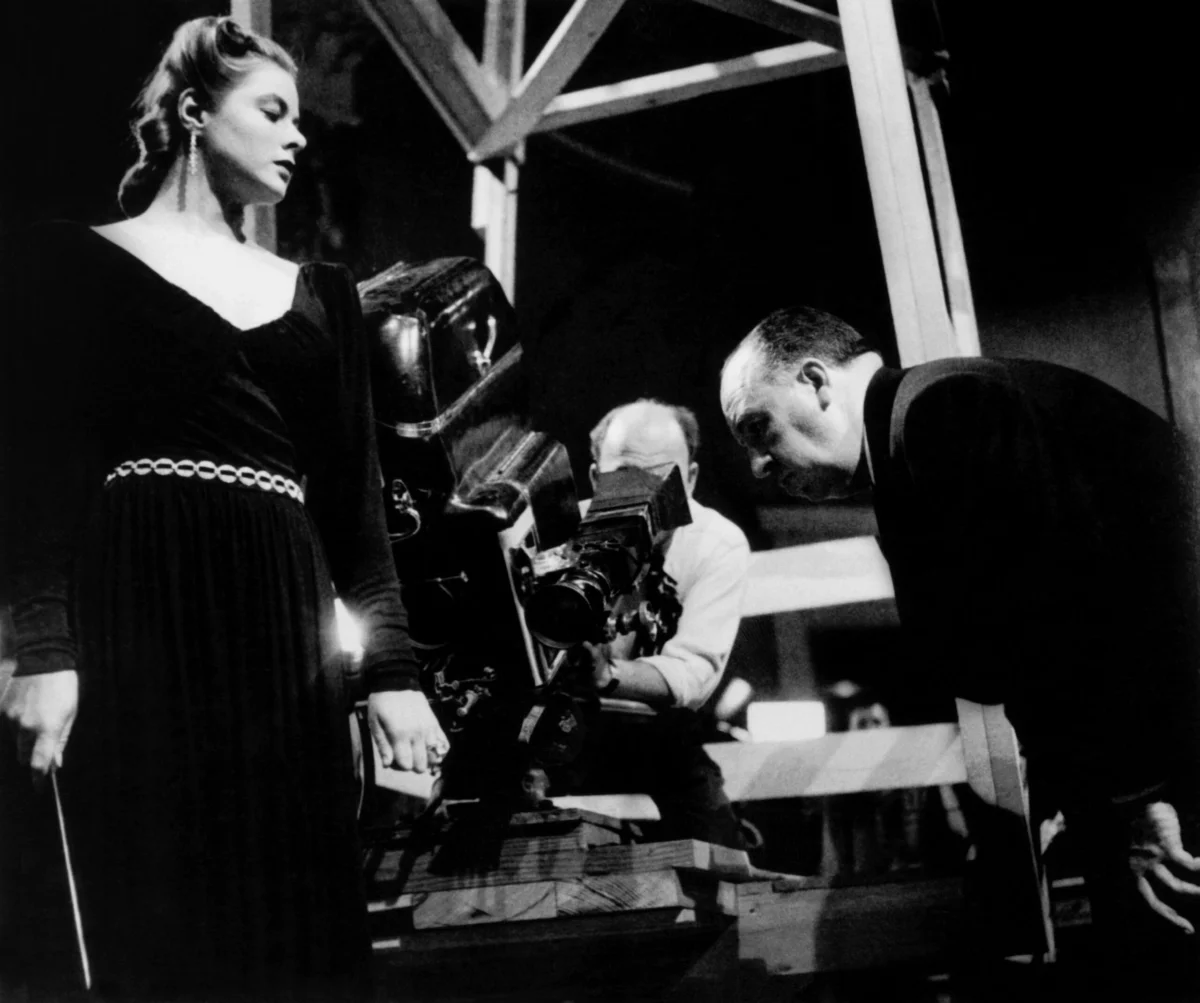
At the heart of the Academy Museum series is del Toro’s insistence on the concept of "pure cinema." Throughout the lectures, he draws upon images from the Margaret Herrick Library, utilizing behind-the-scenes stills and technical diagrams to peel back the layers of Hitchcock’s visual grammar.
Del Toro is particularly fascinated by how Hitchcock’s technical motifs evolved over time. During his presentation, he presented side-by-side clips showing the progression of signature camera movements—such as the "Hitchcockian crane shot"—which starts with a sweeping view of a setting before narrowing down to a single, critical detail. By mapping these techniques from Notorious through to the late-career grit of Frenzy, del Toro demonstrates that Hitchcock’s formal rigor remained consistent even as his thematic interests grew darker and more cynical.
One of the most enlightening moments of the lecture involved a breakdown of the famous romantic scene between Cary Grant and Ingrid Bergman in Notorious. Del Toro highlighted how Hitchcock navigated the draconian censorship of the era’s Production Code through "sly blocking." By breaking the embrace with purposeful, fragmented actions, Hitchcock managed to imply an intimacy that was far more visceral and suggestive than what was allowed on screen.
"It’s not just about the kiss," del Toro explained. "It’s about how he calls back to those exact rhythms at the film’s climax, using the language of film to generate emotional effects that words alone cannot achieve."
The Crisis of Cinematic Literacy
Perhaps the most significant aspect of this retrospective is its underlying philosophical mission. Del Toro is deeply concerned that the ability to analyze film as a formal art form is rapidly "evaporating" from public discourse.
"Most of the time when we discuss movies, we discuss them in terms that we inherit from dramaturgy," del Toro told the rapt audience. "We focus on the plot, the screenplay, the characters. But think about all the fine arts. We don’t discuss a Van Gogh painting by saying, ‘Well, it’s a couple of flowers in a vase.’ We discuss the vigor of the tracery, the richness of the palette, the formal composition."

Del Toro argues that by reducing film solely to its narrative or social-political elements, we are ignoring the very elements that make cinema unique. He posits that film is an art form that exists in a language that cannot be articulated in any other way. By celebrating Hitchcock—a director whose work is almost entirely defined by his mastery of visual and auditory mechanics—del Toro hopes to foster a new generation of "cinematic literacy."
Official Perspectives and Future Implications
As a recently appointed member of the Academy Board of Governors, del Toro is using his platform to bridge the gap between historical preservation and modern education. His work at the museum is not an isolated experiment but part of a broader mandate to "renew the pact with cinema."
The director teased that this is merely the beginning of his collaborative efforts with the Academy. He hinted at future lecture series that would delve into other overlooked corners of film history, floating the idea of a comprehensive program devoted to Luis Buñuel’s Mexican period.
The implications of this initiative are clear: the Academy Museum aims to position itself not just as a repository of artifacts, but as a living classroom. By inviting masters like del Toro to guide audiences through the archives, the museum is encouraging a more active, critical mode of viewing.
"There are no old movies," del Toro reminded the audience during his closing remarks. "There are only movies waiting for you to see them for the first time and make them new."
The Call to Action: Reclaiming the Medium
The "Guillermo del Toro Dissects Hitchcock" series serves as both a retrospective and a rallying cry. In an era where streaming algorithms and rapid-fire content cycles threaten to dilute the viewing experience, del Toro is advocating for a return to "slow cinema"—a way of watching that demands attention to the frame, the cut, and the camera movement.

His lectures are a reminder that the history of film is not a stagnant archive but a dynamic language that must be spoken and understood to survive. Whether it is analyzing the precise framing of a murder or the emotional cadence of a romantic encounter, del Toro’s approach proves that Hitchcock’s work is as relevant to modern audiences as it was to the audiences of 1946.
For the budding filmmaker or the casual cinephile, the series offers a rare opportunity to see the mechanics behind the magic. As the exhibition runs through June 28, it provides a crucial space for the public to engage with the formal possibilities of the medium.
In the final analysis, the series is a testament to the endurance of the cinematic form. By dissecting the work of the master, del Toro is doing more than honoring the past; he is providing the tools for the future of the medium to be built with a deeper, more sophisticated understanding of what makes a movie not just a story, but a work of art.
As the lights dim in the Academy Museum and the first frames of Notorious flicker onto the screen, one thing becomes abundantly clear: the conversation about the language of film has never been more vital, and under the guidance of a scholar-director like del Toro, it is a conversation that is only just beginning.