In the mid-1970s, as the United States attempted to reconcile with the catastrophic psychological and cultural fallout of the Vietnam War, a specific subgenre of American cinema emerged. It was a cinema of displacement, alienation, and trauma—a stark departure from the jingoistic, clear-cut narratives that defined World War II films. While history remembers the heavy hitters of this era—Francis Ford Coppola’s Apocalypse Now (1979), Michael Cimino’s The Deer Hunter (1978), and Hal Ashby’s Coming Home (1978)—there exists a haunting, experimental footnote that preceded them: Henry Jaglom’s 1976 drama, Tracks.
Starring the mercurial Dennis Hopper, Tracks serves as a raw, uncomfortable, and often surreal meditation on the fragility of the American soldier’s psyche in the wake of a conflict that defied traditional heroics. Though it largely fell through the cracks of film history, sitting at a lukewarm 50% on Rotten Tomatoes, the film remains a vital piece of the 1970s "New Hollywood" puzzle.
Main Facts: A Descent into the Interior
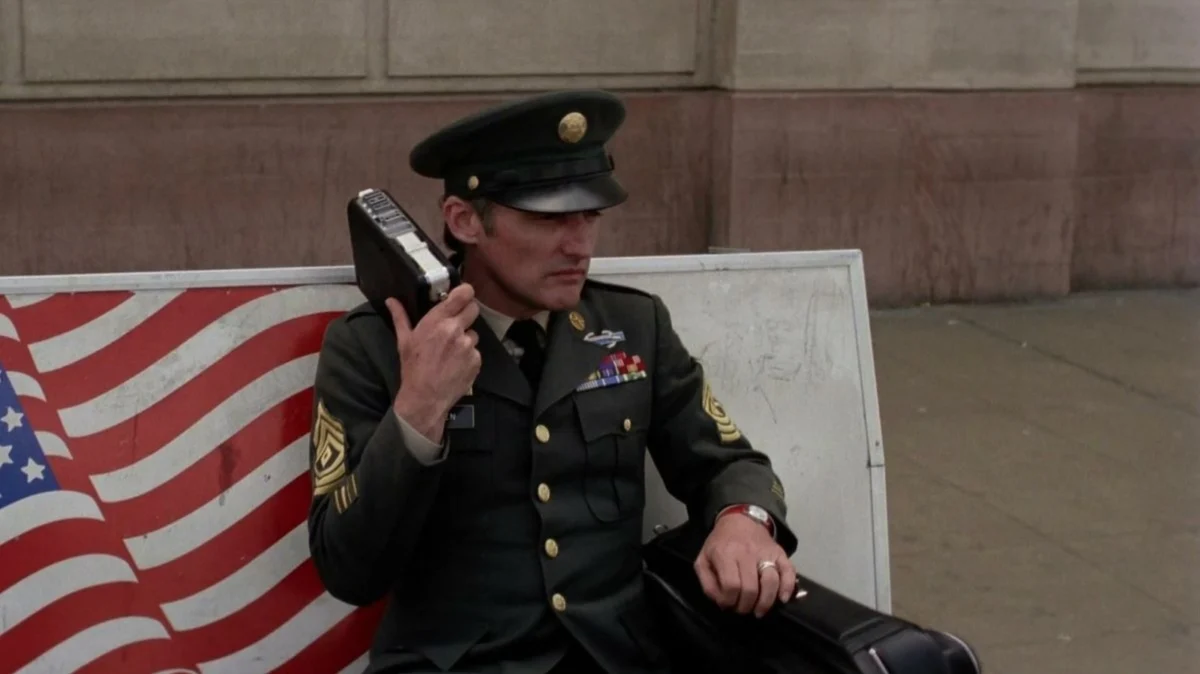
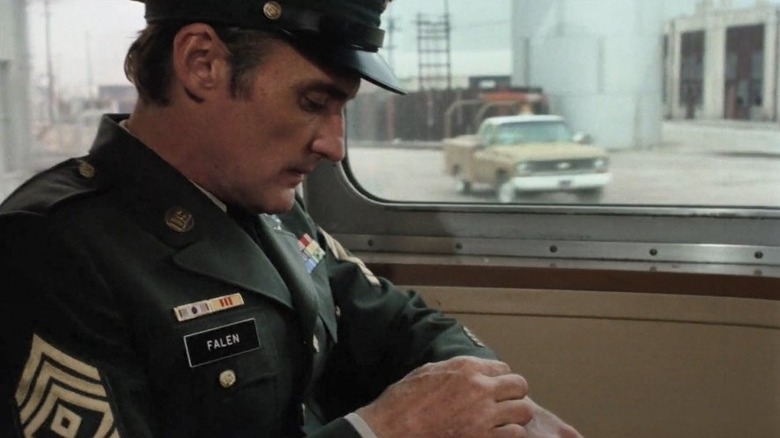
Tracks follows Sergeant Jack Falen (Dennis Hopper), a man tasked with a somber duty: transporting the body of his fallen comrade home to a small California town for burial. The narrative takes place primarily on a cross-country train, a setting that functions less as a physical vessel and more as a claustrophobic purgatory.
As the landscape shifts outside the window, Falen’s internal world unravels. The film eschews linear storytelling in favor of a fragmented, hallucinatory experience. Through flashbacks, bouts of intense depression, and paranoid outbursts, Falen struggles to re-enter a society that seems largely indifferent to the horrors he witnessed. His only tether to reality is a fellow passenger, a young college student named Stephanie (played by Taryn Power), whose presence serves as the only buffer against his total psychological collapse.
Director Henry Jaglom, a protégé of the independent spirit and a man who cut his teeth editing the counter-cultural touchstone Easy Rider, brought his distinct, theater-influenced style to the film. Unlike the slick, high-gloss production values of major studios, Jaglom prioritized actorly instincts and emotional spontaneity, resulting in a film that feels less like a polished product and more like a fever dream.
Chronology: The Evolution of the War Film
To understand the significance of Tracks, one must look at the timeline of the post-Vietnam cinematic shift.
- 1940s–1950s: The "Greatest Generation" era. Films like Twelve O’Clock High and Battleground established the soldier as a stoic, heroic archetype. The mission was clear, the morality was absolute, and the sacrifice was dignified.
- 1976: The release of Tracks. At this juncture, the American public was still reeling from the withdrawal from Saigon (1975). Tracks arrived as a raw, unrefined scream of confusion. It lacked the budget and the polish of later epics, but it captured the immediate, visceral disorientation of the veteran returning to a country that had moved on.
- 1977–1979: The "Masterpiece" period. Rolling Thunder (1977), The Deer Hunter (1978), and Coming Home (1978) arrived with more structured narratives, bringing the trauma of Vietnam into the mainstream spotlight. Apocalypse Now (1979) finally elevated the war to the level of mythic, surrealist horror.
Tracks acted as the bridge. It beat the more famous titles to the punch, articulating the "hell that war creates" before the industry knew how to package it for mass consumption.
Supporting Data: The Critic’s Dilemma
The critical reception of Tracks provides a fascinating glimpse into the intellectual climate of the late 1970s. Reviewers were divided, largely because the film refused to conform to the traditional protest-movie mold.
The Case for "Art" vs. The Case for "Incoherence"
Chris Petit, writing for Time Out, captured the divide perfectly. He was struck by the "sweaty paranoia" of Dennis Hopper’s performance, which he deemed a "sustained and terminal piece of Method acting." However, he questioned the direction, noting that Jaglom might have been more effective had he "tried less hard to make ‘art.’" For Petit, the film’s hallucinatory nature risked drifting into the incoherent.
Conversely, Variety offered a more appreciative perspective. The publication praised the film for its ability to work on multiple levels—simultaneously grounded in the reality of the train ride and the surrealism of the protagonist’s delusions. The review famously remarked that the film was "sometimes uneasy on its rails," highlighting the intentionality of its disjointed structure.
The "Stoned" Critique
Vincent Canby, in his critique for The New York Times, offered a more scathing assessment. He argued that the film lacked a sharp political point, describing it as having the "stoned, improvised look of an artifact out of the 1960s." For Canby, the film’s failure was its lack of a clear ideology; he felt it substituted a "vague dissatisfaction with everything" for a coherent anti-war argument.
Official Responses and Perspectives
The most nuanced reading of the film arguably came from Tom Milne in Sight & Sound. Milne observed that the power of Tracks lies not in its direct political message, but in its juxtaposition of eras.
Milne highlighted the film’s use of sound and music—specifically the way it utilized the "corny" soldier songs of World War II to underscore the hollow, dissonant reality of Vietnam. He pointed out that while the train moved "unswervingly on across America," the passengers inside were oblivious to the existential crisis occurring in their midst. They focused on trivialities—chess problems, nutrition, sexual desires—while the veteran, Falen, was trapped in a cycle of despair, effectively alienating him from the very nation he had been told he was defending.
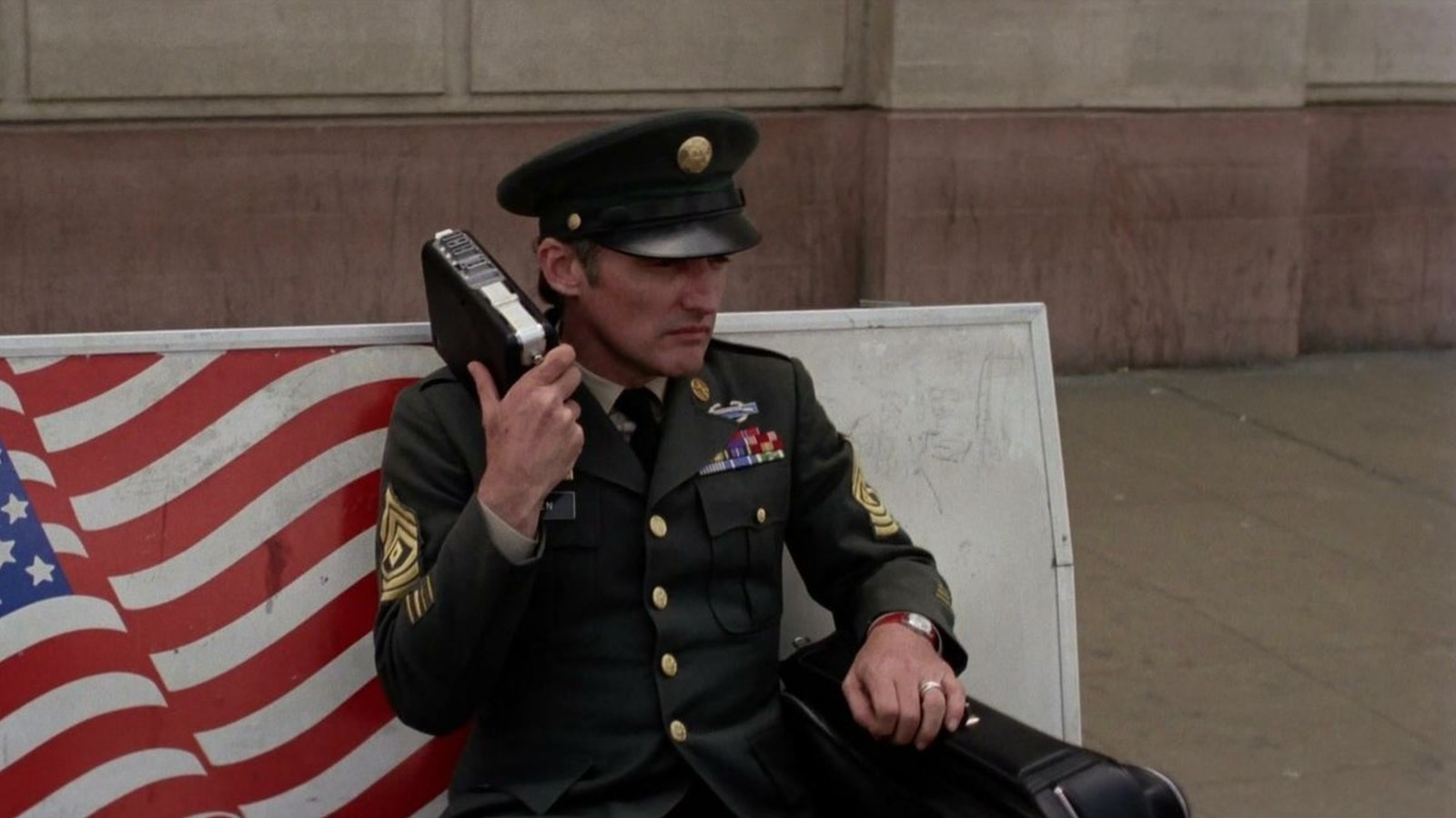
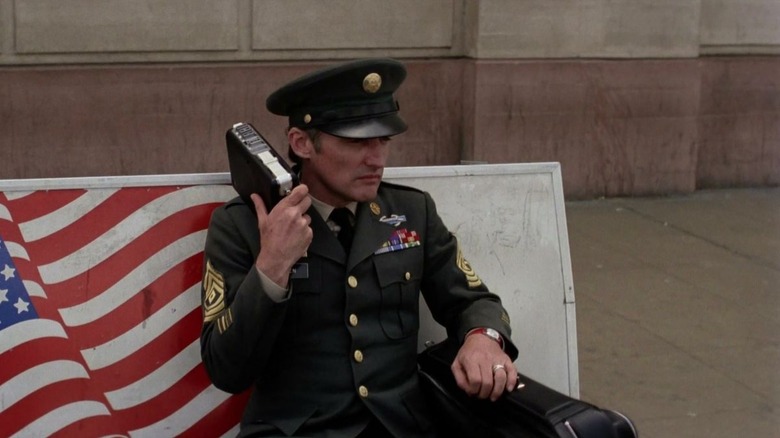
Jaglom himself famously suggested that the entire film might have been a hallucination experienced by Falen while sitting on a simple bus bench—a suggestion that aligns with the film’s themes of fractured identity and the erasure of reality.
Implications: Why "Tracks" Matters Today
The legacy of Tracks is found in its refusal to offer comfort. It does not provide the catharsis of a clear anti-war message or the resolution of a character arc. Instead, it leaves the viewer in a state of suspended animation, much like the protagonist himself.
The Death of the "Hero"
Tracks marked the final nail in the coffin for the "heroic" soldier archetype. It suggested that, unlike the veterans of 1945, the soldiers returning from Vietnam were not coming home to parades or the comfort of a grateful nation. They were returning to a society that viewed them with "varying degrees of embarrassment, indifference, hostility, and pity."
The Aesthetics of Trauma
By employing a low-budget, improvisational style, Jaglom inadvertently captured the authentic, messy, and non-linear nature of PTSD long before the term was part of the common cultural lexicon. While Apocalypse Now used a massive budget to visualize the "heart of darkness," Tracks used a train and a man with a haunted face to demonstrate that the heart of darkness is often located in the quiet, mundane spaces of daily life.
Conclusion: An Artifact of the Unresolved
Today, Tracks serves as a poignant reminder of the "forgotten" cinema of the 1970s. It is a film that reminds us that history is not only written by the blockbusters that define an era but also by the small, experimental, and deeply flawed works that dare to ask uncomfortable questions. While it may never achieve the critical consensus of its more famous peers, Tracks remains an essential, if painful, document of the Vietnam era—a film that, like its protagonist, continues to wander through the tracks of history, searching for a home that no longer exists.