In the ever-evolving, chaotic landscape of Marvel Comics, few characters possess the structural instability—and the narrative elasticity—of Wade Wilson. As the Merc with a Mouth prepares to headline his latest chapter in Wade Wilson: Deadpool #6, fans and industry analysts alike are bracing for a story arc that promises to challenge the very definition of the character’s identity. With the arrival of the mysterious "BADPOOLS," Marvel is set to descend into a meta-narrative frenzy that threatens to leave the original Deadpool questioning his own reality.
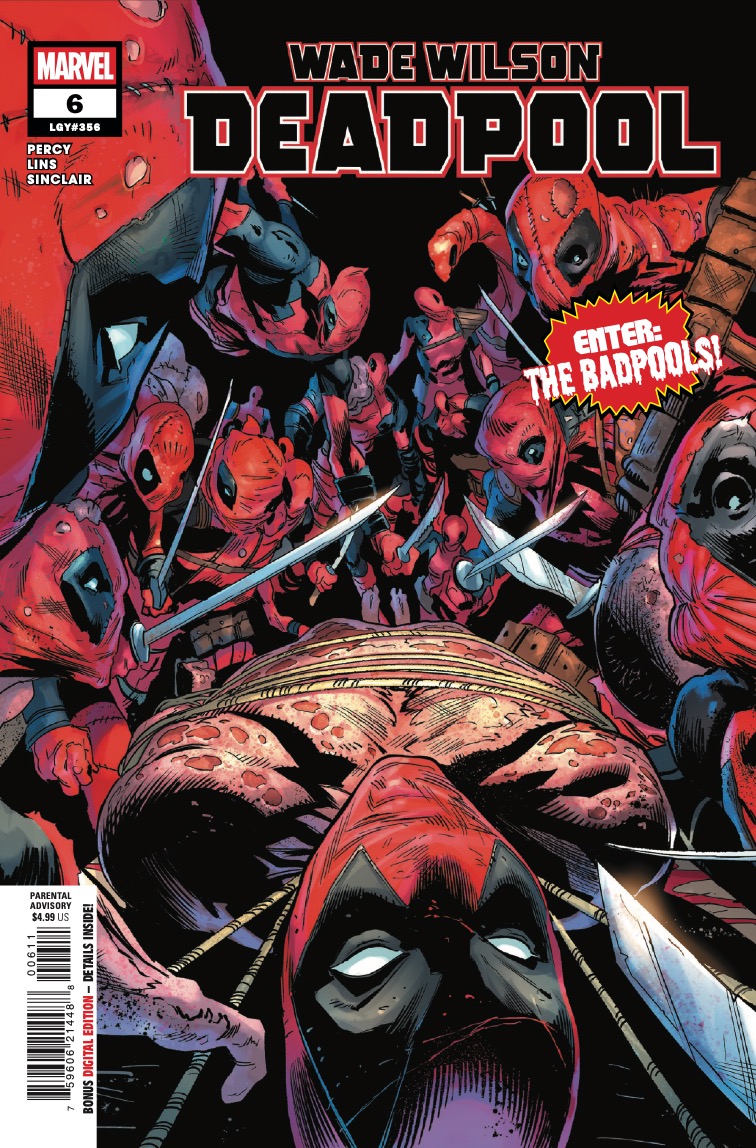
Scheduled for release on July 1, 2026, this issue (carrying the storied legacy numbering of #356) marks a critical juncture in the ongoing series. Under the creative stewardship of writer Benjamin Percy and the visual artistry of Alex Lins and colorist Alex Sinclair, Wade Wilson: Deadpool #6 is positioning itself as a must-read for those who enjoy the dark, irreverent humor that has become synonymous with the franchise.

The Main Facts: An Existential Threat in Spandex
The premise of Wade Wilson: Deadpool #6 is deceptively simple yet laden with potential for psychological horror. The official solicitations pose a question that resonates with the core of the Deadpool mythos: "Who’s that knockin’ at the door? Sounds like Wade. SMELLS like Wade. But it’s not Wade… OR IS IT?!"
The introduction of the "BADPOOLS"—an apparent collective of Deadpool variants or doppelgängers—suggests a story that will delve into the multiverse-hopping antics that have defined modern Marvel storytelling. For Wade, whose life is already characterized by fractured memories, unreliable narration, and a tenuous grasp on the fourth wall, the arrival of these "Badpools" is not just a tactical threat, but an existential one. Marvel’s promotional materials are emphatic: "The BADPOOLS enter the scene, and Deadpool’s life will never be the same." This serves as a clear indication that the status quo is slated for a violent, humorous, and likely permanent upheaval.
Chronology of a Mercenary
To understand the gravity of the events in issue #6, one must look at the trajectory of the Wade Wilson: Deadpool series since its inception. Benjamin Percy’s run has been characterized by a lean, visceral approach to the character, stripping away some of the more cartoonish elements of previous iterations in favor of a gritty, noir-inspired tone that highlights the isolation of a man who cannot die.
- Issues #1-3 (The Setup): Established a new status quo for Wade, focusing on the psychological toll of his regenerative abilities and his strained relationship with the greater Marvel Universe.
- Issues #4-5 (The Escalation): Began introducing subtle cracks in the narrative, with minor inconsistencies in Wade’s missions, hinting that he was being mimicked or observed by unseen forces.
- Issue #6 (The Pivot): The "BADPOOLS" arc acts as the mid-season climax, where the foreshadowing of the previous issues coalesces into a direct, physical confrontation.
By hitting the Legacy #356 milestone, the creative team is tapping into decades of history. This numbering is not merely symbolic; it honors the lengthy, often convoluted history of the character, providing a sense of weight to the upcoming conflict that a standard reboot might lack.

Supporting Data: The Creative Engine
The strength of Wade Wilson: Deadpool #6 lies in the synergy between its creative team. Benjamin Percy, known for his work on Wolverine and Ghost Rider, has proven himself adept at balancing high-octane action with character-driven tragedy. His scripts for this run have been noted for their sharp dialogue and their ability to keep the reader guessing about the protagonist’s mental state.
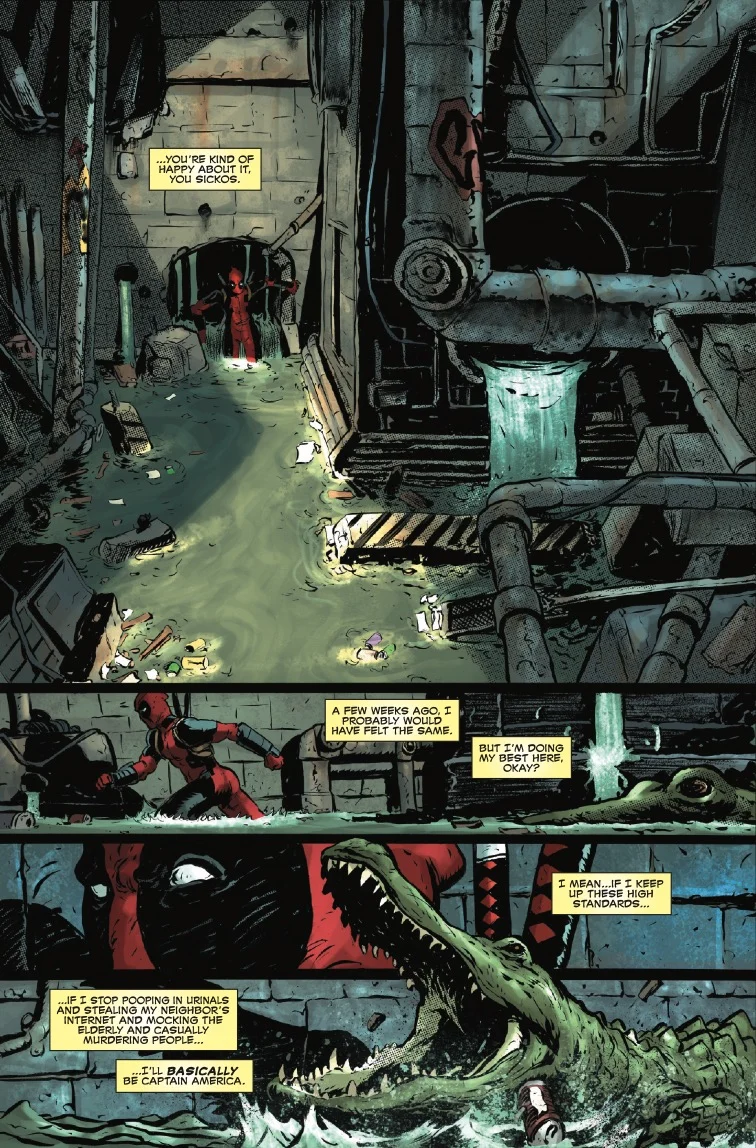
Complementing this, the art team of Alex Lins and Alex Sinclair provides a visual language that is both gritty and dynamic. Lins’ linework brings a rugged, lived-in texture to the character designs, while Sinclair’s color palette—often relying on high-contrast reds and blacks—emphasizes the visceral nature of the violence. The preview pages released by Marvel showcase a masterclass in visual storytelling, utilizing cramped, claustrophobic panels to mirror the encroaching sense of dread that Wade feels as he realizes he is no longer the only "Wade" in the room.

Official Responses and Industry Context
While Marvel remains tight-lipped regarding the specific nature of the "BADPOOLS," the industry buzz surrounding this issue has been significant. Editorial teams have hinted that this arc will have repercussions that extend beyond the pages of Wade Wilson: Deadpool.
"We wanted to challenge Wade in a way that he couldn’t just stab his way out of," says a source close to the project. "When your greatest enemy is a reflection of yourself—or worse, a corrupted version of yourself—it forces you to confront the aspects of your personality that you’ve tried to bury. Benjamin [Percy] has written something that is going to force readers to rethink everything they think they know about Wade Wilson’s origins and his place in the current Marvel hierarchy."

This approach aligns with a broader industry trend of "deconstructionist superhero comics," where established icons are placed in scenarios that test their moral, physical, and psychological limits. By pitting Wade against a group of his own design, the writers are essentially turning the character’s own tropes against him.
Implications: The Future of the Merc with a Mouth
The implications of Wade Wilson: Deadpool #6 are manifold. If the "BADPOOLS" prove to be a multiversal threat, it could signify a pivot toward more cosmic-scale stories for the character. Conversely, if they are a localized, perhaps even internal, threat—a manifestation of Wade’s fractured psyche—the story could evolve into a deep-dive character study.

Furthermore, the release timing is strategic. Hitting the stands in July allows the story to capitalize on the summer comic book cycle, a period where publishers typically aim to push their most high-impact titles. With a 32-page count, the issue is formatted to provide a substantial, self-contained narrative experience that rewards both new readers and long-time fans who have been following the legacy numbering.
Final Thoughts
As we approach the release of Wade Wilson: Deadpool #6, the anticipation is palpable. Will the "BADPOOLS" be the catalyst for a redemption arc, or will they serve as the final undoing of a character who has survived everything else the universe has thrown at him?

The combination of Benjamin Percy’s dark, analytical writing and the gritty aesthetic of Lins and Sinclair suggests that this will be one of the most memorable chapters in the character’s long, blood-stained history. Whether you are a devotee of the Deadpool mythos or a casual reader interested in the latest developments in Marvel’s "Legacy" era, the arrival of the "BADPOOLS" is a sign that the status quo is, quite literally, being killed off—and in the world of Wade Wilson, that is the most exciting outcome possible.
The stage is set. The door is locked. And someone, or something, is knocking. Wade Wilson is about to find out exactly what happens when your worst nightmare wears your own face.