Introduction: A Disrupted Weekend
The professional wrestling landscape was irrevocably altered this past weekend as AEW, in collaboration with NJPW, CMLL, and Stardom, hosted Forbidden Door 2026. While proponents of the event point to the high-stakes cross-promotional matches as a triumph of modern booking, the reality for traditionalist observers remains far more concerning. Scheduled directly opposite WWE’s Night of Champions weekend, the event has sparked a firestorm of controversy regarding the direction of the industry, the safety of the performers, and the psychological toll taken on those who adhere to a more traditional sports-entertainment philosophy.
The Chronology of Conflict
The final three matches of the card served as the epicenter for what can only be described as a complete departure from the norms of professional wrestling.

The Women’s Owen Hart Foundation Tournament Final
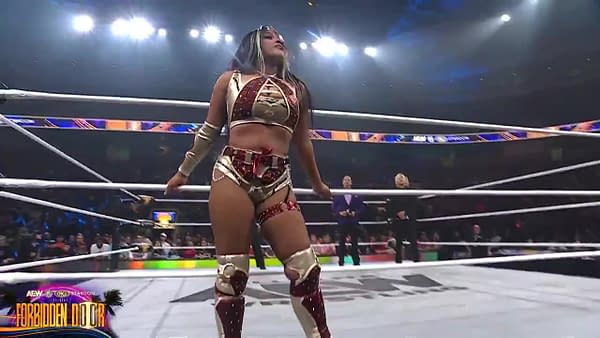
The evening began with a technical display between Mercedes Moné and Maya World. The bout, which saw Moné emerge victorious via her signature "Statement Maker," was characterized by a high-octane pace that some might label "reckless." While fans in the arena appeared to relish the back-and-forth counters and high-risk maneuvers, such as Maya World’s sunset flip powerbomb to the floor, the lack of traditional pacing raises questions about long-term performer welfare.
The post-match proceedings added another layer of complexity. Athena’s appearance, in which she asserted her dominance and challenged the landscape of the division, served as a stark reminder of the dense, serialized storytelling that Tony Khan has made the hallmark of AEW. For those accustomed to the episodic, often standalone nature of championship reigns, this level of intense, multifaceted booking can be overwhelming.
The "Death’s Door" Steel Cage Match
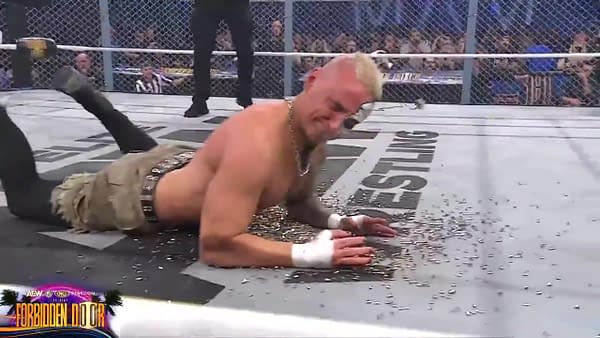
Perhaps the most jarring segment of the night was the 12-man steel cage match between Team Briscoe and Team MJF. Featuring a cornucopia of weapons—including, somewhat controversially, an NES console and controllers—the match descended into a spectacle of "extreme" sports that pushed the boundaries of standard televised content.
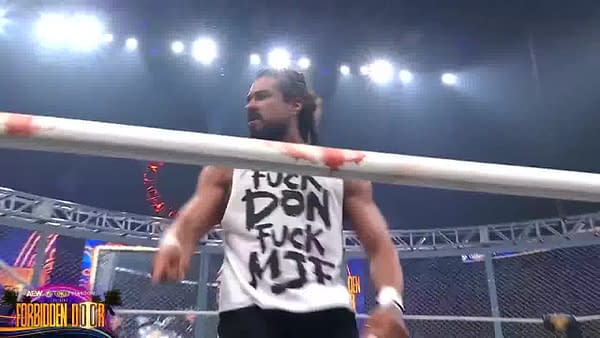
The inclusion of an exploding bag and a high-altitude Coffin Drop from Darby Allin underscored a philosophy that prioritizes visceral, dangerous thrills over the psychological tension typically preferred in the industry. The turning point of the match, where Andrade El Idolo betrayed MJF and the Don Callis Family, was a masterclass in the "shock-value" booking that has become a staple of AEW programming, forcing viewers to commit to future broadcasts to see the fallout.

The Main Event: Ospreay vs. Strickland
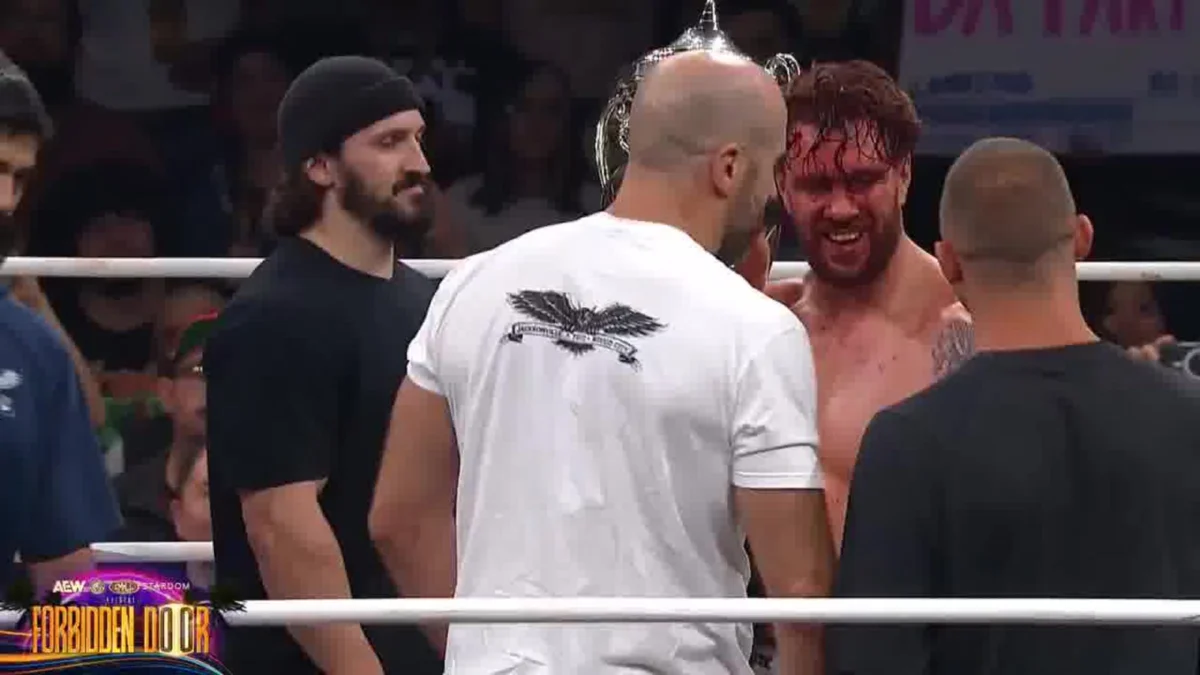
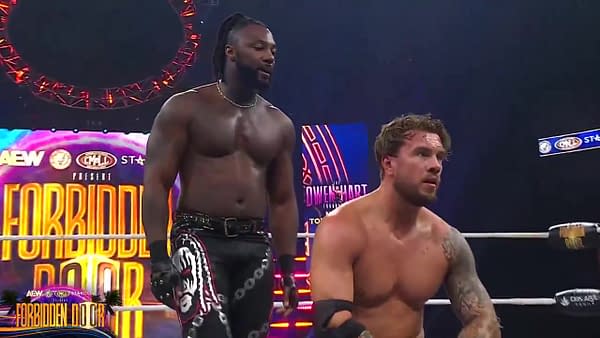
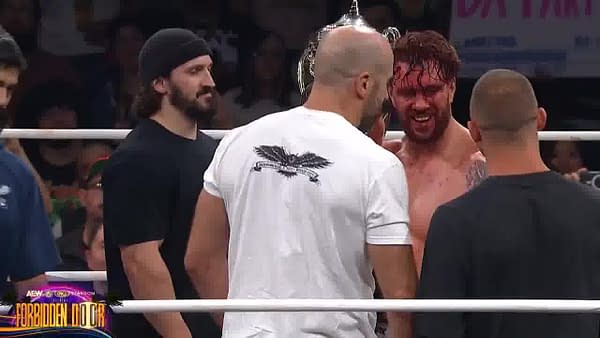
The main event saw Will Ospreay defeat Swerve Strickland in a brutalized, bloody affair. The use of Jon Moxley’s "Death Rider" to secure the win, coupled with the involvement of the Death Riders at ringside, signaled a shift toward a faction-heavy, interlinked universe. The excessive blood loss and the reliance on chaotic outside interference serve as a stark contrast to the more regulated, sponsor-friendly environment found in other major promotions.
Supporting Data: The Cost of Competitive Booking
When examining the implications of Forbidden Door 2026, one must consider the sheer volume of narrative threads being pulled at once. By setting up an AEW Women’s World Championship match at All In: London and having Mark Briscoe immediately challenge for the World Championship on Dynamite, the promotion has essentially locked its audience into a cycle of constant, high-pressure consumption.
Industry analysts have pointed to a shift in consumer behavior. AEW’s strategy appears to be one of "total immersion," requiring a deep knowledge of ongoing feuds and history. In contrast, the traditional model—often championed by figures like Bully Ray—advocates for a more accessible product that allows for standalone enjoyment without the need for a deep, pre-existing database of lore.
Official Responses and Industry Perspectives
The industry remains deeply divided. While Tony Khan continues to defend his vision of "dream matches" and cross-promotional synergy, veteran voices are growing increasingly vocal. Bully Ray, in a recent interview, suggested that the industry would benefit from a move back toward "safe, controlled" matches, arguing that the current trajectory toward high-risk, bloody, and violence-heavy main events alienates potential sponsors and mainstream advertisers.
The sentiment among those who prioritize the "sports entertainment" aspect of the business is clear: by treating wrestling as a "real" competition, promotions like AEW risk losing the narrative polish that keeps the industry palatable to a general audience.
Implications: The Future of the Industry
The success of Forbidden Door 2026, in terms of engagement and social media discourse, cannot be ignored. However, the long-term sustainability of this model is the true question.
- Narrative Exhaustion: By moving at a breakneck speed, AEW risks burning out its audience. When every match has "championship implications" or "massive historical significance," the gravity of such stakes begins to diminish.
- The "Forbidden" Precedent: The success of this show will likely embolden other independent promotions to seek similar cross-promotional arrangements. While this may provide fans with temporary satisfaction, it creates a fragmented industry where talent contracts and narrative consistency become nightmares to manage.
- The Viewer’s Burden: The most significant implication is the pressure placed on the viewer. By creating cliffhangers that necessitate watching every minute of every show, the promotion is effectively turning a leisure activity into a labor-intensive requirement.
Conclusion
Forbidden Door 2026 will undoubtedly be remembered as a polarizing moment in the history of professional wrestling. Whether one views it as a revolutionary step forward in creative freedom or a dangerous descent into unchecked, chaotic booking, the impact is undeniable. As the industry moves forward, the divide between the "traditional" sports entertainment model and the "modern" wrestling-centric model will only widen.
For now, the audience is left to navigate the aftermath of a show that left no stone unturned and no tradition intact. The question remains: can the industry maintain this pace, or will the weight of its own ambition eventually lead to a collapse of the very door that was meant to open new possibilities?
As we look toward All In: London and the subsequent episodes of Dynamite, it is clear that the wrestling world is no longer a place of calm, episodic resolutions. It is a world of constant, aggressive, and often overwhelming content. Whether that is a victory for the fans or a cautionary tale for the industry, only time—and perhaps the continued, desperate, and unbiased scrutiny of those on the front lines of journalism—will tell.
The wrestling business is currently caught in a transition phase, one that favors the bold, the bloody, and the fast-paced. For those who prefer the traditional, measured approach, the road ahead may be fraught with frustration. But for those who demand constant evolution, Forbidden Door 2026 has delivered exactly what they were looking for: a night where nothing was sacred, and everything was at stake.