Azzam Bilal Chamdy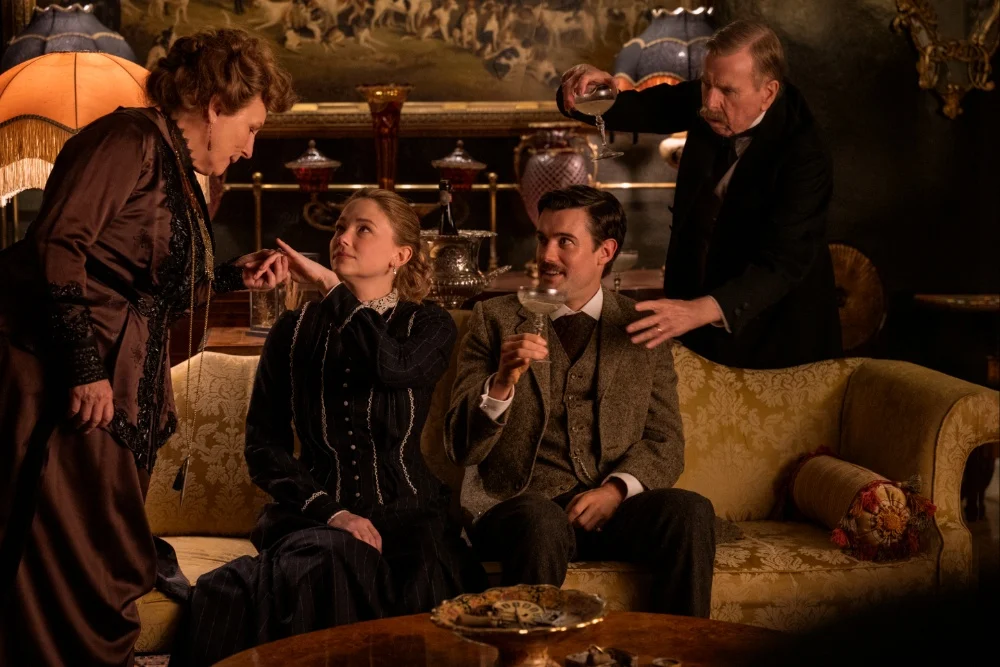
For over a century, Virginia Woolf’s 1919 novel Night and Day has existed in the shadow of her more experimental masterpieces. While Mrs. Dalloway and To the Lighthouse became the hallmarks of the high-modernist canon, Night and Day—a dense, pensive, and structurally traditional examination of Edwardian courtship and the nascent suffrage movement—remained a curiosity. It was a book that even its author approached with a degree of ambivalence. Yet, in the hands of director Tina Gharavi, this "underexposed" work has finally made its way to the screen.
Premiering as the centerpiece of the second annual SXSW London multimedia festival, Virginia Woolf’s Night & Day is a bold, albeit contentious, reimagining of Woolf’s prose. By trading the novel’s subtle, elusive ironies for a contemporary manifesto on female agency, Gharavi has crafted a film that feels less like a period adaptation and more like a bridge between the Edwardian past and the modern feminist present.
The Core Facts: A Departure from Tradition
The film centers on Katherine (Kit) Hilbery, played with vivacious intensity by Haley Bennett. Set in the rigid, patriarchal landscape of London in the early 20th century, the narrative follows Kit’s struggle for intellectual autonomy. While her peers are concerned with the intricacies of the marriage market, Kit is obsessed with the cosmos. Her pursuit of astronomy—a field strictly barred to women of her class—forces her to adopt a male persona to infiltrate the Royal Astronomical Society.
However, where the novel is a complex web of "misbegotten and rearranged courtships," Gharavi’s adaptation strips away much of the narrative entanglement. The film is a self-conscious departure from the source material. It eschews the "Merchant-Ivory" aesthetic—often expected of such period pieces—in favor of a more aggressive, crowd-pleasing approach to empowerment. The result is a film that prioritizes thematic clarity over the nuanced, often contradictory, psychological portraits that defined Woolf’s literary style.
A Chronological Shift: From Text to Screen
The development of this project marks a significant pivot in the career of Tina Gharavi. Known for her punchy, incisive 2013 debut I Am Nasrine, which earned her a BAFTA nomination, Gharavi has historically focused on marginalized voices and the immigrant experience. Moving into the realm of British heritage cinema, Night & Day sees her working with a larger budget and a more traditional framework, yet she struggles to reconcile the film’s "handsomely dressed" period trappings with the urgent, modern energy she attempts to inject into the dialogue.
The film’s progression follows a classic narrative arc:
- The Suppression: Kit’s initial defiance of social norms, including her struggle against a patriarchal university panel and her father’s (Timothy Spall) expectations of marriage.
- The Engagement: Her tactical, loveless betrothal to William (Jack Whitehall), a foppish poet who serves as a foil to her intellectual fire.
- The Catalyst: The arrival of Ralph (Elyas M’Barek), a literary editor tasked with managing the manuscript of Kit’s mother (Jennifer Saunders).
- The Awakening: A deepening bond with suffragette Mary (Lily Allen), which transforms from a polite acquaintance into a unified front for political action.
Supporting Data and Character Dynamics
The casting of the film serves as its most compelling, if uneven, asset. Haley Bennett, an American actress with a chameleon-like ability to blend into international productions, delivers a performance that acts as the film’s anchor. Her cut-glass accent and relentless intellectual curiosity make Kit a relatable protagonist for modern audiences.
However, the supporting cast represents a distinct shift from the source text. Most notably, the character of Cyril, Kit’s cousin, has been rewritten from a man who fathers a child out of wedlock to a marginalized gay man. This change is indicative of the film’s overall strategy: to align the characters with contemporary sensibilities regarding identity and oppression.
Lily Allen’s performance as Mary, the suffragette, is the most jarringly modern element of the production. Allen plays the character with an anachronistic forthrightness, her speech patterns and mannerisms feeling as if they were transported directly from the 21st century. While this creates a sense of "bouncing" against the period setting, it reinforces the film’s central goal: to highlight the universality of the struggle for women’s rights.
Official Perspectives and Creative Intent
In interviews and public discussions surrounding the SXSW premiere, the production team has defended the move toward "straightforwardly empowering" storytelling. For Gharavi, the objective was never to create a museum piece, but to make Woolf’s often-inaccessible writing resonate with a contemporary audience.
Critics have noted that the film’s dialogue occasionally veers into "speechifying." When Kit confronts the sexist university panel, the rhetoric is, by design, modern and progressive. While some viewers may find this shift from the book’s elegance to a more didactic tone off-putting, the creative team argues that the source material—while beautiful—lacked the necessary momentum to engage a broader, younger demographic. The inclusion of an electro-tinged score, which culminates in an Ellie Goulding-esque pop track during the closing credits, underscores the film’s intent to disrupt the "status quo" of British heritage cinema.
Implications: The Future of Heritage Cinema
The success of Virginia Woolf’s Night & Day raises significant questions about the future of literary adaptations in an age of streaming and social media. As a theatrical release, the film faces an uphill battle. It lacks the "major draw" star power usually required to dominate the global box office, and its niche source material may struggle to compete with high-concept blockbusters.
However, its implications for the industry are profound:
- The "Modernization" Trap: By stripping away the nuance of Woolf’s original prose, does the film lose its artistic soul? There is a growing tension between the desire to make historical stories "relevant" and the responsibility to preserve the historical complexity of the source text.
- Streaming Potential: Analysts suggest the film may find its natural home on global streaming platforms, where the "period-piece-meets-modern-pop" formula has historically performed well with demographics that appreciate high-production value but prefer accessible, feminist-forward narratives.
- The Role of the Auteur: For a filmmaker like Gharavi, Night & Day represents a calculated risk. It proves she can command the aesthetic demands of a period piece, but it also highlights the difficulty of imprinting a personal, political vision onto a genre that is traditionally staid and resistant to change.
Conclusion: A Well-Meaning Anachronism
Ultimately, Virginia Woolf’s Night & Day is a film of contradictions. It is visually stunning, intellectually sincere, and deeply committed to its feminist convictions. Yet, it often feels as though it is fighting its own structure. The handheld camera work and the pop-influenced score are valiant attempts to breathe life into the Edwardian setting, but they occasionally clash with the "talky and stiffly didactic" nature of the screenplay.
The film succeeds as a bold, if flawed, attempt to reclaim the voice of a young woman in a world designed to silence her. Whether it finds the "crowds to please" remains to be seen, but its existence serves as a testament to the enduring, if often misunderstood, power of Virginia Woolf’s work. In its attempt to update the status quo, the film may not have fully dismantled it, but it has certainly opened a dialogue about how we translate the past to satisfy the demands of the present. As audiences move toward more serialized and digestible content, Gharavi’s experiment may well be the blueprint for the next generation of literary adaptations.


 Nana Wu
 Jia Lissa