


In the current cinematic landscape, where massive intellectual properties and legacy franchises typically dominate the conversation, a tectonic shift is underway. While the return of Star Wars to the silver screen with The Mandalorian and Grogu has drawn respectable crowds, the industry’s true gravitational center has shifted toward an unexpected source: director Curry Barker and his breakout horror sensation, Obsession.
Barker, once a digital creator, has successfully bridged the gap between online viral fame and mainstream theatrical prestige. His sudden ascent has not only shattered box office records but has also triggered a high-stakes feeding frenzy among major Hollywood studios, who are currently lining up to secure his next project before it has even been fully conceived.
The Anatomy of an Unprecedented Deal
According to reports from The Hollywood Reporter, the industry’s hunger for Barker’s unique creative voice has manifested in a stunning, sight-unseen offer. An unnamed major studio reportedly extended a $10 million bid to the filmmaker for his next original feature—a project that exists only as a concept in Barker’s mind.
This offer is remarkable not just for its dollar amount, but for its audacity. In a town built on scripts, pitch decks, and lengthy development cycles, a seven-figure commitment for a film that has yet to be pitched is a rare vote of confidence. It signals that Barker has transcended the role of a "director-for-hire" and has become a brand unto himself, a commodity capable of moving tickets regardless of the specific plot.
Chronology of a Meteoric Rise
To understand why studios are writing blank checks for Barker, one must look at the improbable trajectory of Obsession.
- The Micro-Budget Genesis: Barker produced Obsession on a shoestring budget of just $750,000. Operating with minimal resources, he leveraged his understanding of audience engagement and genre tropes to craft a film that resonated deeply with viewers.
- Festival Validation: Following its production, the film caught the eye of industry gatekeepers at the Toronto International Film Festival. The subsequent acquisition by Focus Features for $14 million was, at the time, a calculated gamble. In retrospect, it stands as one of the most profitable acquisitions of the decade.
- Box Office Defiance: While most horror films see a steep drop-off in their second weekend, Obsession defied the laws of industry gravity. Against the backdrop of a major Star Wars release, the film saw a staggering 39% increase in box office revenue during its sophomore frame.
- Crossing the Century Mark: As of this writing, Obsession has accrued $90 million globally. With the film still maintaining momentum in theaters, it is poised to shatter the $100 million threshold, cementing its status as a bona fide blockbuster.
Supporting Data: Why the Horror Genre is Winning
The success of Obsession is not an isolated incident; it is a symptom of a larger, systemic shift in how Hollywood identifies talent.

The YouTuber-to-Director Pipeline
Barker is part of a new vanguard of filmmakers emerging from the digital trenches. Creators who spent years honing their craft on YouTube and other platforms have developed a distinct "direct-to-audience" instinct.
- Markiplier’s Iron Lung: Demonstrating that a massive, built-in digital audience can be successfully converted into a physical theatrical turnout.
- Kane Parsons’ Backrooms: A project that is anticipated to be one of the year’s most significant surprise hits, proving that the visual language of the internet is increasingly becoming the visual language of cinema.
These filmmakers arrive at the studio gates with two distinct advantages: an existing, fiercely loyal fanbase and an intuitive understanding of the viral mechanics that make a project "sticky" in the modern age.
The Institutional Tug-of-War: Blumhouse vs. The Field
The $10 million offer, while aggressive, hit a procedural roadblock: the right of first refusal. Because Obsession was produced by the powerhouse genre house Blumhouse, the production company retains contractual rights to negotiate for Barker’s next project.
The unnamed studio that made the $10 million offer was forced to step back, respecting the legal architecture of the industry. However, the withdrawal is likely temporary. Sources indicate that at least two other major studios are waiting in the wings, ready to intervene if the Blumhouse negotiations fail to yield a deal.
This creates a high-pressure environment for Barker. He must balance the creative stability provided by an established powerhouse like Blumhouse against the potentially transformative financial offers being dangled by external competitors. He is, for all intents and purposes, the person in the driver’s seat, holding the leverage that usually only established A-list auteurs possess.
Future Slate and Strategic Intentions
Despite the ongoing bidding war, Barker shows no signs of resting on his laurels. His immediate future is already mapped out, suggesting a filmmaker who is focused on output rather than mere fame.
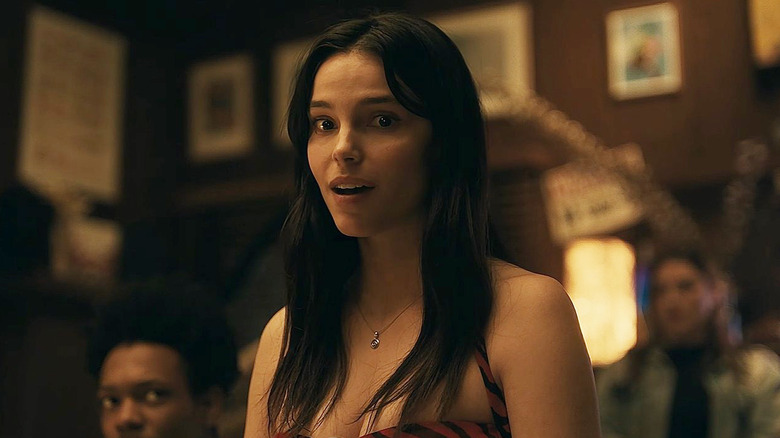
Upcoming Projects:
- "Anything but Ghosts": Already in the can, this project sees Barker reuniting with Blumhouse and Focus Features. By keeping his next immediate project within the fold that fostered his success, Barker is signaling a degree of loyalty while maintaining his creative momentum.
- "Texas Chainsaw Massacre": Barker has secured a deal to helm a new entry in the iconic franchise for A24. Given A24’s reputation for supporting elevated, director-driven horror, this project is widely expected to be the crown jewel of Barker’s near-future slate.
Implications for the Industry
The "Barker Effect" carries significant implications for the future of film production.
1. The Death of the "Slow Build"
Studios can no longer afford to wait for a director to prove themselves over three or four films. In an era of fragmented attention, the "hot hand" is the most valuable asset. If a director shows they can command a massive audience with a $750,000 budget, the studio response is to pay whatever it takes to capture that lightning in a bottle for their own slate.
2. The Decentralization of Talent
Traditional film schools are no longer the primary pipelines for new directors. The "Creator Economy" is effectively acting as the new talent incubator. Hollywood is effectively outsourcing its development and vetting process to platforms like YouTube, then "buying up" the finished products once they have already proven their commercial viability.
3. The Power of "Genre-First" Thinking
The success of Obsession reinforces the reality that horror is the most efficient engine for profitability in modern cinema. Because the genre relies on atmosphere, pacing, and psychological tension rather than astronomical CGI costs, it allows for a higher ROI. Studios are now shifting their budgets away from bloated, $200 million franchise tentpoles and toward high-concept, mid-budget horror films that offer a safer and often higher return on investment.
Conclusion: The New Auteur
Curry Barker is currently the archetype for the modern filmmaker. He is agile, digitally fluent, and undeniably profitable. While the $10 million offer for an un-pitched film might seem like an act of desperation by a studio looking for a savior, it is actually a calculated investment in a changing marketplace.
As Barker prepares to transition from the success of Obsession to his work with A24 and his upcoming projects with Blumhouse, the industry will be watching closely. He is the test case for whether the "YouTuber-to-Auteur" transition is a sustainable career path or a temporary flash in the pan. If the current bidding wars are any indication, the industry has already placed its bets: Curry Barker is here to stay, and he is just getting started.









No comments yet. Be the first to join the conversation!