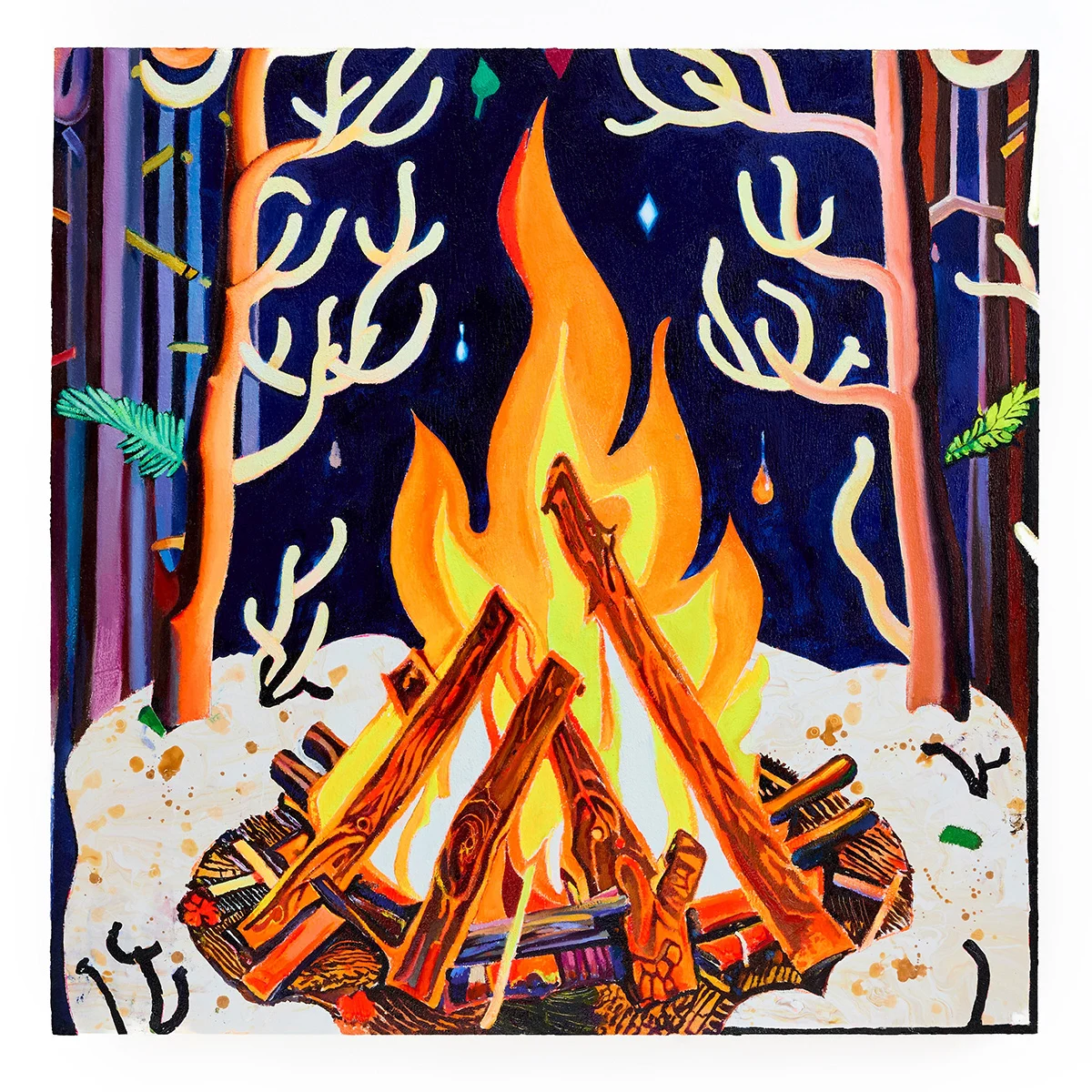
In the quiet landscape of Bloomington, Indiana, artist Caleb Weintraub is dismantling the traditional boundaries between painting and sculpture. His latest series of heavily textured, hyper-saturated works serves as a profound meditation on the collision of history, pop culture, and the human psyche. By moving beyond the flat plane of the canvas, Weintraub creates elaborate, three-dimensional scenes that force the viewer into a visceral engagement with the work. His practice is not merely an exercise in aesthetics, but a deliberate effort to reconstruct our collective memory using a medium that feels as much like an architectural intervention as it does a traditional painting.
The Architect of Shadows: An Artistic Evolution
Caleb Weintraub’s artistic journey is rooted in a rigorous academic foundation. A graduate of Boston University (BFA) and the University of Pennsylvania (MFA), Weintraub has spent years refining a process that defies categorization. His work is characterized by a "sculpted surface"—a complex topography created through a synthesis of oil, acrylic, epoxy clay, aqua-resin, and foam.
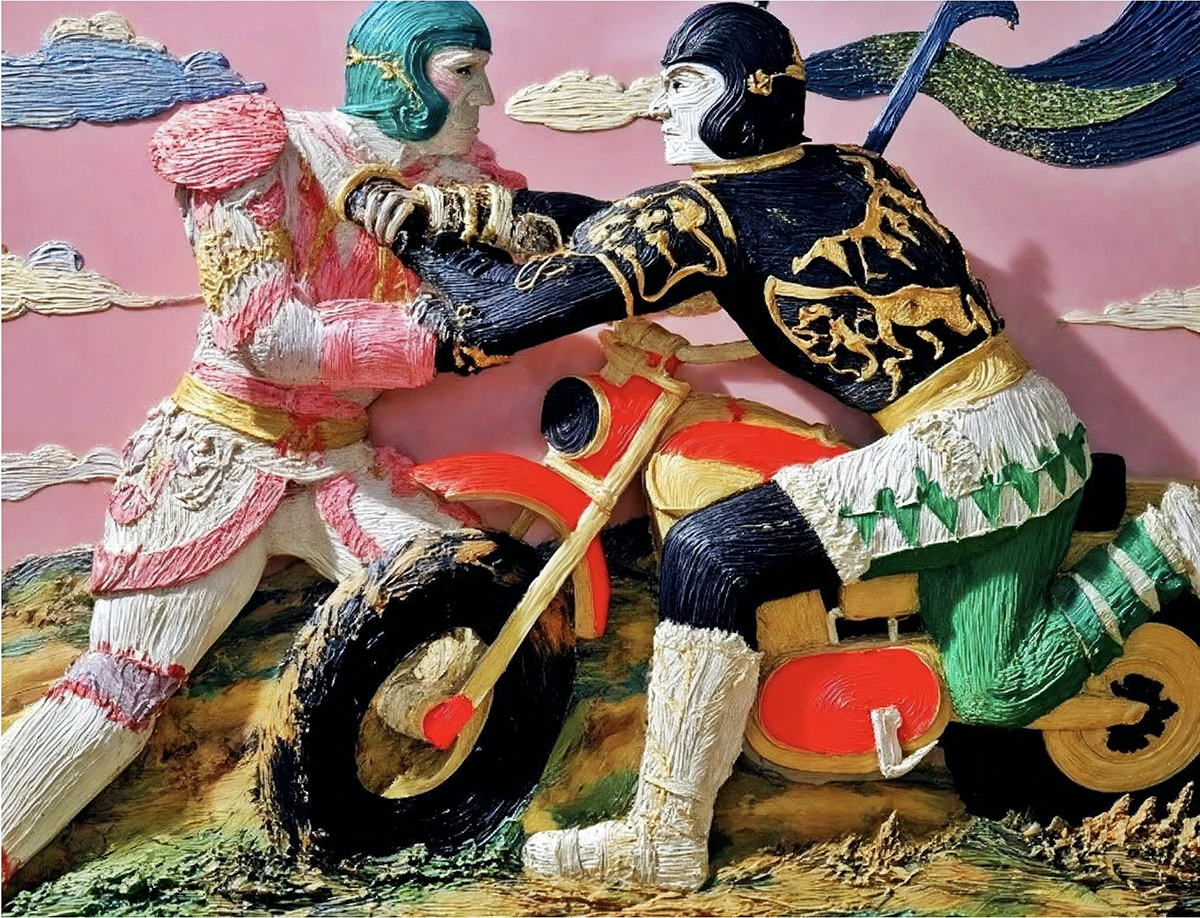
By mounting these materials onto shaped panels, Weintraub manipulates light and shadow, casting "real and fake shadows" that amplify the sense of depth within his work. This is not the trompe-l’œil of the Renaissance, which sought to deceive the eye through flat illusion; rather, it is a physical encroachment into the viewer’s space. The images possess an energy that is distinctly carnivalesque, pulling from classical iconography while maintaining an unsettling, anachronistic edge.
Chronology of a Practice
- Formative Years: Early education at Boston University provided the technical rigor required to master traditional painting techniques.
- Refining the Medium: During his MFA studies at the University of Pennsylvania, Weintraub began to experiment with the physical limits of the canvas, moving toward the additive sculptural processes that define his current practice.
- The Bloomington Era: Based in Indiana, Weintraub established his studio, where he began integrating salvaged materials—scraps from abandoned palettes and discarded earlier paintings—into his new compositions. This act of recycling serves as a bridge between his past work and his current output.
- The Current Series: His most recent body of work marks a shift toward a more cohesive, albeit fragmented, narrative. Here, the symbols of the past (armor, heraldry) collide with the modern (motorcycles, chainsaws) in a state of suspended animation.
Symbols in Disarray: Deconstructing the Narrative
The thematic core of Weintraub’s work lies in the disorder of symbols. As he describes it, the elements that populate his scenes—motorcycles, sabers, leather jackets, and martyred figures—arrive out of order. This lack of chronological coherence is intentional. Weintraub creates a world where the "inheritance" of culture is clumsy, a patchwork of signs that we don and carry like armor.
The Iconography of the Mundane and the Mythic
Weintraub’s imagery is a catalog of the uncanny. Consider his juxtaposition of a motorcycle gang at a holiday table or marauders quietly tending to houseplants. These scenes function as domestic disruptions. In his universe, the horse and the motorcycle are interchangeable—both are vessels of movement and status, bridging the gap between the nomadic past and the motorized present.
The presence of animals, particularly birds, serves as a recurring motif. These creatures act as messengers, omens, and witnesses to the figures’ internal states. Snakes slither through the rubble of his compositions, while tooth-shaped forms emerge from the moldings, suggesting that the very environment is alive and biting.
Linguistic Play: The Titles as Anchors
The titles of Weintraub’s pieces act as a linguistic bridge to his visual chaos. By blending sports commentary, action film tropes, and devotional religious language, he forces the viewer to reconsider the gravity of his imagery. Titles like Clutch Decision, Parry Parry Pray, In Good Faith, and Flock and Awe are not just labels; they are instructions on how to interpret the tension between violence and reverence. As Weintraub notes, "A throttle, a fang, and a feather are instruments for closing distance."
Supporting Data: The Materiality of the Work
Weintraub’s process is as labor-intensive as it is intellectually demanding. His studio practice relies on a specific set of material constraints that dictate the visual outcome:

| Material | Application | Purpose |
|---|---|---|
| Epoxy Clay | Structural base | Provides the foundation for high-relief forms. |
| Aqua-Resin | Coating/Modeling | Offers durability while maintaining fine detail. |
| Salvaged Paint | Recombination | Utilizes "scraps from abandoned palettes" to link historical work to new themes. |
| Foam | Volumetric shaping | Allows for large-scale, lightweight projections from the panel. |
The use of shaped panels is critical. By departing from the rectangular constraints of the traditional canvas, Weintraub forces the artwork to interact with the architecture of the gallery space. The "exaggerated depth and relief" ensures that the viewer’s perspective is constantly shifting as they move around the work.
The Implications of Anachronism
What are the implications of a body of work that refuses to exist in a single time period? Weintraub’s practice suggests that our identity is not a linear progression but a layered experience. We carry the "armor" of the past—heraldic symbols, classical poses—while navigating a world defined by the "leather jackets" and "motorcycles" of modern subcultures.
By externalizing the figures’ feelings through animal imagery and distorted settings, Weintraub touches on the existential anxiety of the contemporary era. We are all, in a sense, crossing deserts and mountain divides, arriving in places that feel identical yet "slightly disrupted and askew."
Artistic Statement: A Reflection on the Inheritance
In the artist’s own words, the inheritance of culture is "clumsy." This is a candid admission that the symbols we value are often disjointed or poorly understood. Weintraub’s work validates this clumsiness, turning it into a site of artistic production. By allowing the "martyr holding a chainsaw" to exist alongside the "marauder watering the houseplants," he highlights the absurdity of our own self-construction.
Conclusion: Looking Toward the Future
Caleb Weintraub’s work is a testament to the power of materiality in painting. In an era dominated by digital imagery and flat-screen consumption, his commitment to the physical, the sculpted, and the tactile is a radical act. His ability to fuse the classical with the carnivalesque suggests that the future of painting may not lie in the refinement of the brushstroke, but in the physical construction of reality itself.
As we look toward the continued evolution of his practice, it is clear that Weintraub will remain a pivotal figure in contemporary art. His work challenges us to look closer at the "emblems and tattoos" we use to define ourselves, and to consider the possibility that we, too, are navigating a world of slightly disrupted, shifting realities. Through the precise application of a throttle, a fang, and a feather, Weintraub continues to close the distance between the mythic past and our complicated, modern present.
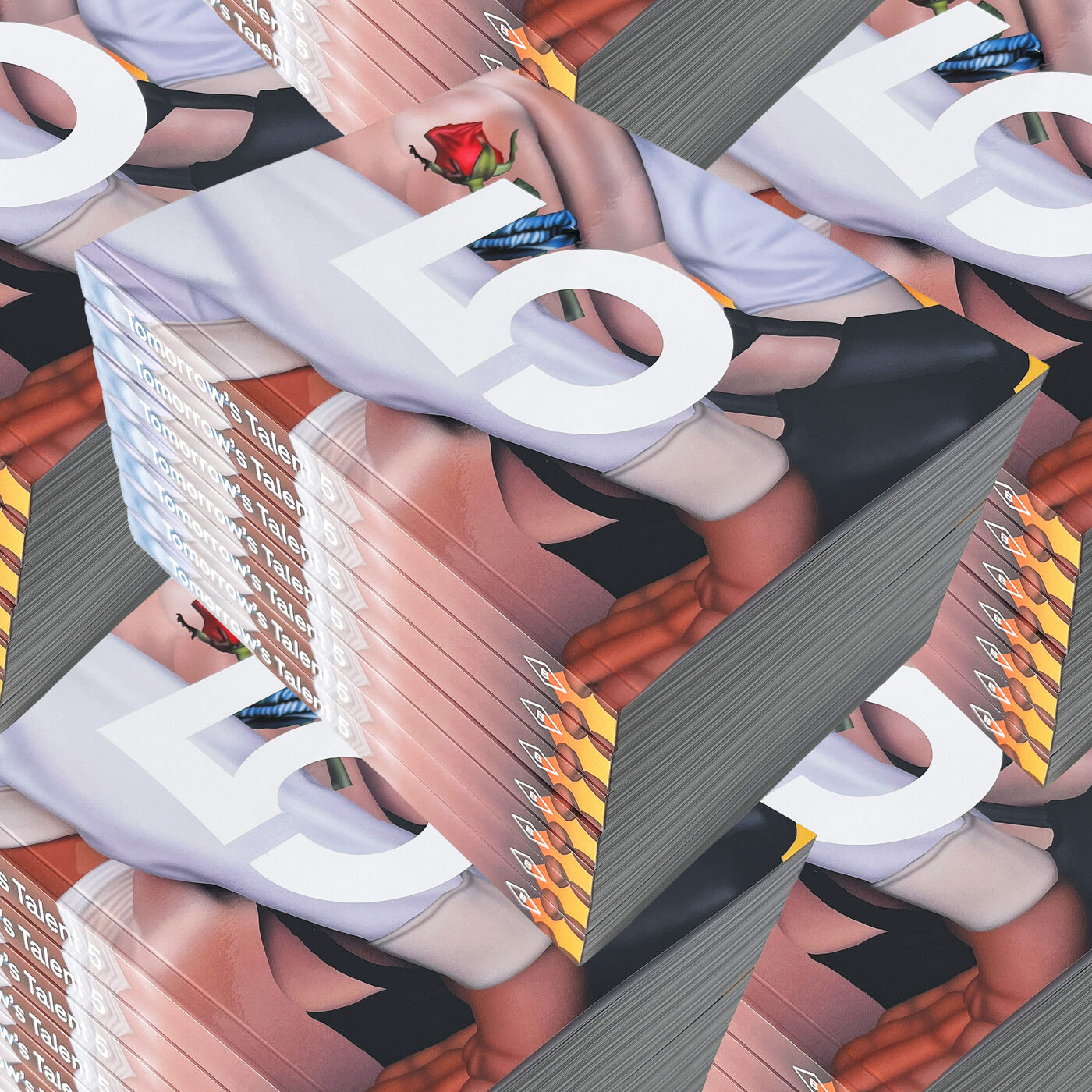
For those interested in exploring the broader context of emerging artists who, like Weintraub, are pushing the boundaries of traditional media, resources such as the "Tomorrow’s Talent" series provide a vital window into the next generation of creative practice. Additionally, staying connected with independent art platforms ensures that such nuanced, material-focused explorations remain at the forefront of the cultural conversation.