Jia Lissa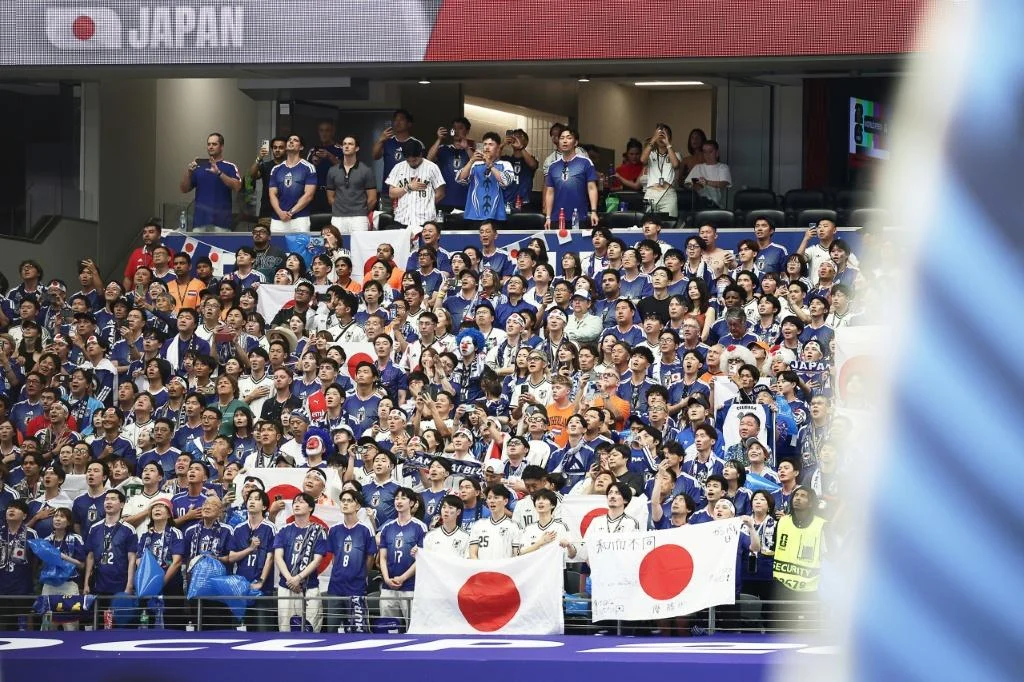
By International News Desk
For decades, the image of Japanese football fans meticulously cleaning stadium stands after World Cup matches has served as a global archetype of civic virtue. As the Samurai Blue supporters remain a fixture in international tournaments, their penchant for tidiness has once again been thrust into the spotlight, drawing praise from FIFA and global observers alike. Yet, beneath the veneer of this celebrated "cultural altruism," a fierce debate has ignited back home. A viral social media critique has punctured the celebratory atmosphere, forcing a uncomfortable conversation about the disparity between the public conduct of Japanese men and their domestic contributions.
The Global Stage: A Display of Impeccable Manners
FIFA’s official recognition of Japanese fans on the social media platform X (formerly Twitter) this week served as the catalyst for the latest cycle of discourse. Highlighting the "impeccable manners" of the Samurai Blue faithful, FIFA shared images of supporters—predominantly men—carefully collecting refuse from stadium seating areas long after the final whistle had blown.
This behavior, which has become a hallmark of Japan’s international sporting presence, is often viewed by foreign observers as an expression of omotenashi (hospitality) and a collective sense of social responsibility. The images have proliferated across global media, reinforcing the narrative of a disciplined, community-oriented society. For many, the act is more than mere tidiness; it is a cultural hallmark that represents the Japanese ethos of leaving a place better than one found it.
The Viral Reality Check: A Homegrown Critique
The adulation, however, was short-lived in the domestic sphere. As the images circulated within Japan, they encountered a stark, biting critique that went viral, garnering over 1.9 million views. The post, which featured a satirical illustration, juxtaposed the image of a patriotic fan diligently cleaning a stadium with the same man lounging on a sofa at home, entirely oblivious to a mountain of laundry and a domestic partner struggling with household chores.
The text accompanying the illustration was blunt: "Japanese men spend among the least time on housework internationally. Please do it at home."
The post triggered an immediate and polarized response. For many, it hit a nerve that has been raw for years. Critics of the current domestic landscape argue that the "clean-up" culture on display at the World Cup is, at least in part, performative—a public display of discipline that vanishes the moment the stadium gates close and the domestic front door opens.
Supporting Data: The Gender Gap in Unpaid Labor
The frustration expressed in the viral post is backed by sobering statistics. According to 2021 data from the Organisation for Economic Co-operation and Development (OECD), cited by the Japanese Cabinet Office, the gender gap in "unpaid work"—which includes domestic chores, childcare, eldercare, and shopping—remains one of the most pronounced in the developed world.
The figures are stark: Japanese women spend 5.5 times more time on unpaid work than their male counterparts. To place this in a global context, the disparity in Japan is significantly wider than in other major economies. In Britain, women spend roughly 1.8 times the amount of time on unpaid labor compared to men; in France, the figure is 1.7; and in the United States, it is 1.6.
These data points suggest that while Japanese society excels at maintaining public order and collective cleanliness, the private sphere remains anchored in traditional gender roles that place an overwhelming burden on women. Sociologists have long pointed to the "Salaryman" culture, which demands long hours and total devotion to the workplace, as a primary driver of this imbalance, leaving men with little time, energy, or expectation to contribute to the domestic environment.
Official Responses and Cultural Nuance
The discourse reached the highest levels of the national team’s leadership. During a press conference held on the eve of Japan’s match against Tunisia in Mexico, Japan coach Hajime Moriyasu addressed the phenomenon of the fans’ cleaning efforts.
"I think this is one part of the Japanese culture that we can be proud of in the world," Moriyasu remarked. He noted that the discipline extends to his own squad, who are famously known for leaving changing rooms in pristine condition after matches.
However, Moriyasu also provided a rare, pragmatic perspective on the act of cleaning, revealing that he had engaged in discussions with international colleagues regarding the practice. "I have met Brazilian players, Brazilian coaches, and people from different countries, and they would all point out something different," he noted. "They said, by picking up people’s garbage, it would be clean, but wouldn’t you be taking away the work from the cleaners? So, I guess that is one way of looking at it."
This insight added a layer of complexity to the debate, suggesting that even within the Japanese delegation, there is an awareness that their actions are subject to varying interpretations—not just in terms of domestic gender politics, but in terms of global economic impact.
Social Media: A House Divided
The online debate regarding the viral post has remained heated, reflecting the generational and ideological rifts currently defining Japanese society.
One user, echoing the frustration of many, commented, "Wives struggling with husbands who don’t clean at all should have them wear Samurai Japan uniforms at home too," suggesting that perhaps the "World Cup persona" is the standard that should be imported into the living room.
Conversely, others have defended the fans, arguing that the viral post relies on a broad and unfair generalization. "This is too much of a generalization—not all Japanese men are like that," one user retorted. Defenders of the fan culture argue that the act of cleaning at the stadium should be celebrated as a positive civic virtue, regardless of whether it correlates with domestic habits. They argue that one can appreciate a public display of respect for shared spaces without demanding it serve as a comprehensive indictment of the entire male population.
Implications: The Search for a Modern Identity
The clash between the public image of Japanese discipline and the private reality of gendered domestic labor highlights a society in transition. As Japan grapples with a declining birth rate and an aging population, the role of men in the household has become a matter of national policy. The government has increasingly encouraged "work-life balance" initiatives, yet progress remains slow against the inertia of corporate culture and long-standing social expectations.
The "stadium cleaning" debate serves as a microcosm of this broader tension. It asks whether a nation can truly claim to be a model of modern, egalitarian behavior if its public virtues are not mirrored by private equity.
A Call for Consistency
As the World Cup continues, the images of Samurai Blue fans will undoubtedly continue to inspire. Yet, the viral critique has ensured that the conversation will not be limited to the stands. Whether this moment of digital activism leads to a meaningful shift in the domestic division of labor remains to be seen. However, it is clear that for many, the pride felt in seeing Japanese fans clean a stadium is now inextricably linked to the question of when that same level of care will become the norm within the Japanese home.
The juxtaposition of the tidy stadium and the untidy living room is a powerful metaphor for a country that is clearly capable of extraordinary collective action, but which is still struggling to redefine the boundaries of responsibility between its citizens. As Japan continues to project its cultural values onto the world stage, the challenge will be to ensure that those values are as vibrant and inclusive at home as they are in the glow of the stadium floodlights.
© 2026 AFP


 Neng Nana
 Asro
Asro