

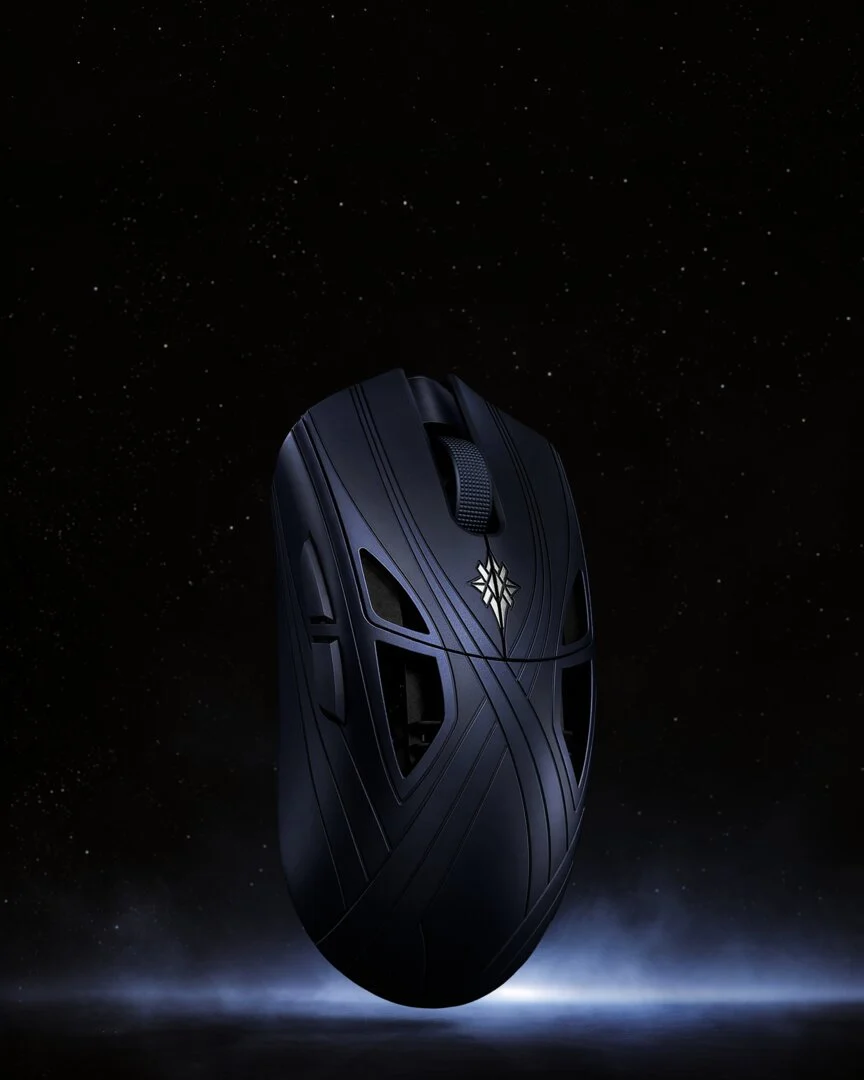
In the hyper-competitive world of esports, where victory is often measured in milliseconds, the hardware peripheral market has reached a fever pitch. Today, Finalmouse has unveiled its latest flagship, the Starlight X, a gaming mouse engineered with a singular, ambitious goal: to fundamentally redefine the performance ceiling for tactical shooters like Counter-Strike 2 and Valorant. By integrating cutting-edge materials, a proprietary sensor, and a radical approach to switch actuation, the Starlight X positions itself as the "fastest rodent on the planet."
Main Facts: Engineering the Impossible
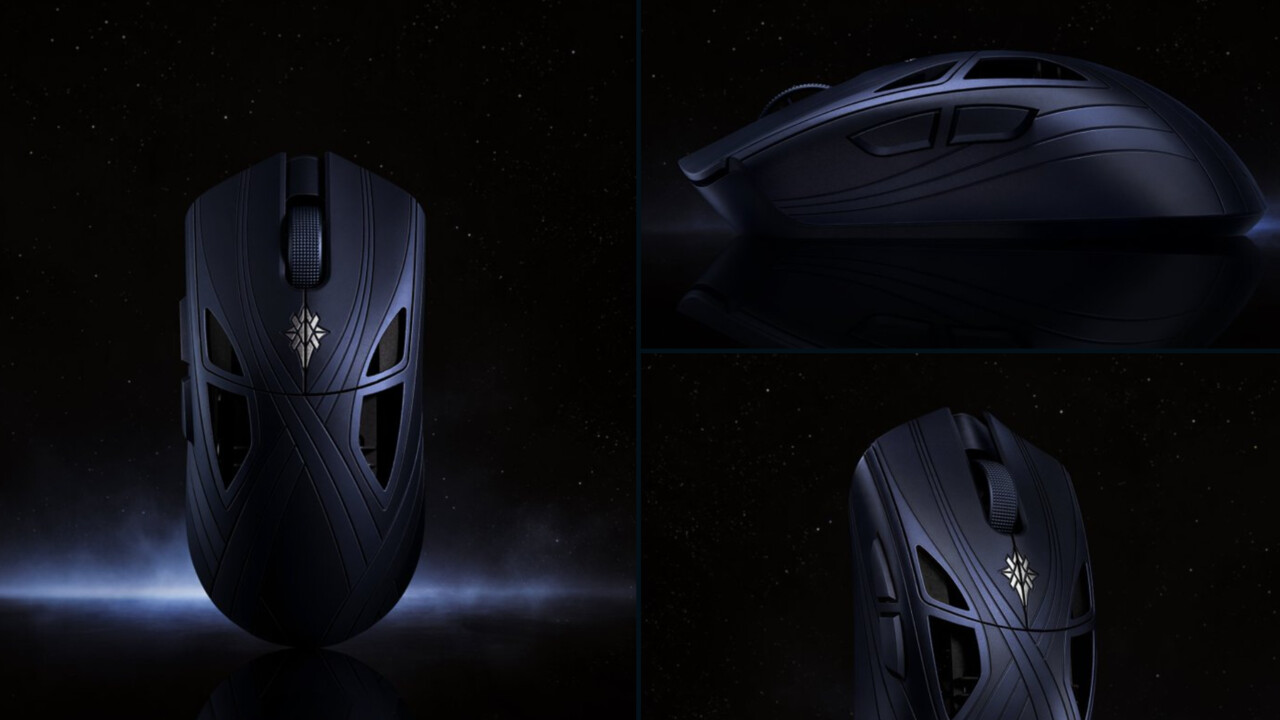
The Starlight X arrives with a bold set of specifications that challenge the current industry standards. Weighing in at a mere 38 grams, the mouse achieves its featherweight status without resorting to the aggressive, large-scale honeycomb cutouts that characterized its predecessors. Instead, the chassis utilizes a "Carbon Fiber Super Composite," a material engineered for superior density-to-strength ratios, allowing for a unibody construction that eliminates flex and structural noise.
Beyond weight, the core innovation lies in its "Dual-Switch" architecture. By pairing traditional Huano Blue Shell Pink Dot mechanical switches with proprietary TMR (Tunnel Magnetoresistance) sensors, Finalmouse claims it has bypassed the inherent delays of mechanical actuation. This system effectively decouples the "feel" of the click from the signal registration, theoretically saving up to 35 milliseconds of input latency—a lifetime in high-level competitive gaming.
Chronology: From Concept to Competition
The development of the Starlight X follows a multi-year trajectory of iterative refinement.
- Initial R&D (2022–2023): Finalmouse began experimenting with ultra-light composites, moving away from the magnesium alloy shells used in the original Starlight-12 series. The goal was to maintain the structural integrity of metal while reducing the mass below the 40-gram threshold.
- Sensor Collaboration (2024): Recognizing the limitations of off-the-shelf sensors, the company entered a strategic partnership with Pixart to develop the custom "F1" sensor, tailored specifically for the Starlight X’s unique power-draw profile and tracking requirements.
- The Latency Breakthrough (Early 2025): The integration of TMR technology marked the final hurdle. Engineers realized that by using the mechanical switch merely as a physical tactile feedback mechanism and the TMR sensor as the signal trigger, they could offer customization of the actuation point, allowing users to tune their "pre-travel" settings via software.
- Launch Day (Current): The Starlight X officially opened for orders at 8:00 PM today, retailing at $179 USD.
Supporting Data: The Physics of Performance
To understand the implications of the Starlight X, one must examine the specific technical hurdles the engineering team sought to overcome.
The Shift in Wireless Architecture
The Starlight X utilizes the Nordic nRF54LM20 microcontroller, a state-of-the-art chip that offers significantly lower power consumption and higher processing throughput than the previous generation. Finalmouse has opted to abandon the traditional "bridge" wireless receiver configuration, instead streamlining the signal path directly into the mouse’s firmware.
The "PerfectPolling" Philosophy
While many competitors are locked in a "Polling Rate War," pushing for 8,000Hz or higher, Finalmouse has taken a contrarian stance. According to the company, 8,000Hz polling introduces instability and excessive CPU overhead, which can ironically lead to stuttering or jitter in sub-millisecond game engines. Instead, they have introduced "PerfectPolling." This approach optimizes the polling interval to align with the game engine’s "sub-tick" updates, ensuring that every movement and click is captured exactly when the game engine is ready to process it, rather than flooding the CPU with unnecessary data packets.
The Sensor: Pixart F1
While specific DPI and tracking speed data remain proprietary, the Pixart F1 sensor is built for extreme efficiency. The integration of a 250 mAh battery suggests a highly optimized power-management system, as the company claims the mouse will handle marathon gaming sessions without frequent charging, though official battery life figures are still pending.
Official Responses and Strategic Vision
In a briefing, the Finalmouse team emphasized that the "feel" of the mouse was as important as its technical specs. The redesigned shape, featuring a more pronounced "hump" and refined transitions between surfaces, is designed to allow the mouse to "disappear" in the user’s hand.
Regarding the price point of $179, Finalmouse maintains that the inclusion of custom-molded carbon fiber, titanium screws, and the R&D costs associated with the TMR sensor system justify the premium. "This is not a mass-produced consumer peripheral," a company spokesperson stated. "It is a precision instrument designed for the top 0.1% of players who require every possible advantage."

Implications: The Future of Esports Hardware
The release of the Starlight X carries significant implications for the wider peripherals industry.
1. The Death of the "Mechanical-Only" Era
By using TMR sensors in tandem with mechanical switches, Finalmouse has created a template that other manufacturers will likely follow. The ability to adjust the actuation point—essentially giving a mouse the functionality of a magnetic-switch keyboard—is a game-changer for players who rely on "trigger-finger" speed.
2. The Weight Threshold
At 38 grams, we are nearing the physical limit of what a hand-held mouse can be without losing structural utility. The move toward Carbon Fiber Super Composites suggests that the industry is pivoting away from drilling holes in shells (which compromises structural rigidity) toward advanced material science.
3. Software Accessibility
The decision to utilize "Xpanel," a web-based platform for configuration, reflects a broader shift toward cloud-based driver management. By supporting Windows, Mac, and Linux through a web browser, Finalmouse eliminates the need for "bloatware" drivers that often run in the background and consume system resources.
4. Competitive Integrity
The Starlight X raises an interesting question regarding competitive fairness. If a mouse can save 35 milliseconds of latency through hardware-level signal processing, does this create a "pay-to-win" environment? While professional players have always sought the best gear, the gap between a standard gaming mouse and a device like the Starlight X is wider than ever. We may soon see esports governing bodies establishing standards for hardware latency to ensure that competition remains centered on skill rather than the sophistication of one’s sensor and switch technology.

Conclusion
The Finalmouse Starlight X is an unapologetic, high-performance tool. Whether the 35ms latency reduction and the 38-gram weight will translate into tangible performance gains for the average player remains to be seen, but for the competitive elite, it represents the next step in the evolution of input devices. By merging high-end material science with a revolutionary approach to signal registration, Finalmouse has once again signaled that it is not interested in following market trends—it is interested in setting them.
As the units begin to ship, the gaming community will be watching closely. Will the Starlight X be the definitive standard for the next generation of shooters, or will it remain an elusive, niche luxury? If the technical specifications hold up under real-world scrutiny, we may be witnessing the birth of a new era in which the connection between player intent and game action is more seamless than ever before.










No comments yet. Be the first to join the conversation!