

By Matthew Wilson | Tech News & Hardware Analysis
As the global technology community prepares to descend upon Taipei for Computex, the industry’s premier showcase for innovation, G.Skill International has once again cemented its reputation as the vanguard of high-performance memory. In a move that has sent shockwaves through the enthusiast and overclocking communities, the company has officially unveiled its latest masterpiece: a DDR5 memory kit capable of operating at a staggering 9200MHz. This announcement not only signals a significant leap in data transfer speeds but also highlights the evolving architecture of next-generation system memory.
The Core Revelation: Breaking the 9GHz Barrier
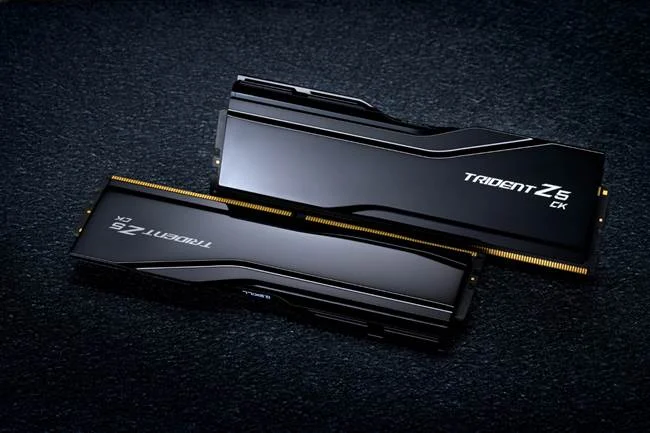
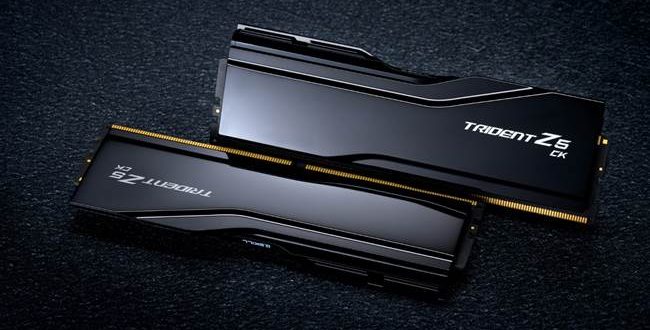
G.Skill’s newest flagship product, the DDR5-9200 CL74 kit, represents a massive milestone for consumer-grade system memory. The kit, configured in a 32GB dual-channel setup (16GB x 2), is designed for users who demand the absolute pinnacle of performance. Beyond the headline-grabbing 9200MHz frequency, the kit operates with timings of CL74-74-74-148.
Perhaps most impressive is the company’s ability to maintain a DRAM voltage of just 1.1V—a testament to the maturation of DDR5 manufacturing processes. This high-speed performance is achieved through the use of advanced CU-DIMM (Clocked Unbuffered Dual In-line Memory Module) technology, which introduces an onboard clock driver to improve signal integrity at extreme frequencies. By offloading signal stabilization to the module itself, G.Skill has effectively mitigated the interference challenges that typically plague high-frequency memory, allowing for stable operation at speeds that were considered impossible just a few short years ago.
Chronology of Innovation: From JEDEC Standards to Extreme Overclocking
The path to 9200MHz has been a calculated, multi-year evolution. To understand the significance of this release, one must look at the trajectory of the DDR5 standard:
- 2021: The Dawn of DDR5. The industry transitioned from DDR4 to DDR5, with base JEDEC specifications starting at 4800MHz. At the time, achieving stable 6000MHz kits was the primary challenge for engineers.
- 2022-2023: The 7000-8000MHz Plateau. G.Skill, along with other top-tier manufacturers, spent these years optimizing memory controller (IMC) compatibility on platforms like Intel’s Z690 and Z790 chipsets. During this period, the industry focused on tightening sub-timings and refining PCB trace designs.
- Early 2024: The Push toward 9000MHz. With the introduction of the Intel Core Ultra "Arrow Lake" architecture and the Z890 chipset, the memory controller ceiling was lifted significantly. Engineers began experimenting with higher voltages and more robust PCB layers.
- May 2026 (Present): The 9200MHz Milestone. G.Skill’s latest announcement serves as the culmination of these efforts, proving that 9GHz+ speeds are not just experimental "golden sample" phenomena, but tangible products destined for the retail market.
Supporting Data: The Testbed Configuration
Performance in the realm of extreme memory is only as reliable as the hardware it is paired with. To ensure the 9200MHz kit operates with rock-solid stability, G.Skill has conducted extensive validation testing.
The validation environment utilized the following setup:
- Motherboard: MSI MEG Z890 Godlike. This high-end motherboard, known for its superior power delivery and signal trace optimization, is specifically engineered to handle the increased electrical load of high-frequency memory modules.
- Processor: Intel Core Ultra 7 270K. This processor features an integrated memory controller (IMC) capable of maintaining the high-speed synchronization required for 9200MHz operation.
- Cooling Context: While the memory kit is highly efficient, the move toward such extreme frequencies has necessitated a closer relationship between memory manufacturers and cooling specialists. This has led to the recent strategic partnership between G.Skill and Cooler Master, specifically regarding the development of the "MasterDimm" line—an actively cooled memory solution designed to prevent thermal throttling during intense benchmark sessions or prolonged overclocking.
Industry Implications: What This Means for the User
The arrival of 9200MHz memory carries implications that extend far beyond the synthetic benchmark results.
1. The Bottleneck Shift
For years, the CPU was the undisputed bottleneck in high-performance computing. However, as processors have reached multi-gigahertz speeds and massive core counts, the memory bus has become the new "choke point." By pushing memory bandwidth to these levels, G.Skill is enabling data-intensive applications—such as real-time 8K video rendering, large-scale data modeling, and competitive gaming—to access system memory with unprecedented latency and throughput.
2. The Maturity of CU-DIMM
The shift toward CU-DIMM is a paradigm change. By integrating a clock driver directly onto the DIMM, the motherboard’s workload is lightened. This makes the memory subsystem more resilient to noise and signal decay, potentially allowing future generations of CPUs to support even higher speeds without requiring a complete redesign of the motherboard’s internal wiring.
3. The Future of Consumer Enthusiast PCs
For the average consumer, this technology represents a "trickle-down" effect. While 9200MHz is currently reserved for the ultra-enthusiast tier, the engineering breakthroughs developed to achieve these speeds—better heat dissipation, tighter binning of DRAM chips, and improved PCB design—will eventually be standardized, leading to faster, more stable memory for the mainstream market.
Official Responses and the Road to Computex
G.Skill’s presence at Computex is expected to be one of the most anticipated segments of the event. Beyond the product display, the company is hosting the "Overclocking World Cup," an event that serves as both a marketing showcase and a technical laboratory.
"We are constantly pushing the limits of what DDR5 can achieve," a G.Skill representative noted in a preliminary briefing. "Our collaboration with motherboard partners like MSI and cooling innovators like Cooler Master has allowed us to move past the traditional barriers of memory frequency. 9200MHz is just the beginning of what we intend to demonstrate at Computex."
The industry will be watching closely as these kits move from validation labs to the test benches of professional overclockers. With the Cooler Master partnership bringing active cooling to the forefront, we are likely to see even higher frequency claims as enthusiasts attempt to push these modules beyond their factory-rated specifications during the World Cup.
Final Thoughts: The Road Ahead
As we look toward the remainder of 2026, the question is no longer "can it be done," but "how much further can it go?" The announcement of the 9200MHz kit is a clear signal that the DDR5 platform is hitting its stride. While mainstream users may not yet require these speeds, the relentless pursuit of performance by companies like G.Skill ensures that the hardware industry continues to innovate at a rapid pace.
KitGuru will be on the ground at Computex in Taipei next week. We are scheduled to meet with the G.Skill engineering team to discuss the technical hurdles of the CU-DIMM architecture and get an up-close look at the actively cooled MasterDimm kits in action.
Stay tuned for our in-depth coverage, where we will bring you exclusive hands-on impressions and technical deep dives straight from the show floor. Whether you are a competitive overclocker, a workstation professional, or a hardware enthusiast tracking the cutting edge of silicon, the developments in Taipei are set to redefine our expectations for system performance for the next twelve months.
To support our independent technical analysis and in-depth hardware reporting, please consider becoming a patron of KitGuru via our official Patreon page.












No comments yet. Be the first to join the conversation!